The obstacle to adopting Web3 for everyday payments is gas fee friction.
Plasma $XPL enters the market🛒 as a payments-focused EVM Layer-1 💳 with stablecoins, introducing zero-cost USDT transfers and custom gas tokens.
For infrastructure operators and investors, the question isn’t just whether the UX is seamless, but how the token 🪙 captures value when basic transactions subsidize gas.
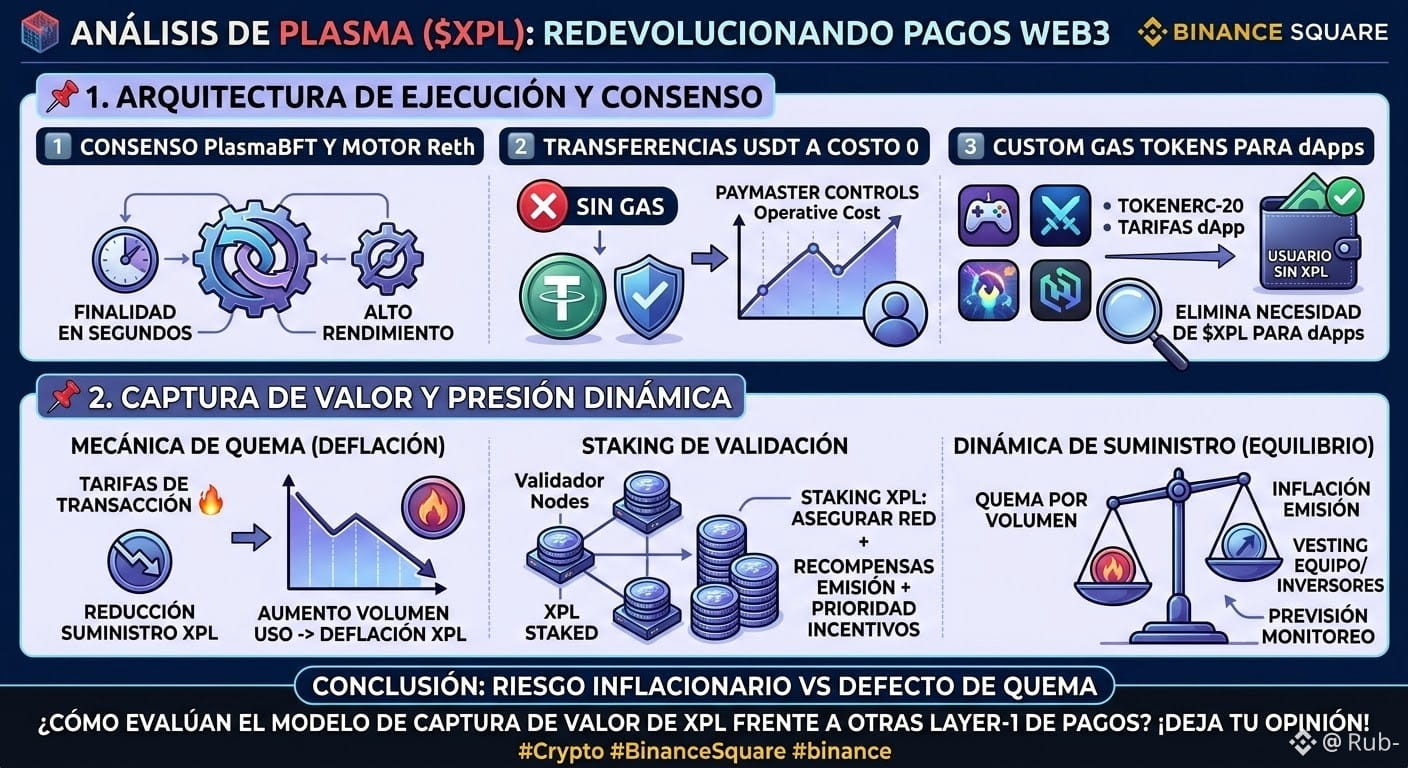
📌 1. Execution and Consensus Architecture
1️⃣ Plasma uses PlasmaBFT consensus alongside the Reth execution engine to ensure finality in seconds and high transaction throughput.
2️⃣ Gas-free USDT transfers work through controlled Paymaster contracts that cover operating costs at the protocol level.
3️⃣ It allows dApps to charge fees in ERC-20 tokens, eliminating the need for end users to hold $XPL to interact.
📌 2. Value Capture and Dynamic Pressure
1️⃣ Transaction fees generated on the network are burned🔥, linking increased usage volume to deflation in the supply of $XPL .
2️⃣ Validators must stake XPL to propose and confirm blocks, securing the network through an issuance rewards and priority incentives model.
3️⃣ It’s key to monitor 🕵🏻♂️ ecosystem incentive allocations and team/investor vesting schedules to assess whether volume-based burns offset inflation📊.
How do you evaluate XPL’s value capture model compared with other payments Layer-1s?👇🏻
#Crypto #BinanceSquare #binance