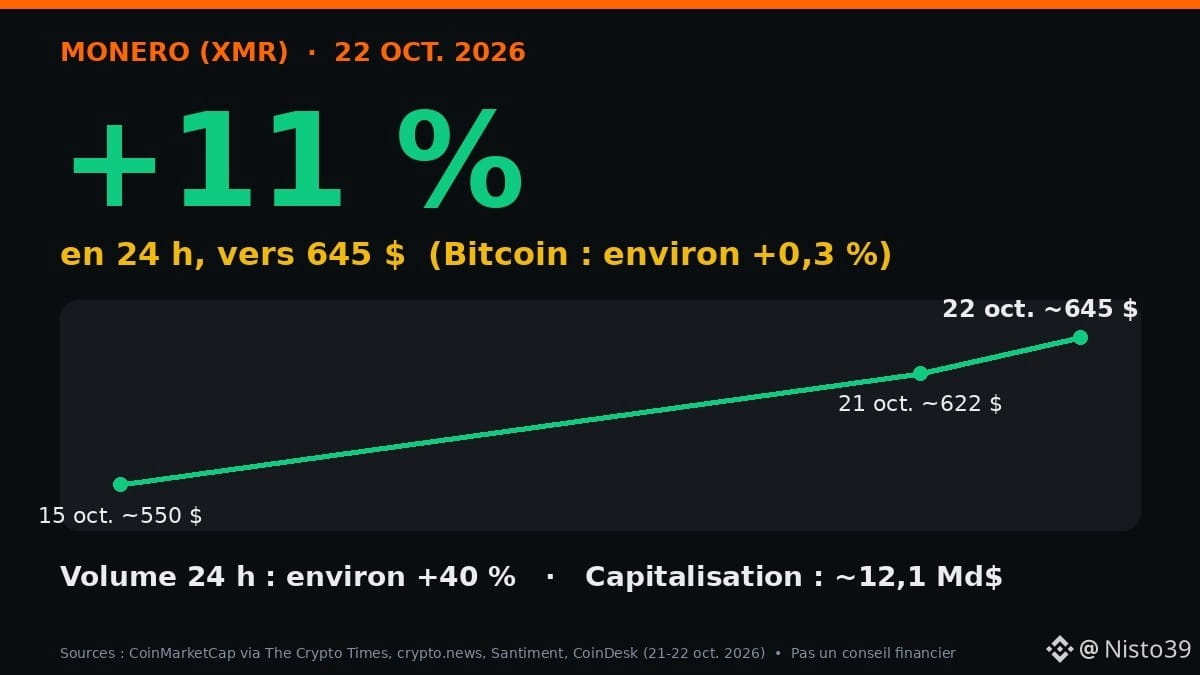
🕵️ Monero, the largest “private” crypto, gained about +11% in 24 hours this Thursday. A nice candle... but part of the story is playing out in leveraged contracts.
📌 The facts (Oct. 22, 2026)
• XMR at around $645 (CoinMarketCap, 05:55 UTC), with a market cap of about $12.1B, ranking 12th among cryptos
• 24-hour volume up about 40%, to around $250–260M
• Rebound from around $550 on October 15
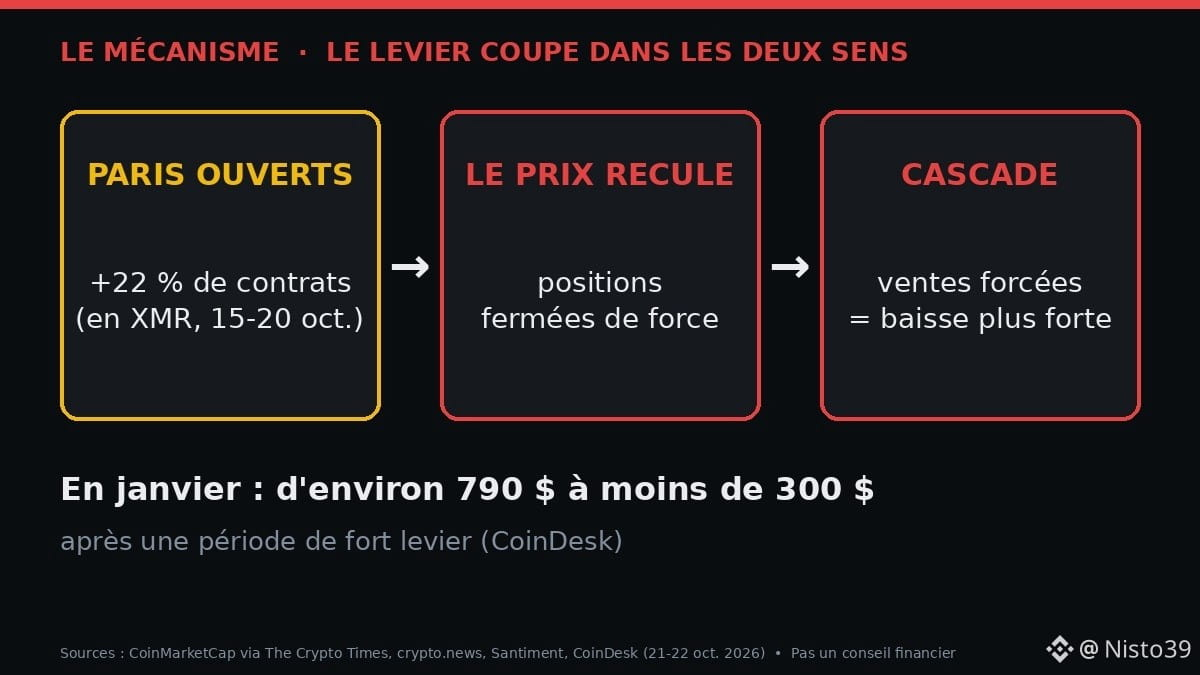
• Santiment: open futures contracts up 22% (measured in XMR) between October 15 and 20
• No major project announcement explains the rise (crypto.news)
🧠 How it works
A future is a bet on the price, often made with borrowed money (leverage). The more bets that are open, the more sharply the price can move in either direction. If the price falls, positions are forcibly closed (liquidations), pushing it down further.
CoinDesk notes that in January, after a period of high leverage, Monero fell from around $790 to under $300.
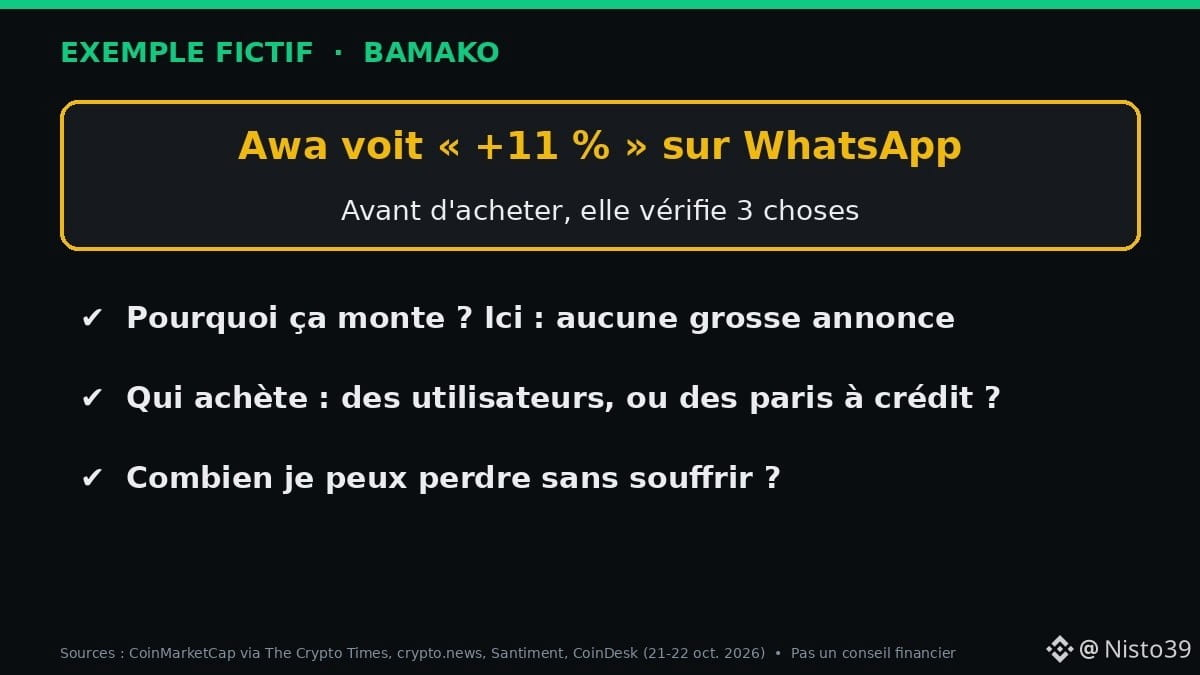
👤 Imagine Awa (a fictional character), a mobile airtime seller in Bamako. She sees “+11%” in a WhatsApp group and wants to buy. First, she asks herself a simple question: are people buying to use the crypto, or mostly to bet with borrowed money?
⚖️ The nuance
• More open contracts = more participants, not necessarily more buyers (every contract has both a buyer AND a seller)
• Trader Peter Brandt compares the chart to that of silver, without giving a price target
• Private cryptos like $ZEC or Monero remain under regulatory pressure in several countries
✅ Faced with a +11% rise in one day, what would you do: Buy / Wait / Ignore it? 👇
Not financial advice. DYOR. Leverage can wipe you out.
Sources: CoinMarketCap via The Crypto Times, crypto.news, Santiment, CoinDesk (Oct. 21–22, 2026). Context: $BTC gained only about 0.3% over the same period.
#Monero #CryptoNews #Afrique #Levier #Altcoins