
💥You know gold is a safe-haven asset that people tend to buy more of during wars or economic downturns, right?
But things are strange right now. There are military tensions in the Middle East, and oil prices are rising, yet gold prices keep falling.
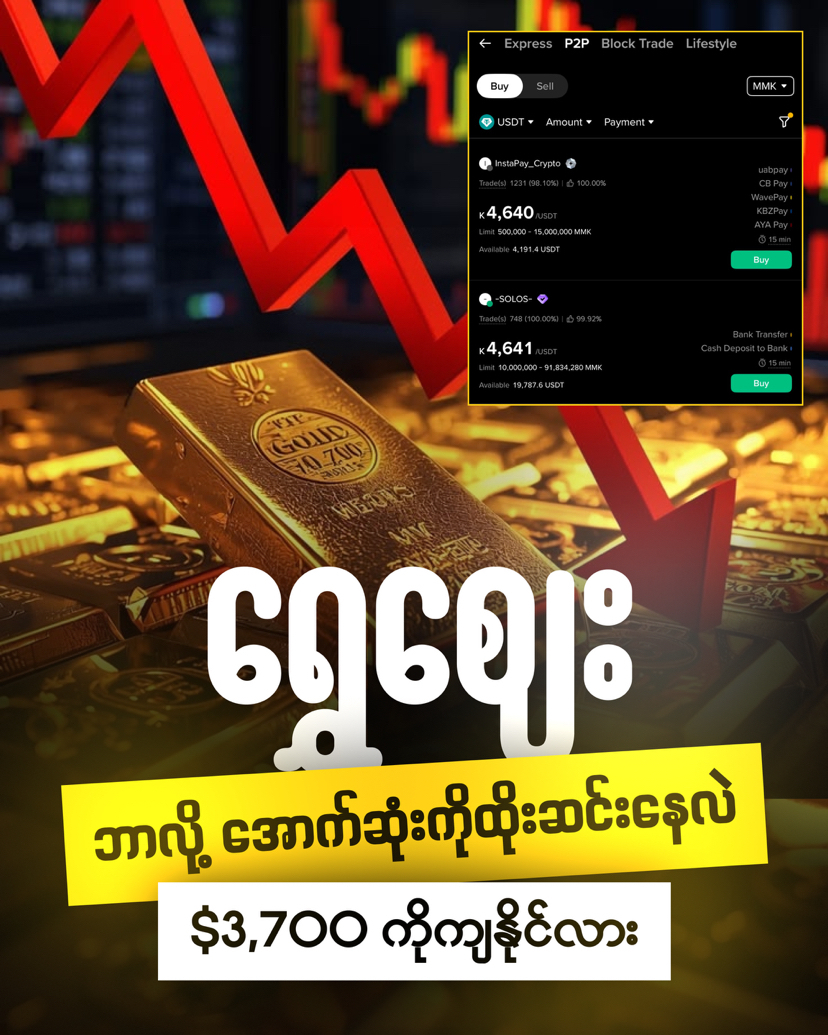
Gold, which reached nearly $5,595 an ounce in January 2026, is now around $4,115 as of October 22.
That’s a decline of more than 26% from its peak.
That raises the question: if gold prices rise during wars, why is the opposite happening now?
I’ll explain by connecting analyses from Reuters and Bloomberg with forecasts published by major banks.
First, let’s look at the main reasons gold prices are falling.
This time, gold is being pressured less by the war itself and more by the resulting oil prices and US interest-rate concerns.
Here’s why: tensions in the Middle East have pushed oil prices to around $110 a barrel.
When oil prices rise, transportation, manufacturing, and the cost of goods can all become more expensive. As a result, investors are worried that inflation in the US could rise again.
If inflation doesn’t come down, the Fed could keep interest rates high or even raise them further if necessary.
That’s where the problem for gold begins.
Think about it: if you buy gold, you only make a profit if its price rises. But US Treasury bonds pay interest.
When yields on those bonds rise, some investors become more interested in bonds than gold.
That’s because people want to earn higher returns.
At the same time, the US dollar has strengthened, putting further pressure on gold prices, which are quoted in dollars.
So even though there’s demand from people wanting to buy gold because of the war, pressure from interest rates and the dollar is stronger, and gold prices are falling.
So, are there no more buyers of gold?
That’s not the case either.
According to the World Gold Council’s October 7 report, gold prices fell 8.5% in September alone.
But in that same month, as much as $10 billion flowed into gold ETFs.
It’s surprising: even though gold prices are falling, there’s still demand for gold ETFs.
What this shows is that falling gold prices don’t mean all investors have lost interest in gold. Some are buying for the long term, while some traders are reducing their positions.
When views diverge like this in the market, it becomes even more interesting to see how much further prices could fall.
What are the major banks forecasting?
Bank of America’s forecast is particularly interesting, so let’s look at that first.
It forecasts gold at around $4,000 in Q4 2026. It says that if conditions worsen, prices could fall as low as $3,750.
But $3,750 isn’t a price gold is certain to reach. They’re only saying it could reach that level.
JPMorgan, on the other hand, forecasts an average gold price of around $4,500 for the final quarter of 2026.
Goldman Sachs has also lowered its year-end 2026 target from $4,900 to $4,650.
So, while banks are cautious in the short term, they don’t all expect gold prices to keep falling.
For example, UBS thinks gold could retest around $4,000 in the short term, but forecasts that it could recover to $5,400 by September 2027.
One thing to keep in mind is that banks’ forecasts cover different time periods, and an average price forecast is not the same as a year-end target.
So $3,750 shouldn’t be treated as a price the gold market is certain to fall to, just as $5,400 shouldn’t be seen as a price it’s certain to rise to.
So which price levels should we be watching now?
Given the current gold market, around $4,100 is a level to watch in the short term.
If gold can’t hold around that level and continues falling, $4,000 could be the next important level.
If oil prices keep rising, inflation doesn’t ease, and the Fed becomes more inclined to raise interest rates again, we may also need to consider Bank of America’s $3,750 scenario.
On the other hand, if inflation comes down again and Treasury yields fall, gold could regain strength.
So what we need to watch now is the Fed meeting on October 27–28 and the upcoming PCE inflation data.
This data could affect the Fed’s interest-rate decision and is also important for the next direction of gold prices.
To recap,
Gold prices are falling now, but that doesn’t mean gold has lost all its value.
Military tensions have pushed up oil prices and raised inflation concerns, shifting expectations for Fed interest rates, while Treasury yields and the dollar are putting pressure on gold.
But over the long term, central bank demand for gold, inflows into gold ETFs, and global economic uncertainty could still support gold.
Here in Myanmar, there’s another thing to keep in mind: local gold prices may not fall in line every time global gold prices drop, because they’re also affected by the USD/MMK exchange rate and domestic market conditions.
So if you’re thinking about buying gold, don’t look only at the fact that prices have fallen. You also need to consider why they’re falling and what might happen next.
Do you think gold can hold around $4,000, or could it keep falling to $3,750, as Bank of America predicts?
Share your thoughts in the comments below.