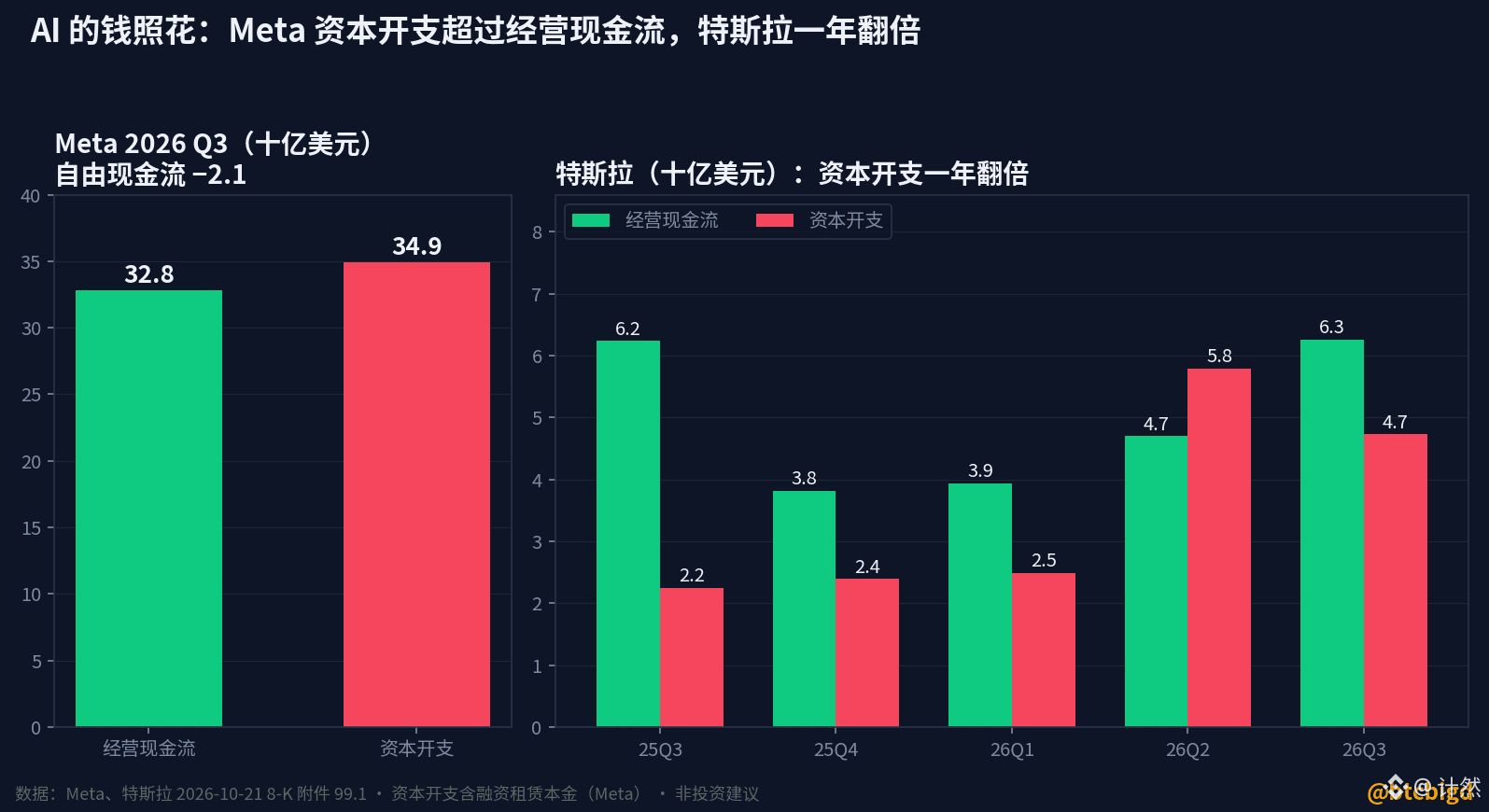
Meta and Tesla report Q3 results on the same day: profits are down for both, while AI spending continues. Meta has already spent more than its operating cash flow
【$META 】
- Revenue: $64.6 billion, +26%; ad impressions +10%, average price +14%—both volume and pricing are up
- Operating profit: $13.0 billion, −37%. This includes a $9.9 billion charge for a settlement with the attorneys general of 52 states over litigation involving teens. Excluding that, operating profit was $22.9 billion, +11%
- Don’t take the +264% net profit growth at face value: the third quarter last year included a one-time tax expense, with an effective tax rate of 87%, making for a very low comparison base
- Quarterly capital expenditures: $34.9 billion; operating cash flow: $32.8 billion; free cash flow: −$2.1 billion
- Full-year capital expenditure forecast: $135 billion to $145 billion, versus the previous $130 billion to $145 billion. The range narrowed because the lower end was raised, not because spending was cut
- Meta will create a new non-voting Class C share, effective January 19, 2027, and distribute one share for each existing share held. The first reason cited by the board is financing, employee compensation, and acquisitions; the filing says the investment required for the AI transition is substantial. This isn’t a new share issuance, but it opens the door to using equity financing in the future
【Tesla $TSLA 】
- Revenue: $28.0 billion, flat year over year; automotive −3%, energy storage −16%, services and other +33%
- Gross margin improved by 1.6 percentage points, but operating expenses rose 39%. Operating profit was $720 million, −56%, with an operating margin of 2.6%
- The two measures diverged sharply: GAAP net income was $790 million, −43%; non-GAAP net income was $1.7 billion, down just 4%
- Energy storage deployments: 13.7 GWh, +10%, while revenue fell 16%—prices are coming down
- Quarterly capital expenditures: $4.7 billion, up from $2.2 billion a year ago; the total for the past four quarters was $15.4 billion, versus $8.5 billion for all of 2025. The shareholder letter says the spending is going toward AI compute, solar, battery materials, and semiconductor manufacturing
- FSD paid subscribers: 1.74 million, +67%; since September 3, Cybercabs have been operating as robotaxis in Austin
【Side by side】
Profits look rough for both, but for different reasons: Meta has a settlement charge, while Tesla’s expenses are growing faster than its gross profit. What they have in common is rising capital expenditure—neither is pulling back. This quarter, Meta spent more than it brought in from operations, and it has also put a Class C share mechanism in place. AI investment is beginning to exceed the cash flow generated by a giant company itself.
Who do you think will be next to spend beyond their cash flow on capital expenditures?