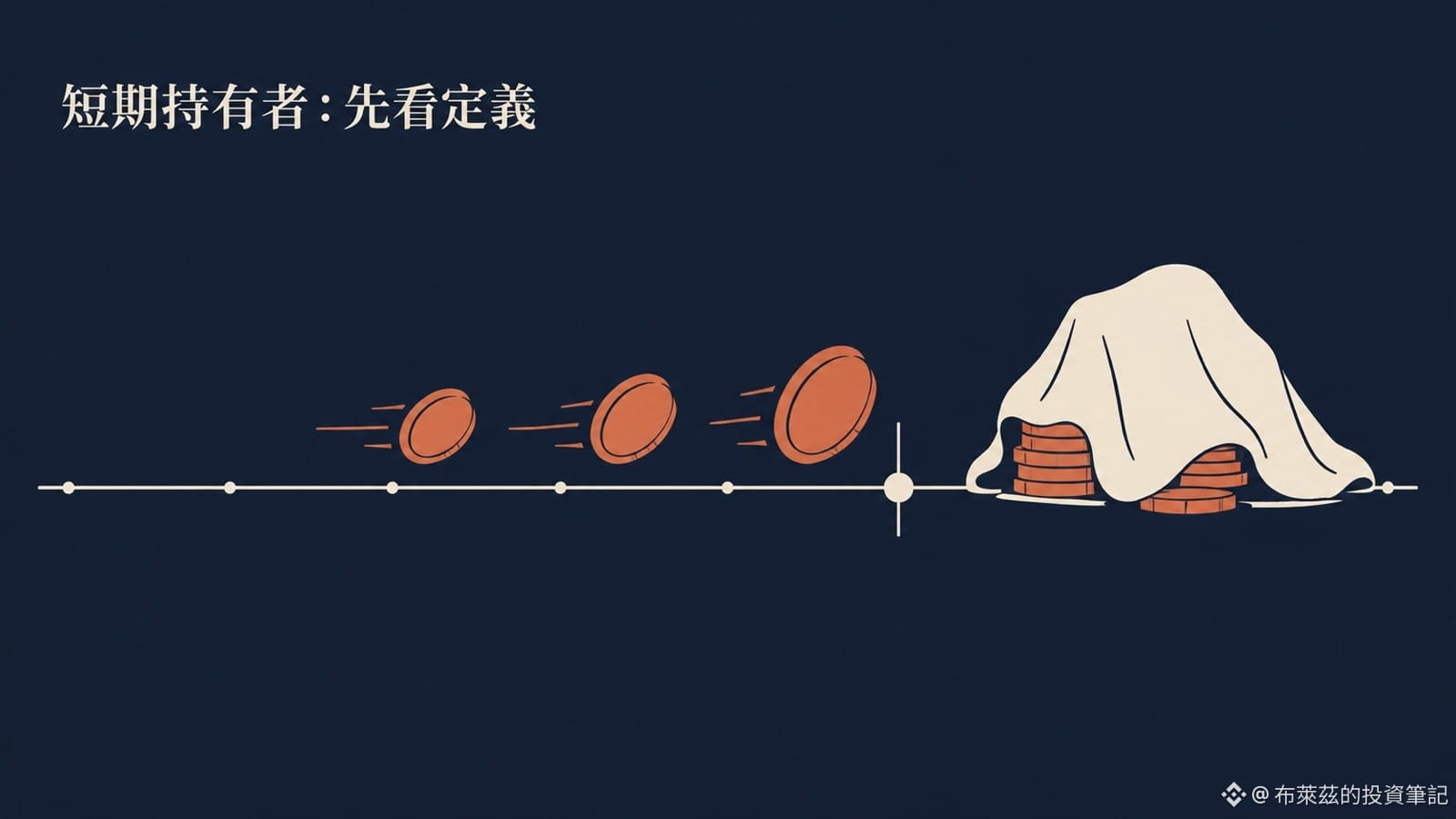
“Short-term holders” doesn’t mean novice retail investors; it’s a classification used in on-chain data.
Glassnode’s definition: Coins that remain untouched for more than about 155 days are increasingly unlikely to be spent and are considered long-term holdings. Coins held for less than 155 days are considered short-term holdings—the more liquid portion.
Three details:
1. It’s not a hard cutoff: 155 days is the midpoint, with a gradual transition over roughly 10 days on either side.
2. It looks at the holding time of the entire wallet, weighted by amount. Newly purchased coins bring that figure down.
3. Coins on exchanges aren’t counted: long-term holdings, short-term holdings, and exchange balances add up to the circulating supply.
So, an increase in “short-term holders” could mean new buyers are entering the market, or that older coins are changing hands. The number alone won’t tell you which.
$BTC