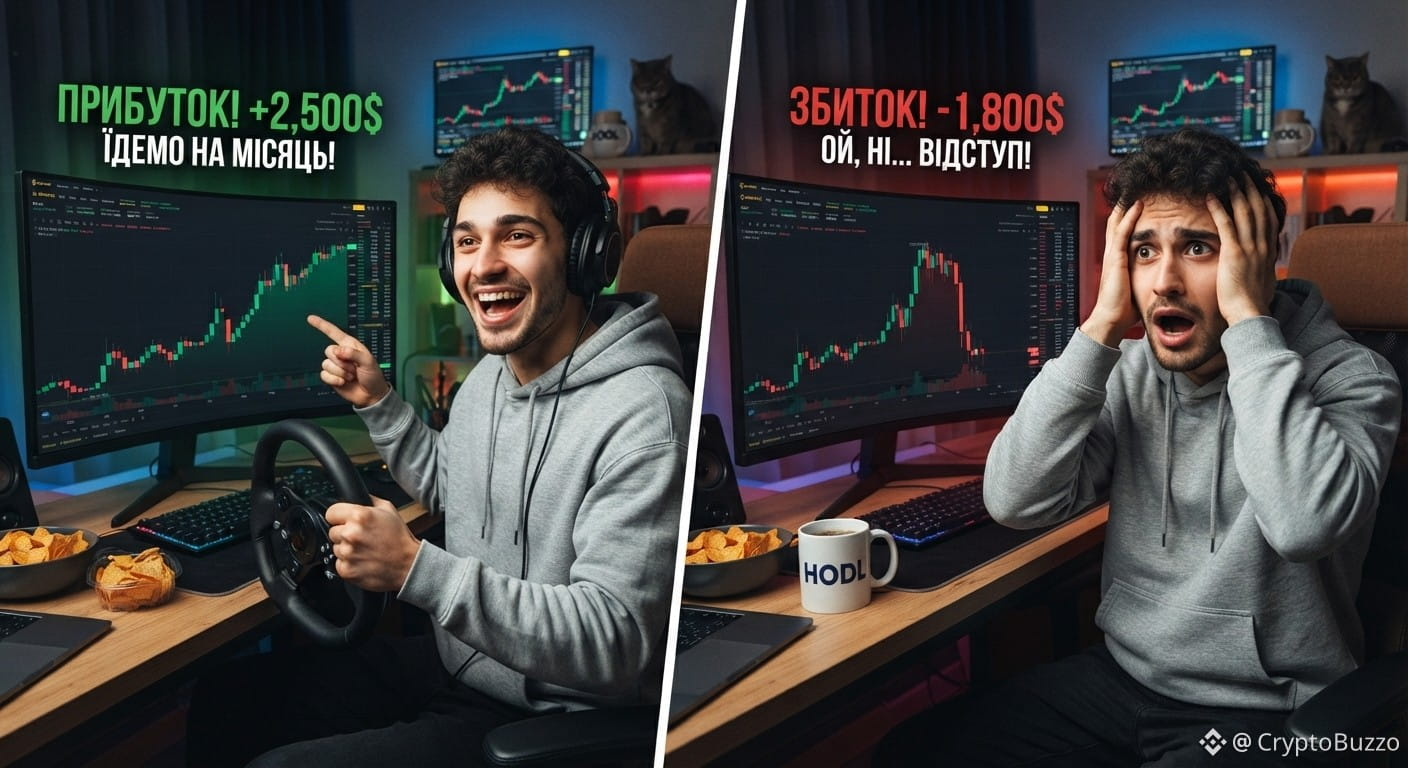
The chart shows a profit, and you’ve already spent the money in your head 😂
Sound familiar? You open a trade, the price moves in the right direction, and you’re already imagining how much you’ll make. Then the market turns around—and your whole mood changes.
I used to think the main thing was to correctly guess the direction. But over time, you realize that even if you get it right, it doesn’t necessarily mean the trade will end in profit.
So now, what matters more to me isn’t how much I could make, but how much I’m willing to lose if things don’t go according to plan. A stop-loss doesn’t make trading foolproof, but it helps limit risk.
Because in the market, it’s not enough to guess the move—you also need to know how to manage your decisions.
Have you ever mentally counted your profits from a trade, only for the market to have other plans? 😅