



Join the inner circle and become an insider.
Hello everyone, I’m Jingshi.
Today is October 22, 2026.
Stay away from contracts; hold spot for the long term.
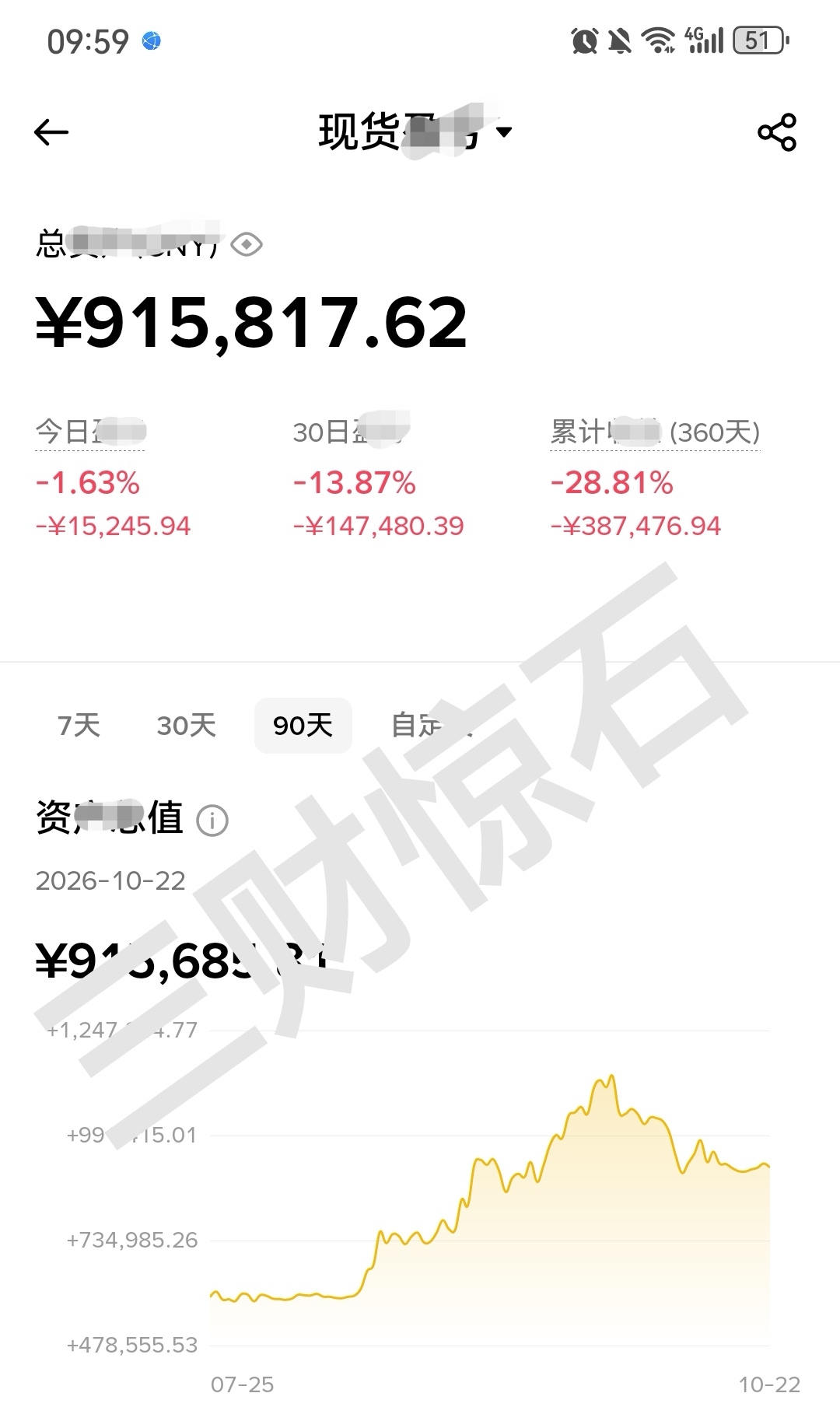
1.5 million—let’s aim for eight figures in this bull market.
A top-tier US bank, the largest by assets in the country, ranked number one among banks worldwide—and the world’s most important bank, JPMorgan Chase.
On October 20, 2026, it published its 2027 Long-Term Capital Market Assumptions report, including Bitcoin in its long-term asset return model for the first time ever.
Base-case forecast: over the next 10–15 years, Bitcoin will deliver an annualized compound return of 10%.
By comparison: US Treasuries at 7.5%, gold at 5.5%—Bitcoin is projected to outperform them.
By this point, are you thinking, “Bitcoin really is amazing. I should just buy Bitcoin and stay away from altcoins”?
It’s true that Bitcoin is amazing. Even the most prestigious banks have started including it in their asset portfolios, and its projected annualized return is higher than that of gold and U.S. stocks.
This also shows that crypto is becoming increasingly powerful. The industry will only get stronger, and there will surely be more and more opportunities. It’s a promising path for ordinary people to change their future.

But don’t celebrate too soon, because the report also says its annualized volatility is as high as 55%—more than three times that of U.S. stocks.
A 10% return over the next 10–15 years is an average. But crypto is a global market, and its volatility is far greater than that of other markets. You might gain 50% this year, then lose 50% next year. 100 plus 50% is 150, but 150 minus 50% is 75. Two years of work, and you’re still down.
Some people might say, “Morgan has explained it to me: as long as I hold for 10–15 years, I’ll end up making money. So I’ll just keep holding.”
Yes, if you can really do that, it would be great. But!!! Human nature doesn’t work that way.
You make 50% in the first year, then lose 50% in the second. What happens in the third year? The “smart person” starts trading the swings. After prices rally in the third year, they assume there’ll be a pullback and plan to buy back in at a lower price. They think, “If I can avoid the drawdown, then my annualized return over the next 10–15 years will be more than 10%.”
Has anyone ever thought this way? Yes—people have thought this in the past, they’re thinking it now, and they’ll think it in the future.
Let me give you an example from my own experience. From the end of 2018 until before the March 12, 2020 crash, there was a rally, followed by the sharp crash on March 12. Then came the huge rally of 2020–21 and a super bull market.
But the vast majority of people failed to catch the huge rally in 2020–21. Why? Because after going through the period from the end of 2018 to the March 12, 2020 crash, they thought they should cash out after making a quick profit: prices would pull back after rising, and the higher they went, the bigger the pullback would be. So while prices were rising in 2020–21, they tried to make more by trading the swings—and ended up missing the rally.
Then, after the huge rally in 2021, they reached the opposite conclusion: they should just hold for the long term. As a result, they got buried in the 2022 bear market.
It’s the same in this bull market. Many old hands in crypto are actually holding for the long term. But after a big rally followed by a deep correction in 2023, and another rally followed by a deep correction in 2024, the same thing happened again in 2025 and 2026. Now many people think they should trade the swings instead of holding for long—they’ll hold for a few months, make a few dozen percent, and then, once they double their money, prices are bound to plunge.
That’s human nature. Financial markets magnify our “greed, anger, delusion, arrogance, doubt, and misguided views”—they can turn a “fool” into an overthinking, scheming “smart person.”
There’s nothing wrong with trading the swings or wanting to make more, especially for people with little capital. But do we actually have the ability to trade the swings and earn more? That’s the question!
Selling at a relatively high price and buying back near a relative bottom—that’s what we at Sancai have done too. In the last bull market, we sold everything before May 19, 2021, and got back in in November 2022.
But “wanting more” and “being able to get more” are two different things. If you want more, you need to improve your skills and be capable of it. Otherwise, even if someone tells you Bitcoin could return 10% annually over the next 10–15 years, most people will still lose money—some might even lose everything!!!