

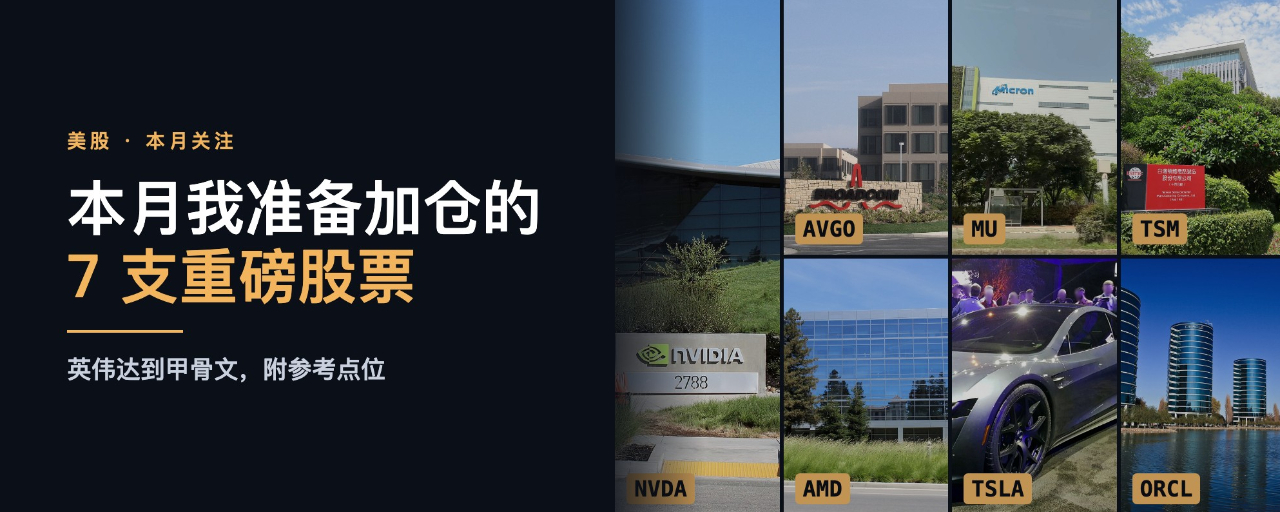

Valuations and growth performance have diverged noticeably among large U.S. tech stocks and semiconductor companies. Nvidia has the lowest valuation multiple but the fastest revenue growth among the five major chipmakers and the tech giants, while AMD, the most highly valued peer, is growing at a more moderate pace. Here are seven blue-chip stocks I’m planning to buy or add to this month, along with the reference price levels I’m watching for each.
Nvidia (NVDA): Lowest Valuation Multiple, Fastest Revenue Growth
Among the world’s five largest chipmakers and the “Magnificent Seven” U.S. tech stocks, Nvidia currently has the lowest valuation multiple and the fastest revenue growth.
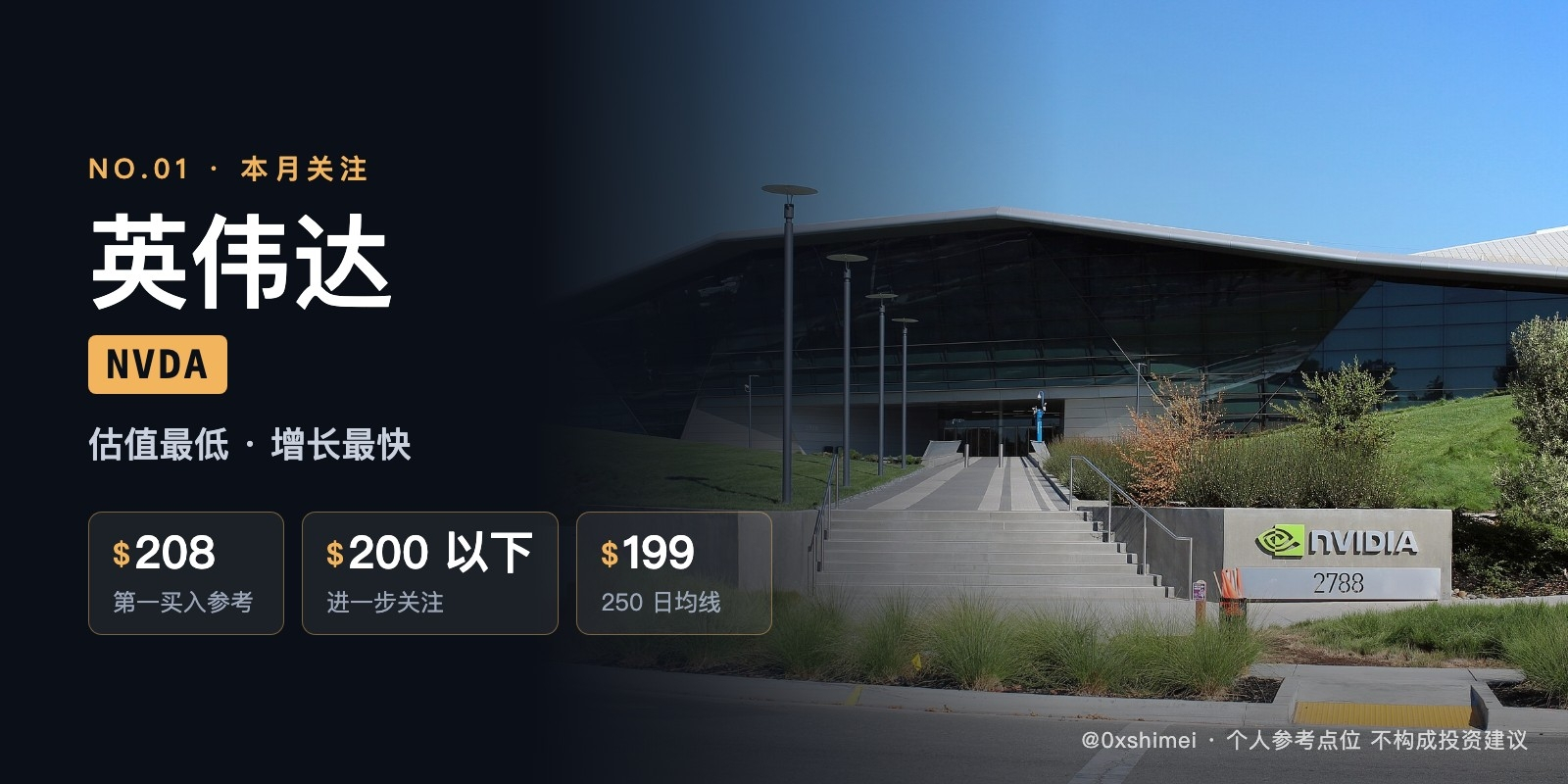
The company’s profit margins are also among the best in the industry, placing it in the top tier alongside Broadcom.
The technical support levels I’m watching are:
$208: First reference buy level.
Below $200: A further buy zone to watch.
Around $199: The 250-day moving average, which is an important technical support level.
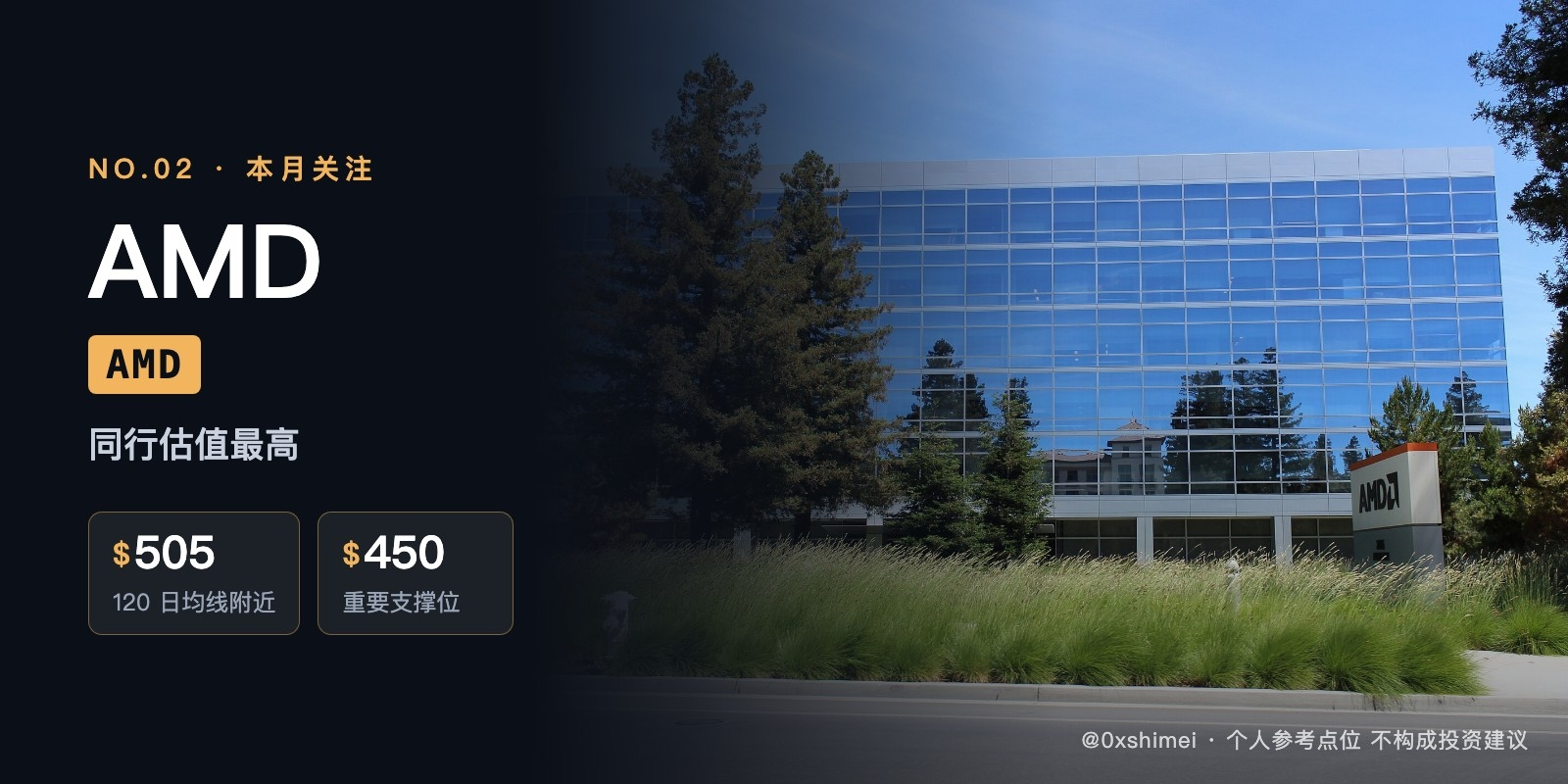
Advanced Micro Devices (AMD): Highest valuation among peers, with relatively moderate growth
AMD currently has the highest valuation among its peers, but its growth has been relatively moderate, trailing Nvidia and Broadcom and coming closer to TSMC’s growth rate.
Two technical price levels to watch closely:
$505: Around the 120-day moving average.
$450: An important support level.
Micron Technology (MU): Memory sector pulls back; the $820–$900 range is worth watching closely
As the memory chip industry as a whole pulls back, Micron’s share price is currently around $900.

Micron Technology’s facility, photographed in person, with reference ranges for adding to a position
Compared with South Korean memory chip companies, Micron offers an opportunity to invest in the sector through U.S. stocks, with relatively lower share price volatility.
Reference range for adding to a position:
$820–$900: If the industry correction continues, this range is worth watching closely.
Broadcom (AVGO): A leader in custom AI chips, continuing to benefit from tech giants’ investments in computing infrastructure
Ongoing investment by large technology companies in AI infrastructure is driving growing demand for application-specific integrated circuits (ASICs).
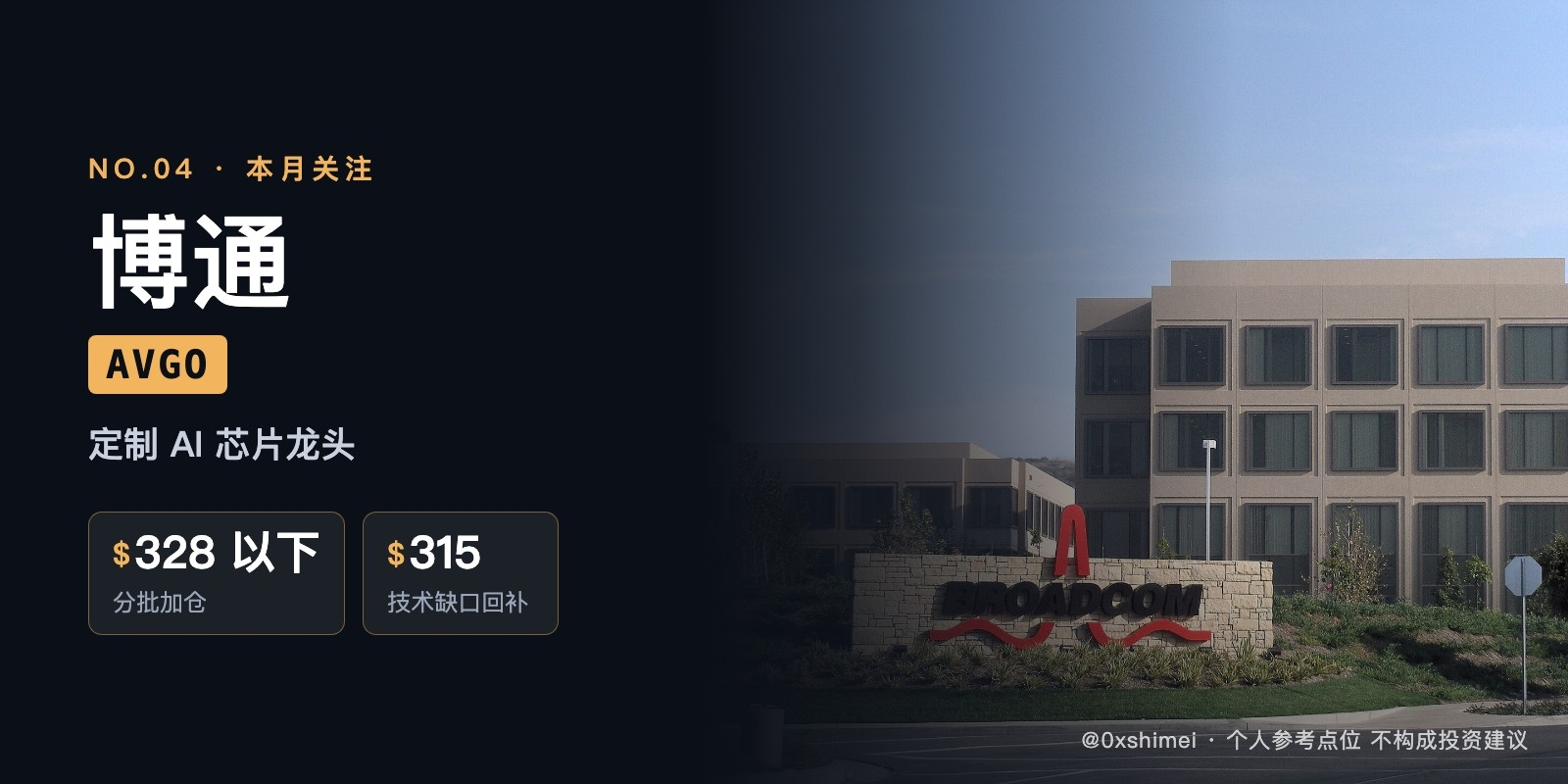
The custom chip market complements demand for general-purpose GPUs. As a leading company in this field, Broadcom stands to benefit significantly from this trend.
Price levels to watch for adding to a position:
Below $328: Start watching for opportunities to add in stages.
Around $315: A price level where a technical gap could be filled, and an area to watch closely.
Taiwan Semiconductor Manufacturing Company (TSM): Deep barriers in advanced processes, while its share price is weighed down by sector-wide selling and geopolitical risks
TSMC’s share price previously peaked at $487 before retreating to around $420.
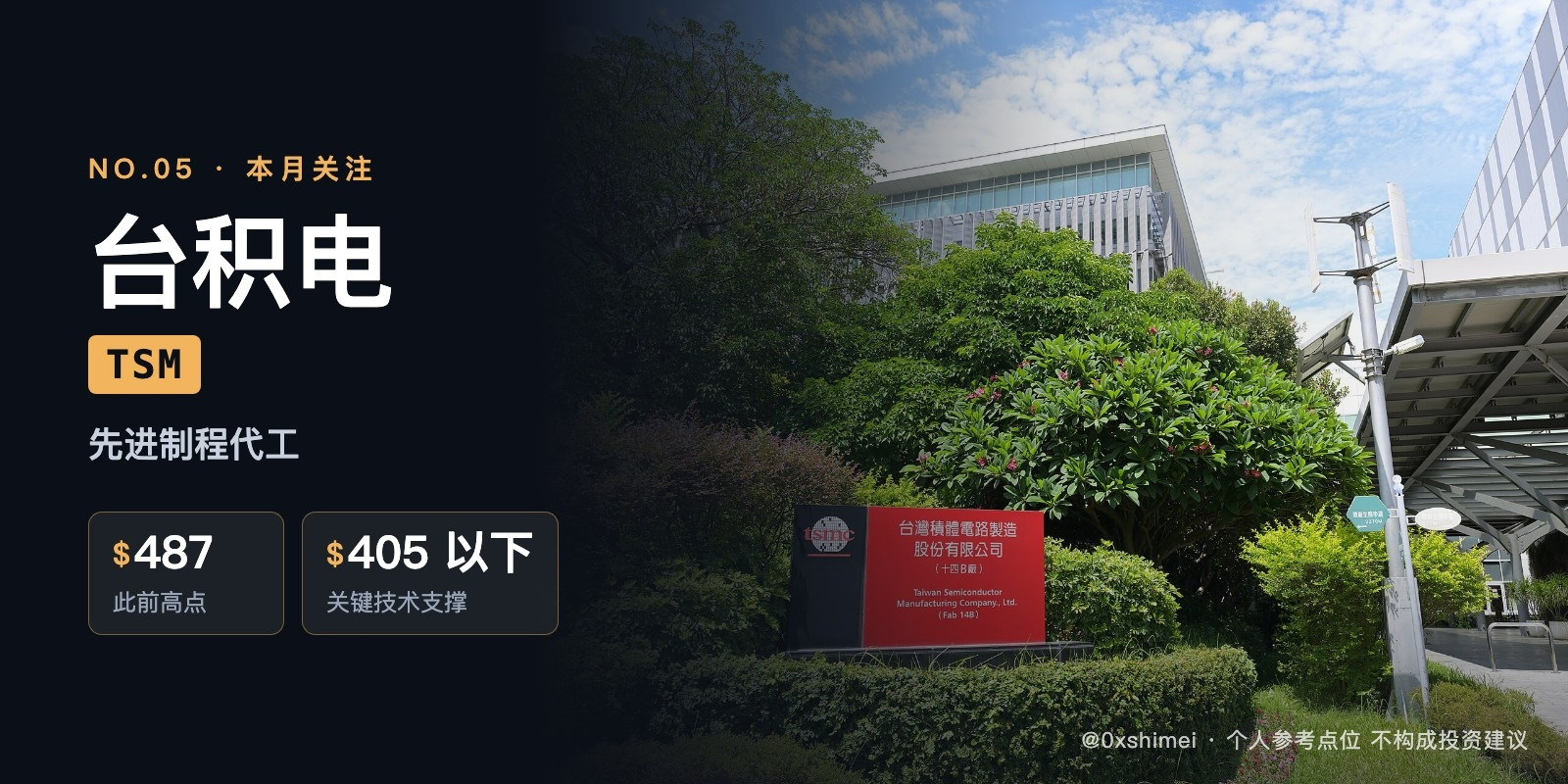
Although the company reported solid earnings, its share price has still been affected by selling pressure across the semiconductor industry. Geopolitical risks are also a key reason the market applies a valuation discount, but the company retains hard-to-replace technological advantages in advanced foundry manufacturing.
Key technical support:
Below $405: A key technical support level.
Tesla (TSLA): Volatility risk after earnings; the new Roadster is likely to make only a limited direct contribution
Tesla is about to report its latest quarterly earnings. Options markets imply that the share price could move by around ±7% after the announcement.

The new Roadster prototype, photographed in person, with key reference price levels
Historically, Tesla’s share price has fallen after earnings in 9 of the past 14 quarters, so short-term volatility risk is worth watching.
Key reference price levels:
$352: First reference support level.
$304: Second reference support level.
Estimating the new Roadster’s commercial value
Tesla’s newly announced Roadster sports car is expected to enter production in 2028, with an estimated price of around $200,000–$250,000.
Assuming annual production of no more than 2,000 vehicles:
Annual sales would account for less than 0.1% of Tesla’s total sales.
It is expected to generate $400 million–$500 million in annual revenue, accounting for less than 0.5% of total revenue.
Even if the Roadster reaches successful mass production, its direct contribution to Tesla’s overall revenue would remain very limited.
Oracle (ORCL): Secures a massive computing capacity deal with OpenAI, but faces near-term pressure from capital spending and cash flow
In the enterprise cloud computing sector, Oracle signed a five-year partnership agreement with OpenAI worth as much as $300 billion.
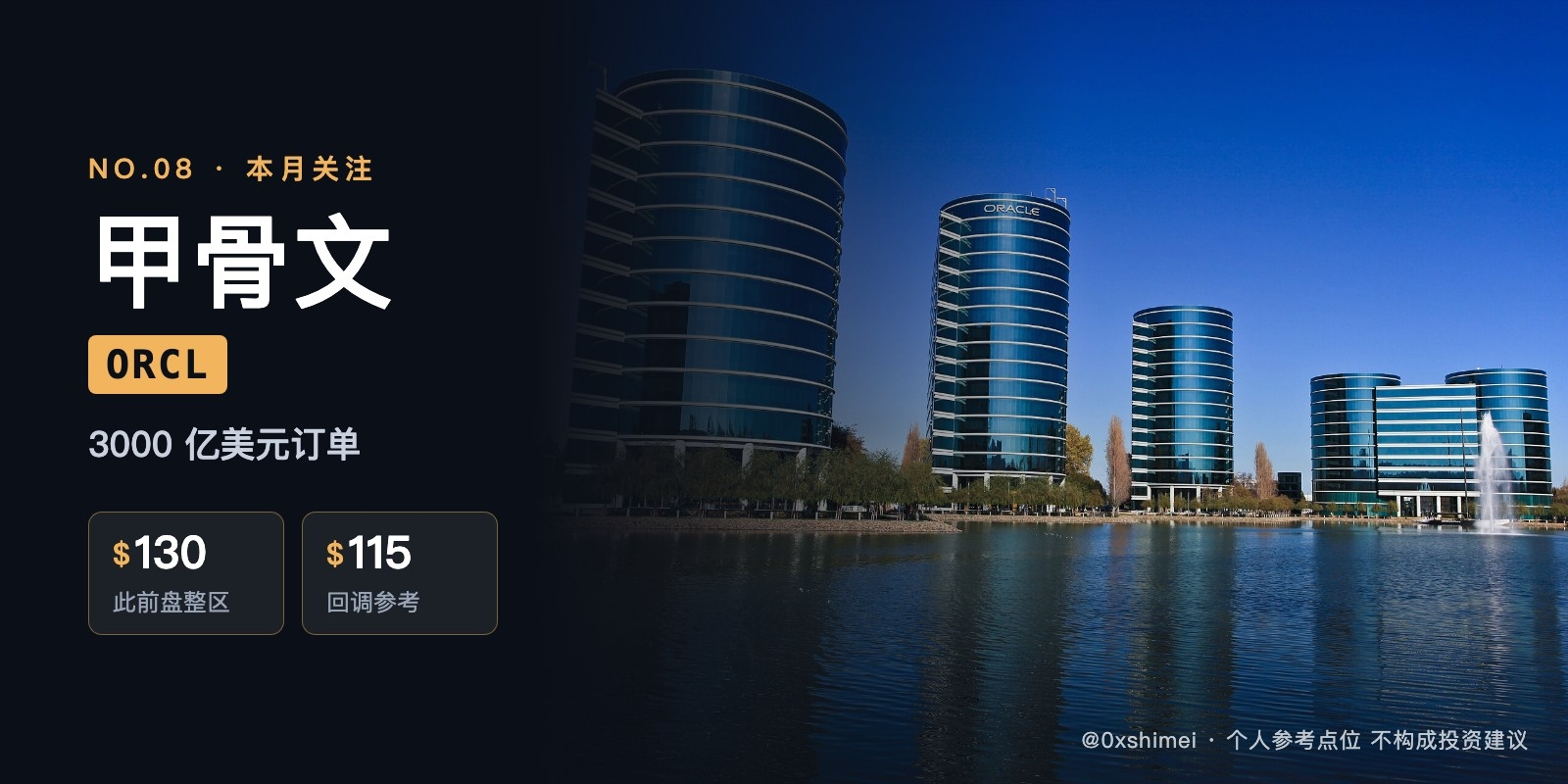
To meet customers’ computing needs, the company must continue investing in data center construction. This requires substantial AI-related capital expenditure, putting near-term pressure on free cash flow.
Oracle’s long-term investment thesis depends largely on whether it can gradually convert its substantial order backlog into actual revenue and profits.
Technical price references:
Around $130: A previous consolidation range.
Around $115: A reference level worth watching if the share price pulls back.
Summary of this month’s outlook
Investment opportunities in U.S. technology stocks and the semiconductor industry are becoming increasingly differentiated. Nvidia stands out for its relatively low valuation, strong revenue growth, and leading profit margins. AMD’s high valuation calls for attention to the margin of safety; Micron’s pullback offers an opportunity to build a position in stages; and Broadcom and TSMC maintain strong positions through their respective strengths in custom chips and foundry manufacturing.
In the near term, Tesla’s post-earnings volatility following the results released early this morning warrants attention. Oracle, meanwhile, needs to balance its long-term AI order backlog against near-term capital spending and cash flow pressures.
The prices above are my personal reference levels and do not constitute investment advice.