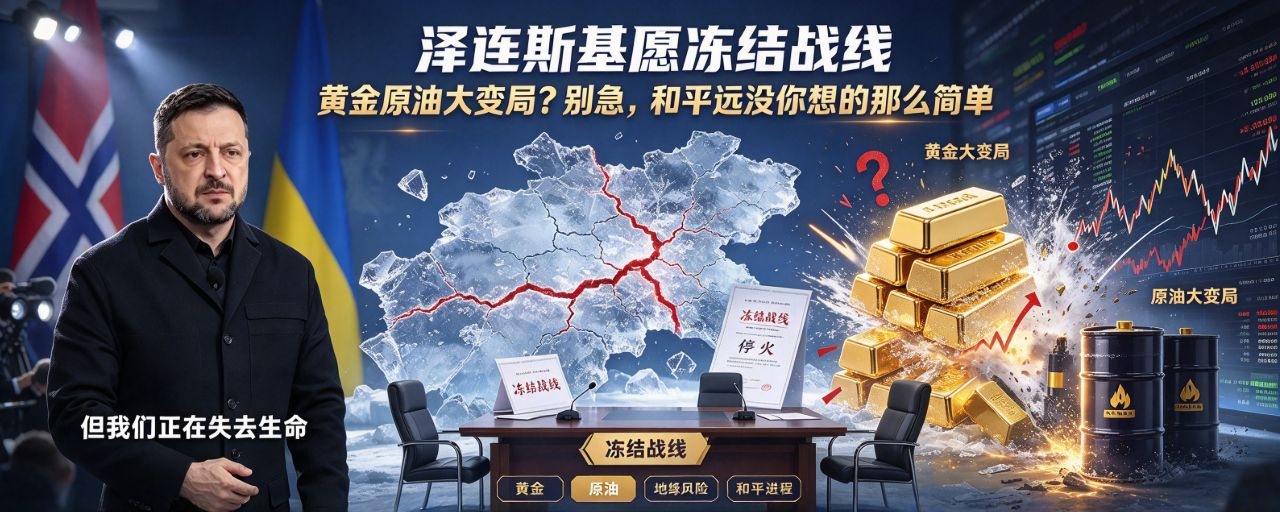

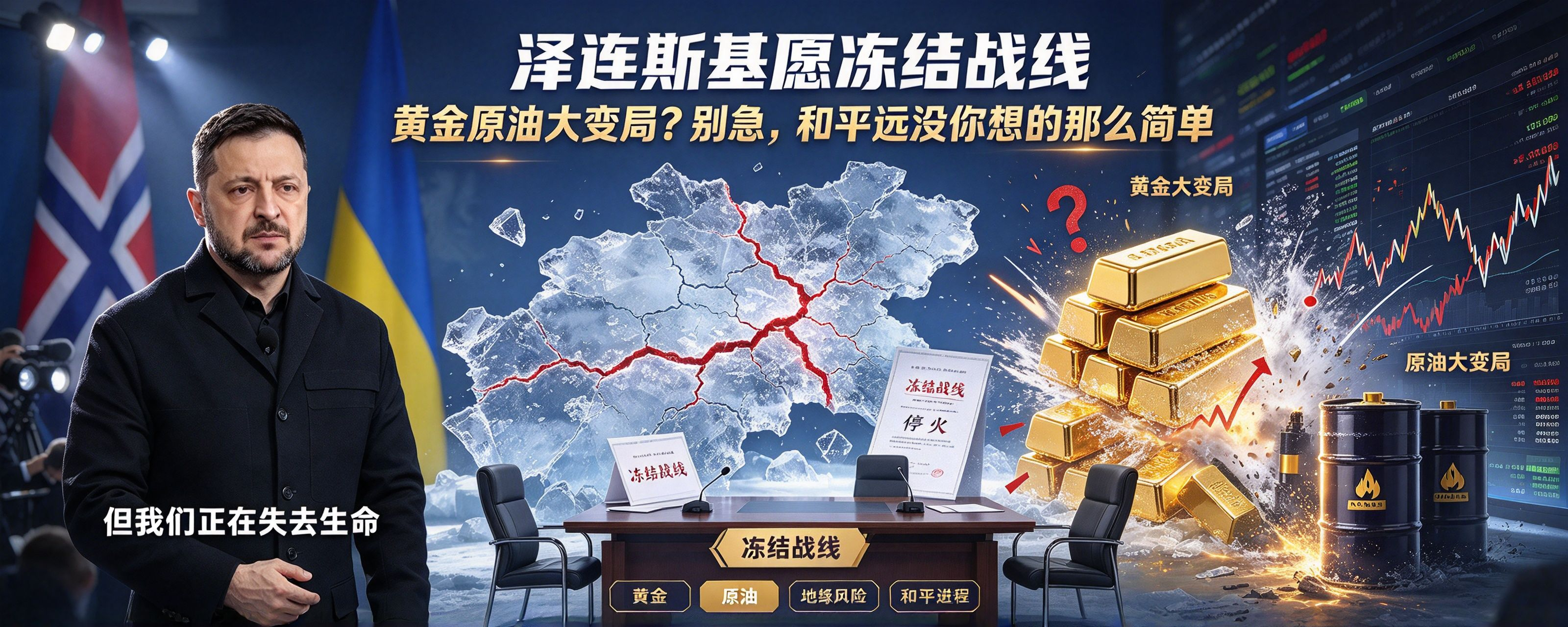
On October 21 local time, Zelensky said he was willing to freeze the front line while retaining control of at least 75% of Ukraine’s territory, as part of a peace deal. Those words—“a practical way forward”—sent ripples through financial markets. But for crude oil and gold, does this mark a reversal in the trend, or just a short-lived emotional reaction? Experts are clear: market sentiment can turn on a dime, but achieving real peace is extremely difficult, and an end to the war is far from certain.
First, let’s look at crude oil. As soon as the news broke, oil prices—which had been elevated by a war premium—retreated sharply. Brent briefly fell below $106, while WTI gave back its gains for the day. The logic is straightforward: if the front line is frozen, Ukraine will most likely pause its ongoing strikes on Russian refineries and energy facilities, quickly squeezing out the geopolitical supply disruption premium previously priced into the market.
But experts warn that it is extremely dangerous to be entirely bearish on crude oil right now. This is merely a unilateral statement from Ukraine, and Russia has yet to reveal its bottom line. As long as the two sides have not signed a substantive ceasefire agreement, shipping risks in the Strait of Hormuz remain. Crude oil is under pressure in the short term, but the underlying support for prices has not been completely undermined.
Now let’s look at gold. The chain of effects for gold is longer than for crude oil. If a ceasefire leads to a sustained drop in oil prices, it will ease global inflationary pressures and, in turn, reduce the need for the Federal Reserve to keep raising interest rates—an indirect positive for gold. On the other hand, an easing of hostilities would also dampen safe-haven demand, putting short-term pressure on gold prices. These two forces are clashing intensely at present, leaving gold’s outlook highly conflicted. Experts believe gold prices remain within a trading range for now; their true direction depends on upcoming inflation data, not on a ceasefire announcement alone.

Finally, we must face the harsh reality of war. “Freezing” the conflict while retaining 75% of the territory essentially amounts to a reluctant acceptance of the status quo. Will Russia accept this “stop the war, but don’t stop the fighting” freeze line? What will NATO do next? Once geopolitical divisions open up, healing can take years, or even decades. For now, what is being called a signal of peace is mostly a bargaining position at the negotiating table; there is still a long way to go before a genuine ceasefire agreement is reached.
In summary, the market is overtrading “peace expectations.” The drop in crude oil reflects a release of sentiment, while gold’s volatility reflects a tug-of-war between competing forces. As investors, we must not mistake verbal statements for a final outcome. Until both sides truly lay down their arms, the sword of geopolitical risk still hangs over us. Waiting patiently and managing position sizes are the best ways to navigate this uncertainty.
The above content is for the compilation and analysis of market information only and does not constitute investment advice. Geopolitical and macroeconomic market risks are extremely high; please make decisions cautiously in accordance with your own risk tolerance.