


How can you effectively mitigate smart contract vulnerabilities? A complete security guide from development to deployment
Once a smart contract is deployed on-chain, it is almost impossible to change. If it contains a vulnerability, the consequences can range from asset losses caused by hacker attacks to the complete collapse of the project. In the Web3 world, “code is law,” and a contract’s security directly determines whether a project succeeds or fails. That’s why mitigating contract vulnerabilities can’t be left until “after launch.” Instead, it requires systematic risk prevention throughout the entire lifecycle—from development and auditing to deployment and operations. Below, we break this down into five stages.
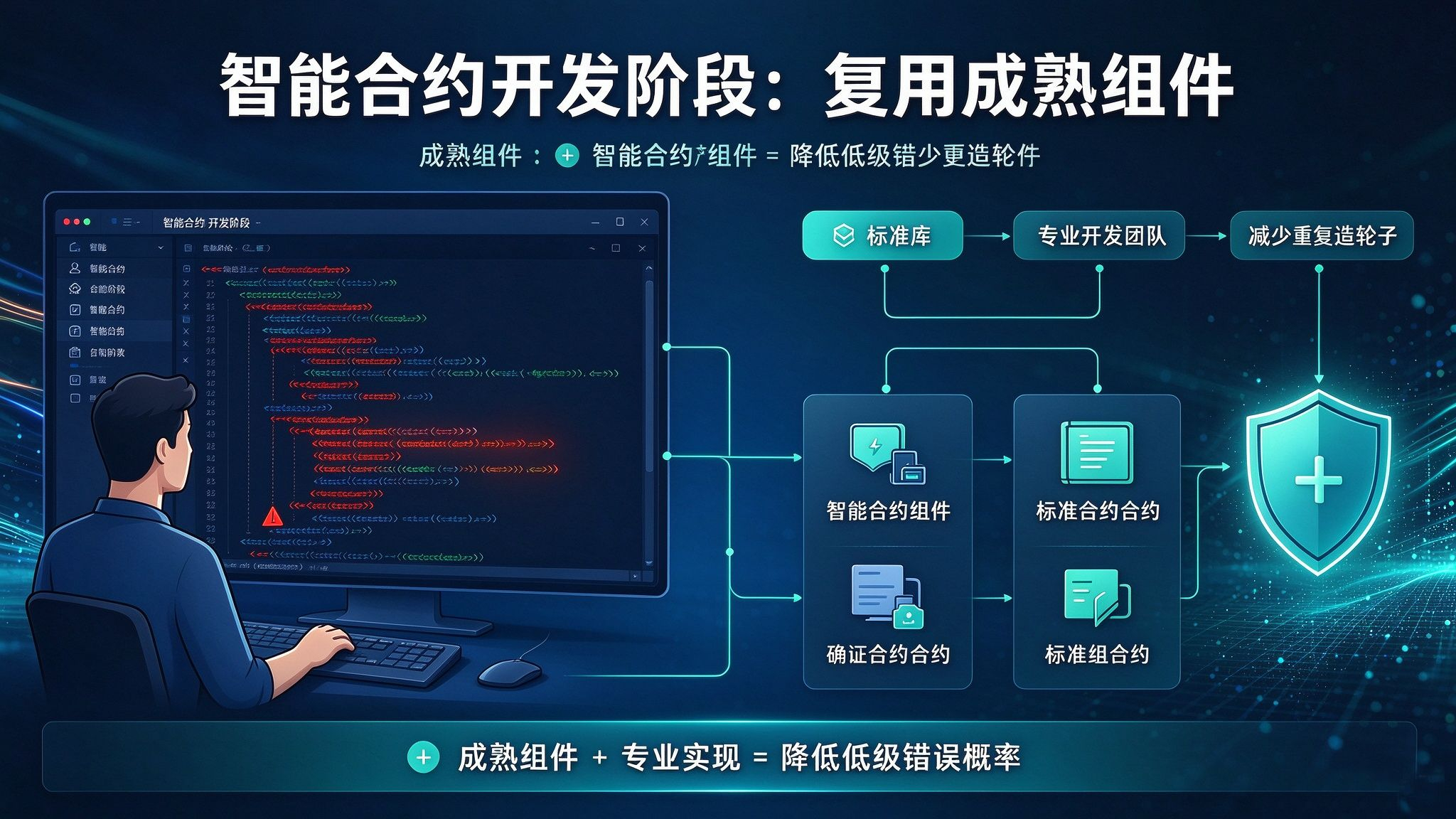
I. Development: Don’t reinvent the wheel—make good use of proven components
The easiest trap to fall into when developing smart contracts is writing complex business logic from scratch just to "save time" or "show off." Complex custom code creates more opportunities for errors, and vulnerabilities are often hidden in custom logic that "looks fine."
The right approach is to reuse mature open-source components and standard libraries that have been tested in the market and proven reliable over time. These components have been used in many projects and audited repeatedly, so known vulnerabilities have largely been eliminated and they are far more secure than hastily written custom code. For standard features (such as token transfers, access control, and timelocks), simply use libraries widely recognized by the industry.
One important reminder: if you lack professional smart contract development and security expertise, the safest option is to entrust the work to a professional development firm. Let an experienced team handle the architecture and coding rather than attempting to write it yourself without fully understanding what you are doing. Professional teams are familiar with common attack patterns and best practices, and can significantly reduce the likelihood of basic mistakes.
II. Audit phase: Conduct multiple rounds of professional audits and obtain the report before deployment
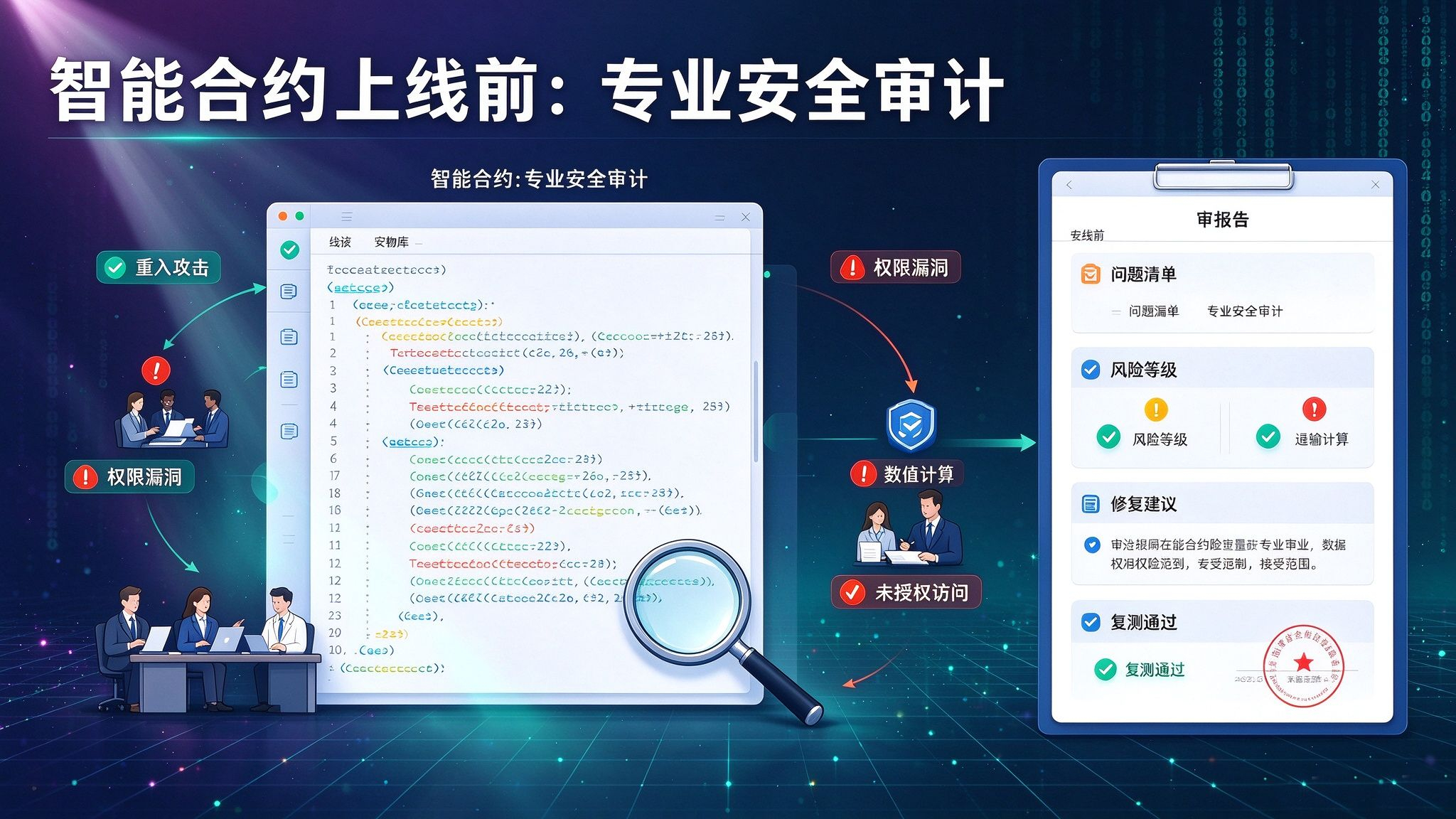
A security audit before launch is an essential step that must not be skipped. The contract must undergo multiple rounds of audits by a professional third-party security firm, covering high-risk vulnerabilities such as reentrancy attacks, access control flaws, integer overflows, numerical precision errors, and unauthorized access.
An audit is not a box-ticking exercise. A good audit should include static code analysis to identify potential flaws, dynamic testing to validate attack paths, and a review for logical vulnerabilities in core business logic. The audit report should list each issue, its risk level, and recommendations for remediation. The project team should fix each issue and then arrange a follow-up audit; the contract should only be considered to have passed once all issues are confirmed resolved.
One point must be clearly understood: an audit does not mean zero risk. Even the most professional audit cannot guarantee absolute security with 100% certainty; it only reduces the probability of risk to an acceptable level. An audit report is therefore a starting point, not an insurance policy.
III. Launch phase: Gradually enable permissions and build in circuit breakers
When a contract first goes live, never enable all permissions, features, and fund limits at once. The right approach is a "phased rollout."
Specific measures include: initially enabling only the minimum permissions necessary; reserving critical administrative actions (such as halting trading, changing parameters, and emergency withdrawals) for administrators and protecting them with timelocks to prevent abuse by a single party; adding an emergency pause mechanism and circuit breakers so that administrators can immediately pause the contract if an anomaly is detected, preventing an attack from escalating and containing losses; and setting per-transaction or daily fund limits to keep each exposure within a manageable range.
Although these mechanisms "sacrifice" some degree of decentralization, prioritizing security over ideological purity in the early stages of a project is both standard industry practice and necessary.
IV. Operations phase: Strictly control oracles and continuously monitor on-chain activity
Many contracts rely on external data (such as prices or random numbers). If a data source is tampered with, the contract's logic can be bypassed. Oracles must therefore be strictly controlled: use decentralized oracles with multiple nodes providing data and cross-checks to prevent price manipulation caused by a single source providing false data. For price-sensitive settlement, also set price deviation tolerances and freshness checks to guard against extreme manipulation, such as flash-loan attacks.
After launch, don't "deploy and forget." Continuously monitor on-chain transactions and set up real-time alerts for unusual transfers, large withdrawals, permission changes, and other events. If a suspicious signal is triggered, respond immediately according to the contingency plan: pause, investigate, and fix.
V. Supporting measures: Legal agreements as a safeguard and risk isolation
In addition to technical security, off-chain safeguards are also needed. The project team should sign clear legal agreements with the developers, auditors, and operators, defining responsibilities and liability for security incidents to prevent disputes after an incident occurs. For businesses handling large sums, funds should also be segregated into tiers, with limits and a phased rollout schedule, to keep systemic risks within acceptable bounds.
Conclusion
Preventing smart contract vulnerabilities is, at its core, a "full-lifecycle" security discipline—not a one-off task that can be solved with a single audit. Avoid reinventing the wheel during development, leave no blind spots during audits, roll out gradually at launch, monitor continuously during operations, and clearly define responsibilities in supporting arrangements. These five interconnected steps are what truly minimize risk. Remember: security is never a one-and-done effort; it requires ongoing protection.