


Cryptocurrency exchanges are turning their attention to another rapidly growing market!
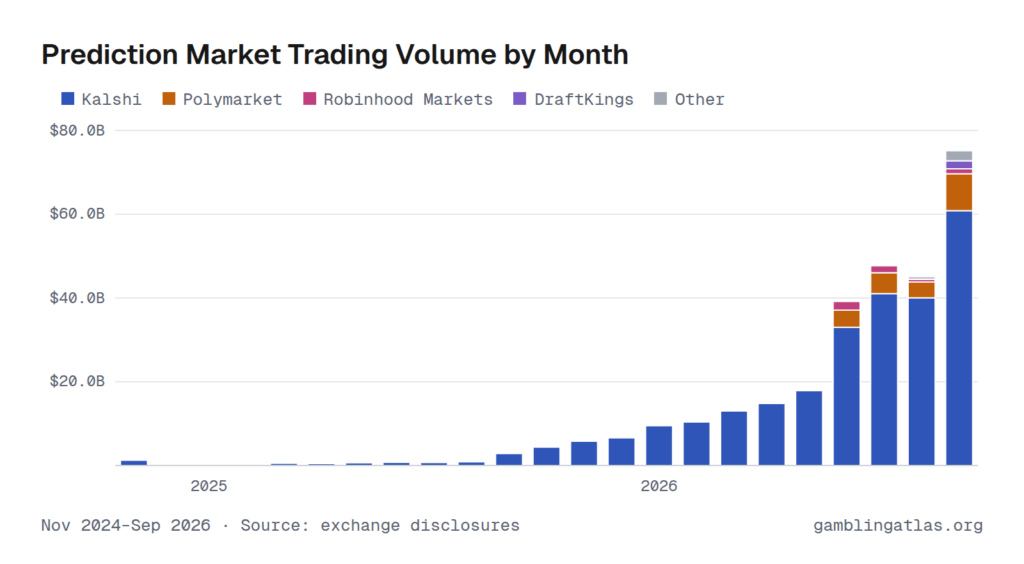
According to a report by the Financial Times on the 21st, monthly trading volume in prediction markets surged from about $17 billion in January this year to $72 billion in September, a rise of more than 300%. As the Bitcoin (BTC) and Ethereum (ETH) markets languish, trading platforms such as Binance.US, Blockchain.com, and Coinbase are accelerating their push into prediction markets, seeking to expand revenue beyond transaction fees from cryptocurrency trading to include contracts on political, sports, economic data, and other future events.
Monthly trading volume surges to $72 billion as Kalshi and Polymarket fuel the boom
Prediction markets allow traders to buy and sell event contracts such as “yes/no” on the outcomes of future events. Prices typically reflect the market’s implied probability of a particular outcome. For example, traders can bet on whether the Federal Reserve (Fed) will raise interest rates, whether Bitcoin will break through a certain price, or the outcome of a sporting event.
According to the latest research data, U.S. prediction market trading volume in September was about $75.1 billion, with Kalshi accounting for approximately $60.8 billion and Polymarket around $8.8 billion, indicating that the market is highly concentrated among a few large platforms.
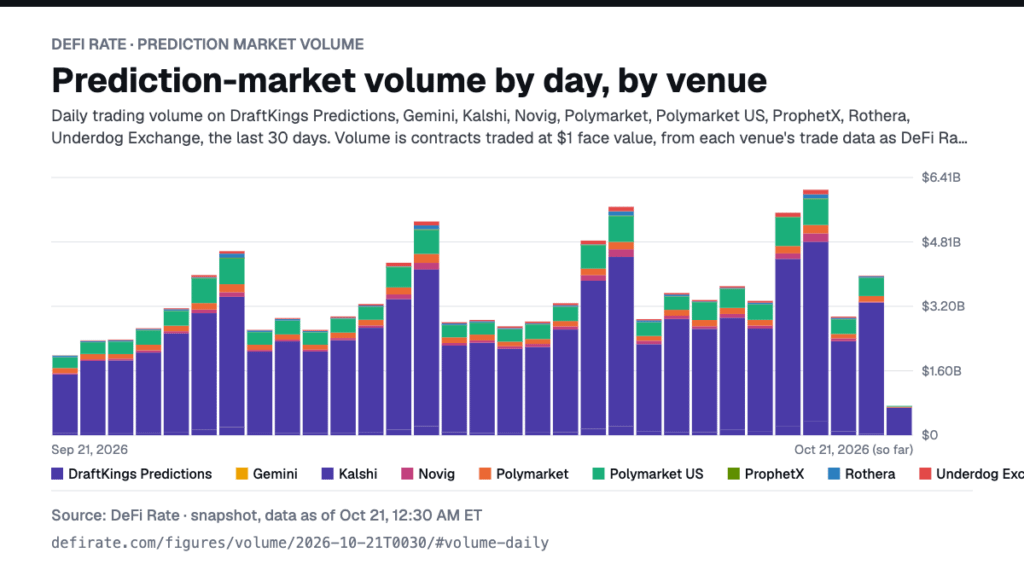
More recent data from DeFi Rate shows that the notional value of prediction market contracts traded over the past 30 days has reached $105.7 billion, with Kalshi accounting for around 76%.
Binance and Blockchain.com Vie for Licenses as Coinbase Joins the Race
The rapid rise of prediction markets is also changing the competitive strategies of crypto exchanges.
On October 13, Blockchain.com announced that it had applied to the U.S. Commodity Futures Trading Commission (CFTC) for Futures Commission Merchant (FCM) and Designated Contract Market (DCM) status, with plans to offer regulated crypto derivatives and prediction market event contracts in the future.
According to the Financial Times, Binance.US is also seeking U.S. regulatory approval, while companies such as Coinbase, Crypto.com, and Gemini have entered the market by launching their own services or through partnerships.
For cryptocurrency exchanges, prediction markets offer not only a new product category but also the potential to increase how often users trade. Even when BTC and ETH lack clear price momentum, sporting events, economic data, and developments in the tech industry may continue to attract trading activity.
Why Are Exchanges Eager to Get In? Crypto Trading Fee Revenue Is Under Pressure
Traditional cryptocurrency exchanges rely heavily on trading volume for revenue. When crypto prices keep falling and investors become less inclined to trade, platforms’ fee revenue may also take a hit.
According to an earlier Reuters report, Coinbase’s transaction revenue in the second quarter of 2026 fell 21% year over year to about $599 million; Robinhood’s cryptocurrency trading revenue also dropped about 38% over the same period. By contrast, prediction markets cover more than just cryptocurrencies, extending to sports, macroeconomics, politics, and technology events.
This gives exchanges an opportunity to attract users who would not otherwise trade crypto and to find new sources of revenue from contract trading fees, trading services, and related financial products. However, a surge in trading volume does not mean platform revenue will rise in tandem. Actual revenue still depends on fee rates, trading costs, incentive payouts, and each platform’s own revenue-sharing model.
Prediction Markets Also Carry Risks: Wash Trading, Insider Trading, and Regulatory Disputes
The rapid expansion of prediction markets has also raised questions about the legitimacy of trading volume and the fairness of these markets.
Last week, Wired reported that researchers had found substantial suspected wash trading and activity-reward arbitrage in some Polymarket event contracts. In some markets, notional trading volume still reached hundreds of millions of dollars even after the outcome had become largely clear. This suggests that high trading volume does not necessarily reflect organic investment demand.
On the regulatory front, U.S. states are also embroiled in legal disputes over whether event contracts constitute gambling. On October 20, Utah sued Kalshi, alleging that some of its contracts violate state gambling laws. Kalshi, in turn, argues that its business is governed by federal derivatives regulations.
Whether prediction markets can continue growing rapidly depends not only on user demand, but also on the quality of trading volume and whether the regulatory framework can provide a stable operating environment.
The rise of prediction markets signals that financial trading platforms are trying to turn more real-world uncertainties into tradable contracts. But that does not mean prediction markets will replace cryptocurrency trading. The two can coexist on the same platform and serve different investment and trading needs. For companies such as Coinbase and Binance.US, a more important strategy may be to evolve from single-product crypto exchanges into comprehensive trading platforms covering crypto assets, derivatives, and event contracts.
The real test for prediction markets is not whether they can surpass $100 billion in trading volume, but how much genuine liquidity, user demand, and sustainable revenue remains after accounting for differences in reported notional contract volume and non-organic trading activity.
“Prediction Market Monthly Trading Volume Surges to $72 Billion! Binance and Coinbase Join the Fray as ‘Betting on Future Events’ Becomes Exchanges’ New Gold Mine?” This article was originally published on BlockTempo.