


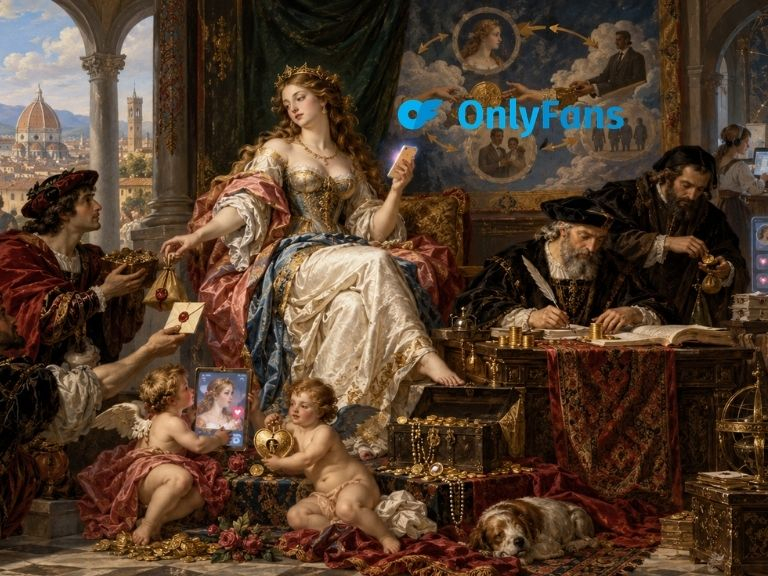
China’s renowned video production team, Yingshi Jufeng, recently released the latest investigative video in its “Million-Dollar Check” series, turning its attention to the globally popular adult subscription platform OnlyFans. Over three weeks, the team traveled to New York and Miami in the United States, and Manila in the Philippines, interviewing adult content creators, paying subscribers, account management companies, and frontline chat operators. They sought to answer one question: With so much free adult content online, why are tens of millions of people still willing to keep paying on OnlyFans?
Yingshi Jufeng’s investigation found that a sophisticated international business system has developed behind OnlyFans. Some account management companies take as much as 70% of creators’ revenue, then hire Filipino workers for low wages to impersonate creators and chat with fans around the clock in shifts. There are even dedicated customer databases that track each fan’s emotional needs, spending power, and chat history to increase the rate at which conversations convert into paid subscriptions.
How Does OnlyFans Make Money? The Subscription Fee Is Just the First Hurdle
OnlyFans is a content platform that allows creators to charge fans directly. Alongside fitness, music, and lifestyle content, adult content is one of its main features. Data cited in the documentary indicates that, as of 2025, the platform had about 5 million creator accounts and 430 million fan accounts, and paid creators more than $6 billion over the year.
Unlike conventional social media, OnlyFans lacks a traditional keyword-based content search feature. As a result, creators rely heavily on external social platforms such as Instagram and TikTok to drive traffic and convert followers into paying subscribers.
Sabrina, a 27-year-old creator, has amassed more than 100,000 followers on Instagram and ranks among the top 5% of creators on OnlyFans. She says that in addition to taking photos and videos each day, she has to chat with more than 500 fans—a task that can take over six hours just for messaging.
Sabrina’s basic subscription costs $15 per month, but that fee is only the price of admission to view her content. Fans who want to unlock special videos, get private interactions, or request custom content have to pay extra. Custom requests start at $150.
Sabrina says she has paid off her student loans and started saving, hoping to use the money to start a business in the future. Levi, a male creator who ranks in the platform’s top 1%, uses his OnlyFans earnings to fund a lifestyle of driving a Cybertruck and towing a camper around the United States.
However, these success stories represent only one side of how income is distributed on the platform.
Creator’s monthly earnings fall from $7,000 to $800 as competition for traffic pushes creators to go further
The documentary also interviews Madison, a 25-year-old former OnlyFans creator. She had loved performing in the circus and hoped to earn enough through content creation to move to a big city and pursue performance work.
Madison joined OnlyFans shortly after turning 18 and earned about $7,000 in her first month. At first, she could make a substantial income just by taking relatively tame photos and videos.
But over time, fans gradually lost interest in her, and her subscriber numbers and income began to decline. To recover her earnings, Madison started pushing past the content boundaries she had originally set, trying more types of shoots and custom services that she did not enjoy. Although her income briefly rebounded, it eventually fell to around $600 to $800 a month—not enough to make a living.
She says the prolonged financial pressure and fans’ demands affected her mental health and gradually made her feel she had lost control of her work. Her experience illustrates the challenges adult content creators face: even if creators are nominally their own bosses, their actual earnings still depend heavily on fan demand, constant visibility, and competition on the platform. When income falls, creators may face the dilemma of pushing their content further or losing their earnings.
Account management companies emerge as the behind-the-scenes winners, taking up to 70% of creators’ earnings
As competition on OnlyFans has intensified, the account management industry known as OnlyFans Management (OFM) has taken off. These companies do not have to produce adult content themselves. Instead, they sign existing creators and provide services such as social media marketing, fan engagement, account management, and sales of paid content, taking a percentage of the earnings in return.
The investigative team interviewed Mitch, the owner of an OFM company, in Miami. He said the company had signed more than 30 creators, some of whom earned around $30,000 a month. The company’s share ranges from 30% to 70%, depending on the services provided.
Mitch explained that the key to managing an OnlyFans account is a carefully designed marketing funnel:
Use platforms such as Instagram and TikTok to gain exposure and attract users’ attention.
Direct users to OnlyFans and convert them into paying subscribers.
Encourage users to spend more through welcome messages, private chats, and additional paid content.
Build ongoing relationships through regular interaction to increase renewals and long-term spending.
In addition to optimizing conversion rates, management companies may even create fictional personas for creators, including their age, occupation, place of residence, and personal history.
In an interview, Mitch admitted that the company had created identities for creators that did not match reality, such as presenting a 21-year-old woman as 18 or inventing an athletic background for her. This means the creator consumers think they know may already have become a commercial persona carefully packaged by a marketing team.
Inside the Philippines’ chat operator industry: playing the girlfriend around the clock
If creators have to reply to hundreds or even thousands of fans each day, who is actually handling those private messages? The investigation found that some OFM companies outsource chat operations to lower-labor-cost markets such as the Philippines and India. The Philippines has become a key hub for OnlyFans chat services, thanks to its established English-language customer service and call center industries.
The team traveled to Manila and interviewed several people who work as OnlyFans chat operators. These employees do not interact with fans as customer service representatives offering assistance. Instead, they log into creators’ accounts and interact with subscribers in the creators’ names. Their work includes chatting about everyday matters, maintaining emotional connections, gauging users’ willingness to spend, and promoting photos and videos.
To avoid detection, chat operators have to learn the creators’ personal backgrounds and even keep up with their social media activity. More notably, chat companies do not just create databases for creators; they also build detailed profiles of individual paying fans, recording their conversations, personal information, and interaction history. One interviewee said that a single account may be handled by three shifts in a day. Before handing over, employees have to summarize the latest information about fans to ensure the next operator can take over without any breaks in the conversation revealing their identity.
This process resembles customer relationship management (CRM) at a traditional company, except that what is being managed is no longer just purchasing history, but users’ emotional attachment to a particular creator. If fans know there is free erotic content online, why are they still willing to keep paying?
The documentary interviews Ryan, an OnlyFans user who works at a hospital in New York. He says it is not that he cannot find free adult content; he wants to support creators he has followed for a long time and get more direct access to them through a paid subscription. Ryan sees this kind of spending as more than just buying content—it also involves a sense of support, giving, and connection.
Mitch, the owner of an OFM company, offered a business perspective: although the company appears to sell adult content, what really improves user retention is the virtual girlfriend experience. In other words, creators are no longer simply offering images for people to view, but an experience that makes subscribers feel valued and accompanied, and even as if they are building an intimate relationship.
But the person behind those conversations may not be the person in the photos at all. A Filipino chat operator revealed that, in addition to selling content, the team uses different scripts to respond to fans’ emotional needs. If a user questions whether they are chatting with the real creator, the team may ask the creator to record a voice message or short video to put their doubts to rest.
The documentary also notes that some fans who express doubts may receive a reply from the creator herself, which can make them feel guilty and spend more. This raises a deeper controversy about OnlyFans’ business model: when consumers believe they are paying for the genuine companionship of a particular person, but the service is actually being provided by strangers trained in sales, the two sides may have fundamentally different understandings of what the transaction involves.
The rise of the “digital pimp” industry: young men become the target audience for business coaching courses
Alongside managing established creators’ accounts, some OFM companies actively search social media for young women who might join OnlyFans. Victoria, a former OFM industry employee, describes some operators as “digital pimps.” She says these business owners do not have to show their faces or create content themselves, yet may take more than half of a creator’s earnings.
As this business model has attracted attention, a flood of paid courses teaching OFM techniques has appeared online. Like instructors in cryptocurrency trading communities, these so-called industry mentors often cultivate an image of success through luxury cars, mansions, and extravagant lifestyles. They tell young men that they can build a high-income business without any professional background—as long as they know how to recruit women and manage their accounts.
The documentary also links this phenomenon to aspects of the online male-supremacist culture represented by the controversial influencer Andrew Tate. The report argues that some extreme rhetoric objectifies women as money-making tools and encourages young people to accumulate wealth by controlling female creators’ business activities.
What Is OnlyFans Really Selling? Adult Content, Loneliness, and Digital Intimacy
The documentary ends by returning to Madison, who has left OnlyFans. Although she has stopped running her account, the content she posted in the past continues to affect her life. She says that after people back home learned she had created adult content, they continued to see her through the lens of that past, even after she left the industry.
Madison also alleges that she was sexually assaulted at another workplace. When she reported it to her supervisor, she was shamed and blamed because of her past work creating adult content. She eventually decided to move away from her hometown and return to circus, dance, and other kinds of performance she loves.
This investigation, spanning the United States and the Philippines, reveals three very different realities in the OnlyFans industry: some successful creators achieve financial freedom, account management companies generate huge profits from traffic and fan relationships, while other creators face declining earnings, ever-expanding pressure to push their content boundaries, and social stigma that is difficult to shake even after leaving the industry.
More importantly, the business model revealed by OnlyFans may not be limited to the adult industry. When users are willing to pay for real-time interaction, emotional companionship, and intimacy, these services can be standardized, outsourced, and even taken over by artificial intelligence. On the surface, OnlyFans’ business is built on adult content. But underneath lies a question about how the digital age turns loneliness, attention, and intimacy into commodities that can be monetized again and again.
This article, How Does OnlyFans Make Money? A Million-Dollar Investigation into the Adult Empire Reveals the “Digital Pimp” Business Model, first appeared on Chain News ABMedia.