


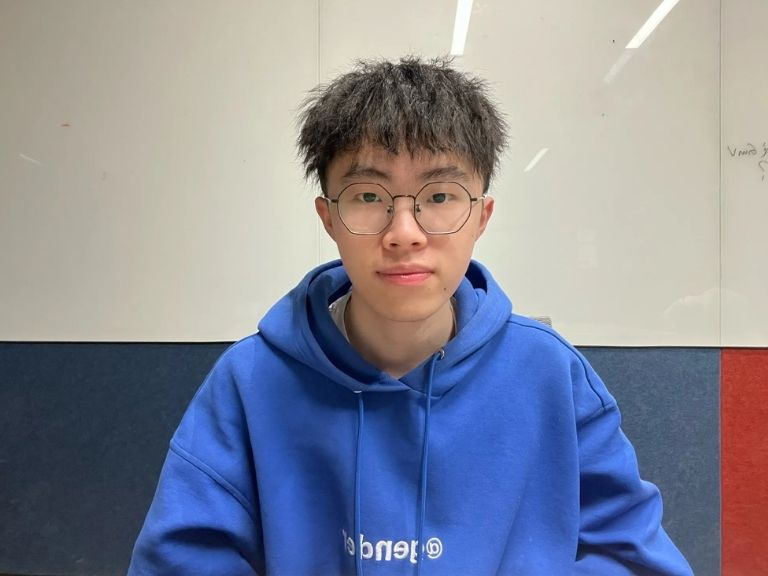
Researcher Keyu Tian, who was fired after being suspected of interfering with ByteDance’s AI model training and dubbed the “AI-poisoning intern” by Chinese netizens, recently drew attention again after founding a World Model startup that raised nearly $30 million. Now, he is facing new allegations.
In an interview with (elsewhere) this month, Tian admitted to interfering with another intern’s training program, but denied maliciously sabotaging other people’s research over an extended period. However, a public statement titled “Here Comes Intern A’s Perspective” recently presented an account of events that differs sharply from Tian’s.
The statement accuses Tian Keyu of repeatedly modifying AI model weights, PyTorch source code, and distributed training procedures from March to July 2024, even adjusting his attack methods while taking part in the team's troubleshooting. It also raises a new research integrity concern: Tian allegedly used the open-source PixArt model and passed off its results as those of the VAR image-generation model he was responsible for training.
The statement includes some suspected attack code and names five researchers willing to testify about their firsthand experiences. However, the allegations currently come mainly from the account of the other party involved in the incident. The complete operational records and code attribution have yet to be independently verified.
Tian Keyu's latest startup is valued at $200 million without a product
Previous reports said that Tian Keyu had founded an AI lab focused on world models. Despite having no publicly released product and a team of only about 10 people, it secured nearly $30 million in investment from firms including 5Y Capital and IDG Capital, reaching a post-money valuation of $200 million.
Tian Keyu previously received the NeurIPS 2024 Best Paper Award as first author for research on Visual Autoregressive Modeling (VAR). He now hopes to extend the technology to foundational AI models capable of understanding the physical world.
(ByteDance's controversial intern Tian Keyu: New company valued at $200 million before launching a product)
Tian Keyu addresses past controversy: No poisoning took place
However, as news of his startup became public, controversy surrounding his 2024 internship at ByteDance also returned to the spotlight. On October 12, (elsewhere) published an interview with Tian Keyu. He said that he interfered with another intern's training at the time because the other person was using GPU resources unreasonably and even stopping other people's programs. The team failed to address the issue effectively, so he intervened in the wrong way.
Tian Keyu claimed that he used GPT to help write code and manually interfered with the other person's experiments about five times over roughly ten days—not in the large-scale, months-long attack described in online rumors. He stressed that he never lacked access to GPUs and never touched other researchers' experiments. He said he was willing to accept responsibility for breaking the rules, but rejected being portrayed as someone who maliciously sabotaged a colleague's research.
Tian Keyu also said at the time that he was certain his misconduct had not affected anyone else's research or papers, and denied using technical methods involving viruses or cyberattacks and defenses.
Tian Keyu accused of sabotaging training as early as March, before the GPU resource dispute
Tian Keyu previously explained his actions as an attempt to address unfair GPU resource allocation, but the timeline in the latest statement suggests that the suspected interference may date back as early as March 2024. According to the statement, Tian allegedly modified the T5 model weights used by the LlamaGen project, adding random noise that caused the model to train abnormally. The statement's author says that LlamaGen was then a small research project using no more than 100 GPUs, and was not yet involved in the competition for computing resources that later emerged around large-scale video-generation models.
The issue was resolved only after researchers downloaded the T5 model weights again. The author made public a piece of code said to come from Tian Keyu's internal GitLab commit history, claiming that it added random noise to the model weights and then restored their original norm, making the modified weights appear normal in magnitude.
If the source of this code and records of its execution are confirmed, they would seriously contradict Tian Keyu's claim that he only interfered with a particular intern over a period of about ten days.
Tian Keyu also accused of fabricating research results: passing off PixArt as a VAR model
In addition to the alleged long-term interference with other researchers, the statement reveals another allegation against Tian Keyu that had received less attention. According to the statement, Tian was responsible for training a VAR text-to-image generation model using thousands of GPUs and regularly reported research progress to his supervisors.
He also deployed a model he claimed was the result of VAR training to the internal Discord server, where colleagues could test its image-generation capabilities. However, after Tian Keyu came under investigation, the team re-examined the model and allegedly discovered that the system provided for colleagues to test was not the VAR T2I model he was training at all, but the open-source PixArt model.
The statement even alleges that Tian Keyu designed a special mechanism in the inference pipeline: whatever prompt a user entered, the program automatically added the word “City” to the beginning before sending it to PixArt to generate an image.
The author believes this may have been intended to stop colleagues from comparing the results by entering the same prompts into the open-source model, which could have revealed the true source of the showcased results.
The statement says researchers had noticed that generated images often inexplicably contained city skylines, but could not figure out why. They discovered the suspected modification only later, when they examined the inference pipeline.
Meanwhile, the actual VAR T2I training reportedly did not achieve the results Tian Keyu had previously demonstrated, forcing the team to reassess its progress and restart development. This allegation is particularly sensitive because Tian's current ability to launch a startup and attract investment rests largely on his past research experience with visual-generation models.
Five researchers named as witnesses
Along with presenting technical materials, the statement names five researchers: Goku co-first authors Shoufa Chen and Chongjian Ge; Goku project member Ting-Che Lin; LlamaGen first author Peize Sun; and fellow intern Shilong Zhang.
The statement says that these individuals confirmed the accuracy of the parts concerning their own firsthand experiences and were willing to testify if necessary. The author also issued a direct warning to Tian Keyu's current collaborators and investors, recommending that they independently verify the relevant training records, model origins, and research progress to determine whether Tian's account of past events is consistent with the facts.
Tian Keyu ordered to pay RMB 500,000 in first-instance ruling; appeal still ongoing
Looking back at the incident, ByteDance publicly confirmed in 2024 that an intern had maliciously interfered with model training for a research project and dismissed the person involved. The company later sued Tian Keyu, initially seeking damages of more than RMB 8 million.
According to Tian Keyu in an interview with (elsewhere), the court set damages at about RMB 500,000 in its first-instance ruling. ByteDance has appealed, and the case is still in the second-instance proceedings. In the interview, Tian repeatedly stressed that he acknowledged his conduct violated the rules and was willing to pay damages, but believed that many of the allegations against him had been exaggerated or even fabricated.
This article, “Former ByteDance intern Tian Keyu responds to ‘poisoning’ controversy, now accused of fabricating research using an open-source model,” originally appeared on Chain News ABMedia.