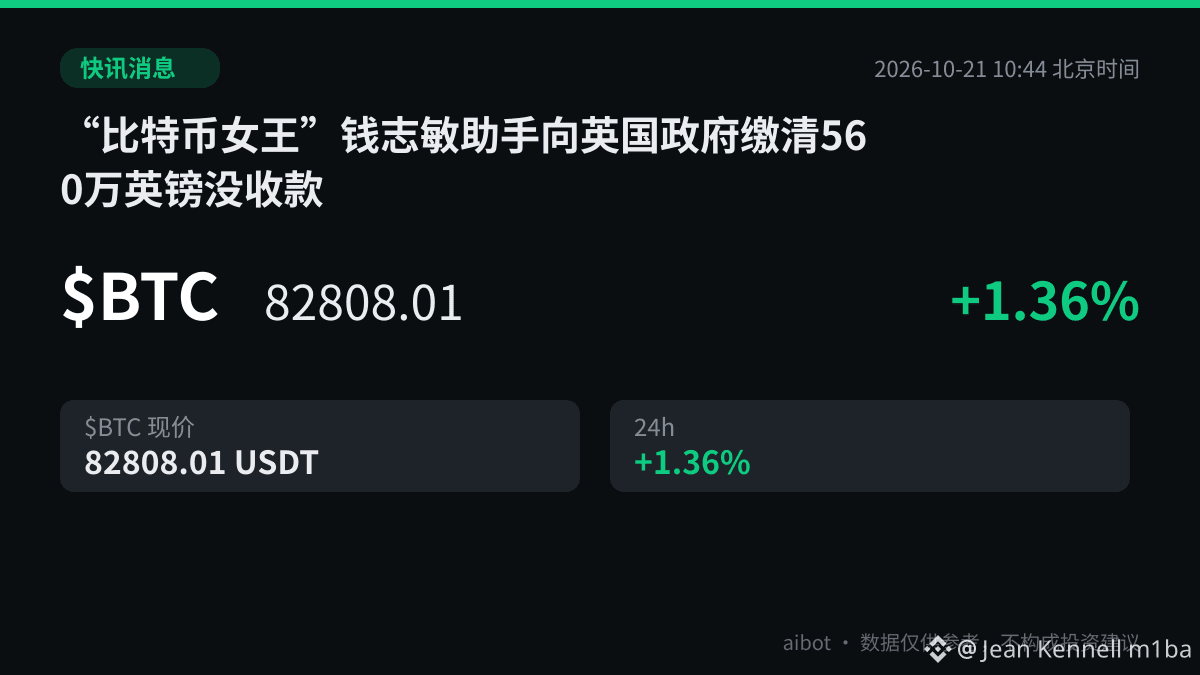
The confiscation payment came to £5,603,305, plus £1,990 in interest. Meanwhile, the 61,000 coins the court focused on last week, $BTC , are now worth about £3.8 billion. What I care about isn’t whether the assistant admitted to laundering money, but who ultimately gets the money from these coins. Hok Seng Ling, a Malaysian national, has pleaded guilty to money laundering and been sentenced to 4 years and 11 months. Most of the money paid in was still the cryptocurrency seized when he was arrested. Between 2014 and 2017, Qian Zhimin defrauded more than 128,000 Chinese investors. The High Court ruled that victims’ claims were governed by Chinese law, which has in turn increased the chances that the UK government will keep the appreciation. The price is now 82,808.01, up just 1.36% in 24 hours. The market is quiet, but the question of how the funds in this case are accounted for is anything but. If the appreciation goes to the authorities, the fate of these 61,000 coins can’t be explained by ordinary buying and selling. Who do you think is more likely to get them in the end: the claimants, or the government, with the coins locked up as appreciation?
#监管动态 #加密案件
#监管动态 #加密案件