
The main feature of blockchain is transparency: any user can view any transaction at any time.
Arkham was created to help traders and researchers detect anomalous transactions and hidden market manipulation.
Thanks to this service, it was easy to track who was buying or selling which coin.
What do recipients of token unlocks do—accumulate or sell?
Many people were keeping an eye on fundamental coins like $BTC and watching Michael Saylor keep his word about buying Bitcoin.
They set up notifications to track large transactions.
Today, something happened that left most people in the dark.
Every button on Arkham is paid now. We can no longer search all transactions for the largest ones, or group addresses into entities to uncover hidden anomalies in coin movements.
We can’t track when a large whale bought a particular coin in their portfolio, because even the coin filter is unavailable.
The date filter is unavailable too.
All we can do is look at the top holders and real-time transactions for a coin we’re interested in.
Set no more than 10 alerts for specific addresses, since you can’t group any more than that together.
And that’s it.
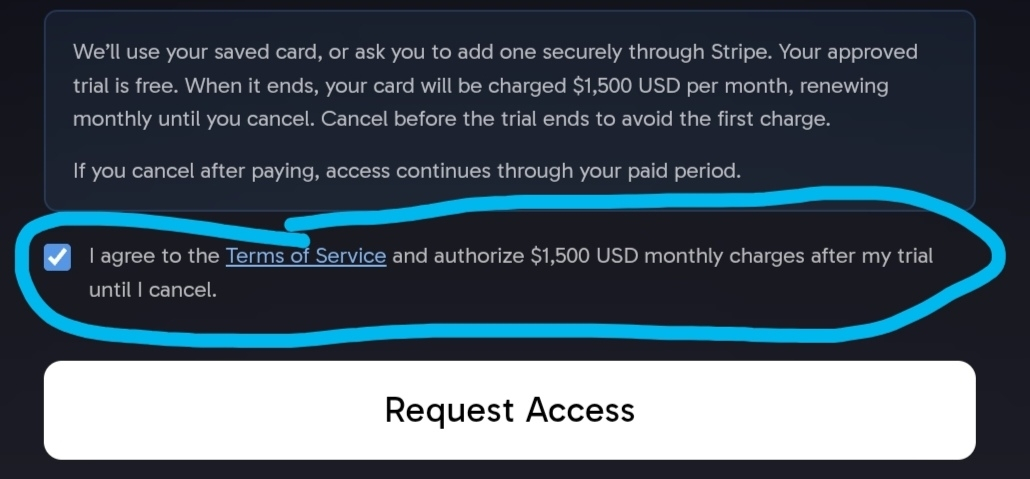
What was previously available and what we used now costs $1,500 a month. That’s more than the average salary in CIS countries.
What I’m getting at is that today we’ve reached a point where blockchain transparency is visible only to the rich.
The whales can see us, but we can’t see them.
My argument makes it sound as if I think everything in the world should be free and the developers of this service have no right to monetize their work.
No. I’m sure millions of people use this service. It would have made sense to charge at least $20 for a subscription; many would have stayed, and the profits would have been much higher.
They could even have started by keeping a free subscription for people who hold their coin, thereby protecting it from an endless decline.
But the service has its own plans. The price is extremely high. Their features aren’t worth $1,500 a month, and it gives the impression that the price was deliberately inflated.
Thousands of people labeled wallets every day and built databases for their own research. In the end, all that work went to waste.
Goodbye, world of transparency. Hello, a world of even more coordinated market manipulation.
Before, there were many researchers investigating coin movements, especially when $SIREN was completely sold off by its holders and all of Twitter was in an uproar.
Now there won’t be any more of them, or only a handful will remain.
Every day, they keep us in the dark. Even coins whose unlock data is completely secret get listed.
Or the information is inaccurate, as with $AKE , where one of the coin recipients gets their tokens a day earlier than stated and immediately rushes to sell.
Or the reported circulating supply is inaccurate, as with AKE, which also puts its market capitalization in question.
From every direction, we’re constantly told about security and transparency, yet they deliberately keep us in the dark.
They push coins with high growth potential, backed by a serious project and supposedly set to go to the moon, but in reality they fall for years along with our portfolios. Meanwhile, they hide the coins that really do have growth potential—the growth just isn’t meant for us. Our role is to watch them top the gainers list and short them, handing over our deposits.
Now we're completely blind.
There’s an Arkham alternative called Nansen. It has a free version and a paid one that costs around $70 a month. You can view large transfers, but there are no labels showing whether an address belongs to an exchange or is a private address. Still, it has other advantages. We’ll try to open our eyes there, at least.
And that’s exactly why I said that a price of 1,500 a month is excessive.
That’s how things are.