

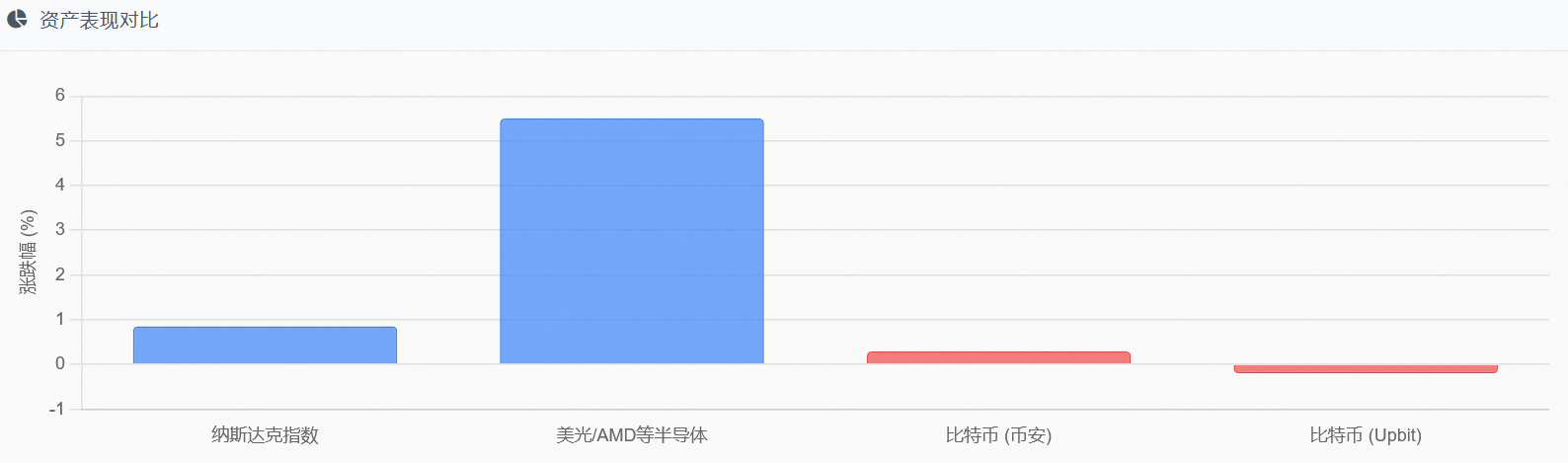
On October 20, the Nasdaq rose 0.85% in the first 30 minutes of trading. Micron, Intel and AMD gained 4%–7%, and the Philadelphia Semiconductor Index ended its eight-day losing streak. Bitcoin, however, barely budged—Binance quoted it at $81,958, up just 0.29% over 24 hours, while its converted price on Upbit was down 0.20%.
Oil prices fell back from $110 to $107, and the probability of an October rate hike dropped from above 50% to around 15%. Although AI and semiconductor companies face higher financing costs, revenue growth is more than enough to offset them. The S&P 500’s technology sector is up nearly 20% this year—the market is rewarding fundamentals.
Bitcoin generates no cash flow. With Treasury yields at 5.14% and Brent crude at $109, the opportunity cost of holding a zero-yield asset has become extremely high: if you can earn 5% risk-free, why hold a coin that generates no returns?
Repeated attempts to break above $83,000 have failed. Bitcoin also failed to break higher during the altcoin rebound on October 16, indicating concentrated selling pressure.
$77,905 was a key level during the October 14 crash. More than $1.372 billion in long positions were liquidated there that day; a further break could trigger a new wave of liquidations.
Until interest rates and oil prices clearly change direction, price action within this range will keep compressing volatility until one side is forced to break. The probability that the Fed will hold rates steady on October 28 is about 87%, but the probability of a rate hike in December is still as high as 75%—this uncertainty itself is why the market is moving sideways.
On the macro front: the Fed decision on October 28; U.S. crude oil inventories on October 20 (which will determine whether oil can get back above $110); and October CPI, due in November (a drop below 3.5% would be positive, while holding above 3.7% would keep pressure on markets).
On the crypto front: whether Bitcoin can hold above $82,000 and break through $83,700 to trigger short covering; ETF fund flows (cumulative outflows exceeded $593 million in October, and a reversal is needed for the rebound to last); and options pricing, which still favors downside protection, with implied volatility back near its lows.
Don’t chase either longs or shorts within the range; wait for crude oil inventories and Fed officials’ remarks to provide direction. A clean break above $83,700, together with a shift to ETF inflows, would confirm the rebound. Bitcoin and oil prices are highly correlated: rising oil weighs on Bitcoin, while falling oil helps it rebound—at odds with the “digital gold” narrative.