

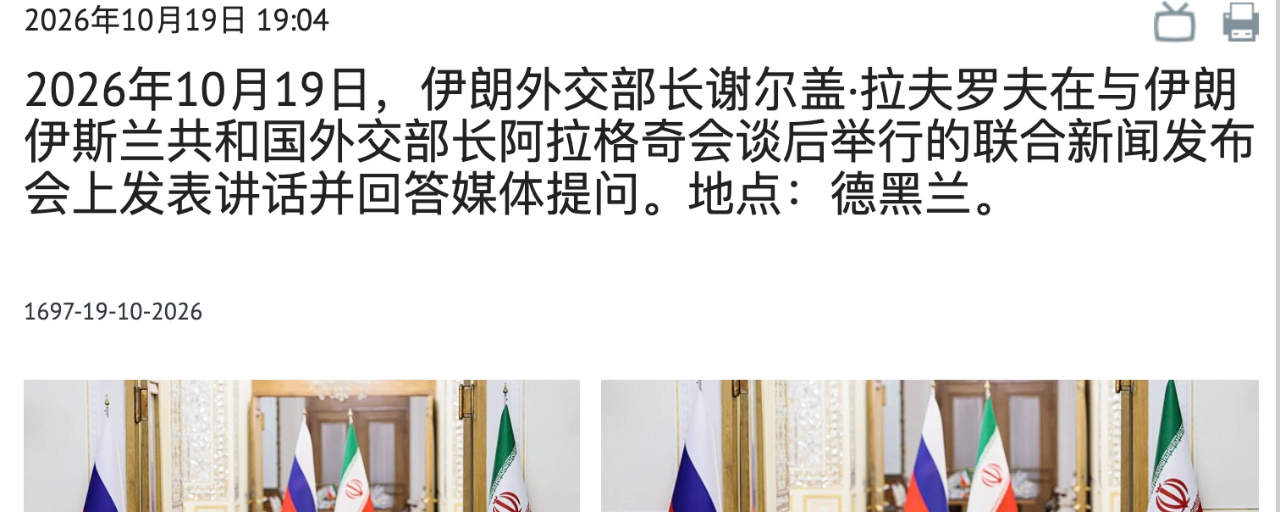

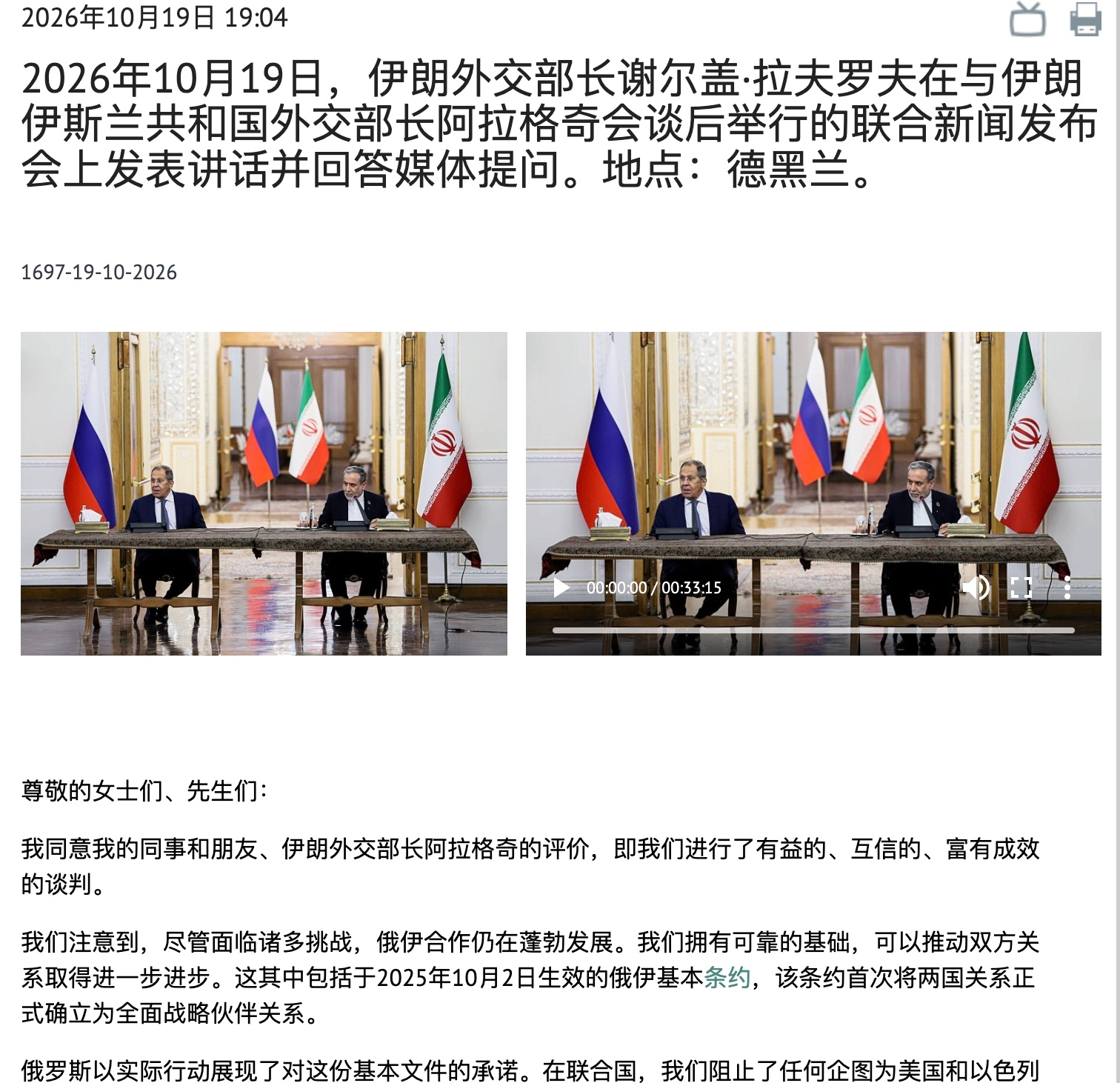
After the Russian foreign minister’s visit to Tehran, Iran, the Russian Foreign Ministry released the full text of its diplomatic statement. It centered on three key points: a desire for energy prices to remain stable; a commitment to signing investment and nuclear agreements with Iran (here referring to nuclear energy facilities); and the development of a long-term plan.
The most optimistic prospect for a breakthrough toward peace in the Russia-Ukraine war is that the leaders of China, the US, and Russia will discuss peace talks during the APEC meeting in November. This is currently seen as the most promising turning point. Trump has also been signaling more frequently in recent days that Russia and Ukraine could return to peace.
Munir, Pakistan’s top army chief, visited Tehran on Tuesday. As Pakistan’s highest-ranking mediator in the US-Iran situation, he must have been carrying an important message on his visit to Tehran.
The current situation is indeed complex, with China, the United States, Russia, Iran, and Ukraine locked in a multi-sided strategic game: #中国三季度经济增速加快至4.5%
The United States could abandon Ukraine in exchange for peace between Russia and Ukraine and Russia’s trust. The condition would be for Russia to end its assistance to Iran, allowing Trump to achieve success in the campaign against Iran and force Iran to submit, thereby laying the groundwork for peace in the Middle East for some time to come. But whether the United States will abandon Ukraine as a means of keeping Russia in check, and whether this can really secure peace, depends on what Russia chooses to do.
Russia is clearly highly distrustful of the United States. The Russian foreign minister’s visit, along with the Foreign Ministry’s statement reaffirming investment agreements with Iran and investment in nuclear energy, is a way of telling the United States that the price for getting Russia to abandon Iran is still not high enough. Trump’s conciliatory gestures will give Russia more leverage in negotiations over peace between Russia and Ukraine. After all, Russia has held out through years of war.
China is acting as a go-between for the parties and promoting regional peace. It is also a key mediator in the various dealings between the United States and Russia, and between the United States and Iran. During its regional mediation efforts, China can secure greater benefits, for example in energy, minerals, and trade. After all, China currently needs more time in peace to accelerate its development.
Ukraine is currently in the most disadvantageous position, with the possibility that Zelensky will once again be sold out. But Ukraine has few options. NATO countries are preoccupied with their own economic and military problems, and their support for Ukraine is limited. If the United States abandons Ukraine entirely, Zelensky’s position will become extremely precarious. Zelensky can only bet that Russia’s ambitions are greater and that Trump will not agree.
As for Iran, China and Russia appear to be offering support in certain areas, but that support does not come without a price. In principle, Iran wants more from its confrontation with the United States, and the price it pays in the future will be greater. Of course, Iran seems to have no other choice at present but to rely on China and Russia in its confrontation with the United States. Although the Russian foreign minister’s visit was meant to reassure Iran, a rift of sorts has already emerged between Iran and Russia. Of course, from Russia’s perspective, there is nothing wrong with giving its junior partner a reminder of its place along the way.
The situation has become so complex that open-source information alone can no longer make sense of it. Every report carries signals at different levels. Whether it is the possibility of peace between Russia and Ukraine or a possible war between the United States and Iran, both are outcomes of multi-sided maneuvering among major powers. In this kind of strategic contest, Iran and Ukraine are both in relatively weak positions. To gain the initiative, they will have to pay a considerable price.
The key event to watch this week is the Pakistani army chief’s visit to Tehran. He is most likely carrying Trump’s terms for talks. This could well be one of the major turning points in U.S.-Iran relations before the U.S. midterm elections!