


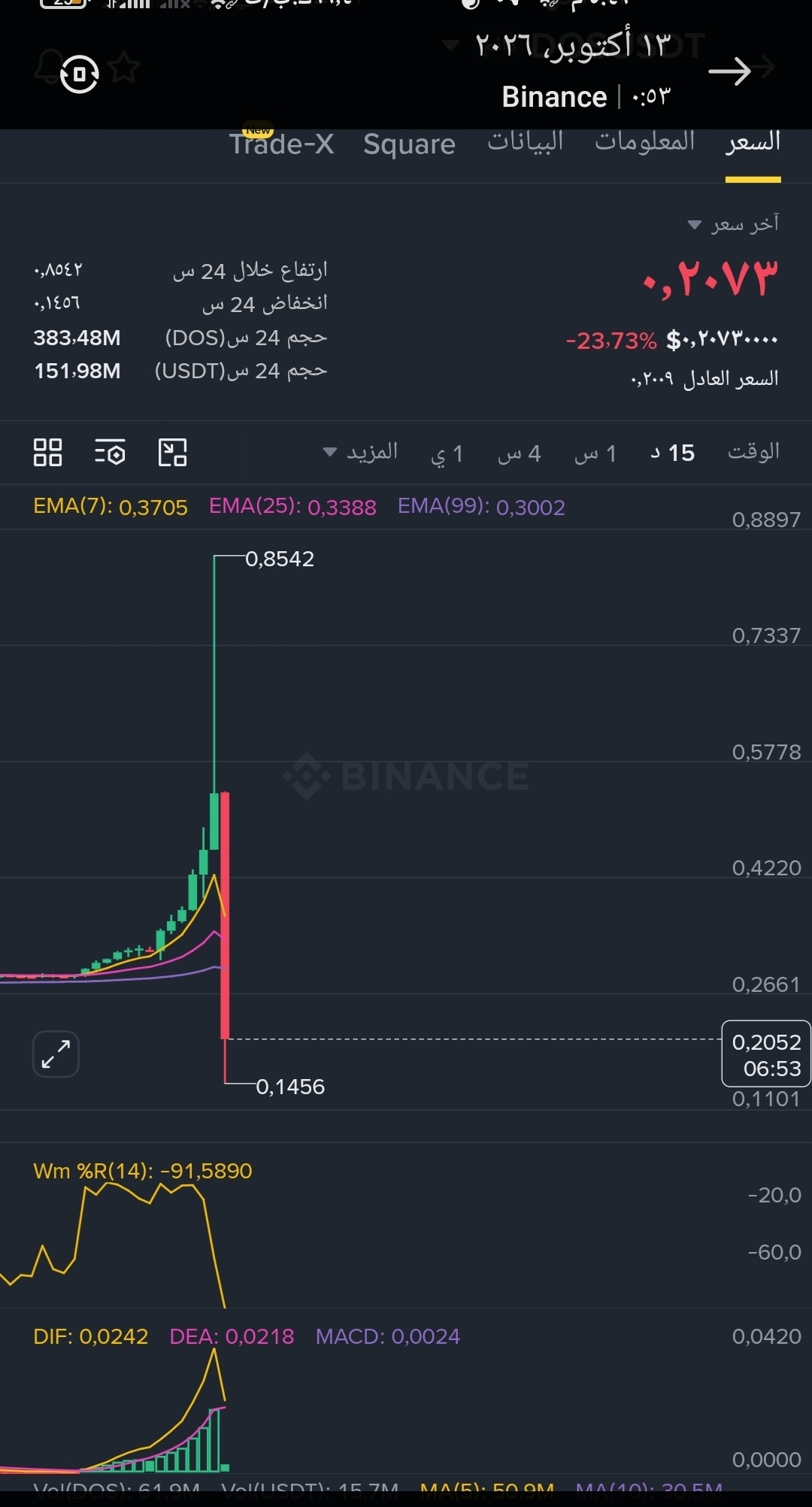
The attached image illustrates the “pump and dump” pattern (Pump
Your guide to spotting manipulation tactics in small-cap cryptocurrencies: an analysis of the “pump and dump” scenario
The cryptocurrency market is fertile ground for financial innovation, but it also conceals many risks and fraudulent practices, especially when dealing with low-cap or emerging cryptocurrencies. The attached image shows a stark, classic example of one of the best-known forms of financial market manipulation, known as “pump and dump”
First: Analyzing what the image shows (anatomy of a real manipulation scheme)
By examining the attached chart closely (which reflects price movement on Binance), we can accurately identify the classic stages of manipulation:
The artificially engineered rocket-like rise (the pump): We see a sharp, almost vertical price increase over a short period, with the price jumping to a peak of 0.8542. This frenzied rise is often unsupported by real fundamentals or genuine adoption of the project; instead, it results from coordinated buying intended to stir up greed among retail traders.
The immediate crash (the dump): As soon as the target peak is reached, a long, violent red candle appears, reflecting massive, sudden sell-offs by whales or market makers. The price then plummets alarmingly to 0.1456, marking a staggering 600% decline and inflicting heavy losses on those who entered late.
Trading volume and indicators: Trading volume rises suspiciously during periods of fake price increases, as coins are offloaded onto unsuspecting traders. Meanwhile, indicators such as MACD and Wm %R reflect a state of false overbought conditions, followed by a collapse in momentum.
Second: The most common manipulation tactics in small-cap cryptocurrencies
“Pump-and-dump” groups
Groups on platforms such as Telegram or Discord coordinate collective purchases of an obscure coin after secretly agreeing on a specific time to start. Organizers buy the coin in advance at low prices, then promote it as “the next big opportunity.” When individuals rush to buy, the organizers sell and pocket the profits, leaving victims facing the price bottom.
Order book manipulation
Market makers place large, fake buy or sell orders to create the false impression of strong support or intense selling pressure, with the aim of influencing traders’ psychology and leading them to make poor decisions.
Fake projects and paid promotion:
Launching new cryptocurrencies with no real value or known team, and relying entirely on fake influencers to promote them with claims that they will outperform major coins.
Third: How can you protect yourself from falling into the manipulation trap?
Avoid emotion-driven buying: If you see a coin rising at an absurd rate (such as hundreds of percent in just a few hours) without major news or genuine technical updates, staying away is the safest decision you can make as a trader.
Check liquidity and trading volume: Small-cap coins with low liquidity are vulnerable to manipulation with relatively little money. Make sure to trade coins with genuine volume on reputable platforms.
Rely on technical and fundamental analysis: Don’t rely on random recommendations on social media.
Use stop-loss orders: Protect your capital from sudden crashes.
In conclusion:
Stay away from low-market-cap coins, no matter how much they rise—it’s a trap. The market has no mercy for unjustified greed. Caution and awareness are your first line of defense against financial scams hidden behind the bright screens of trading.
Good luck, everyone.