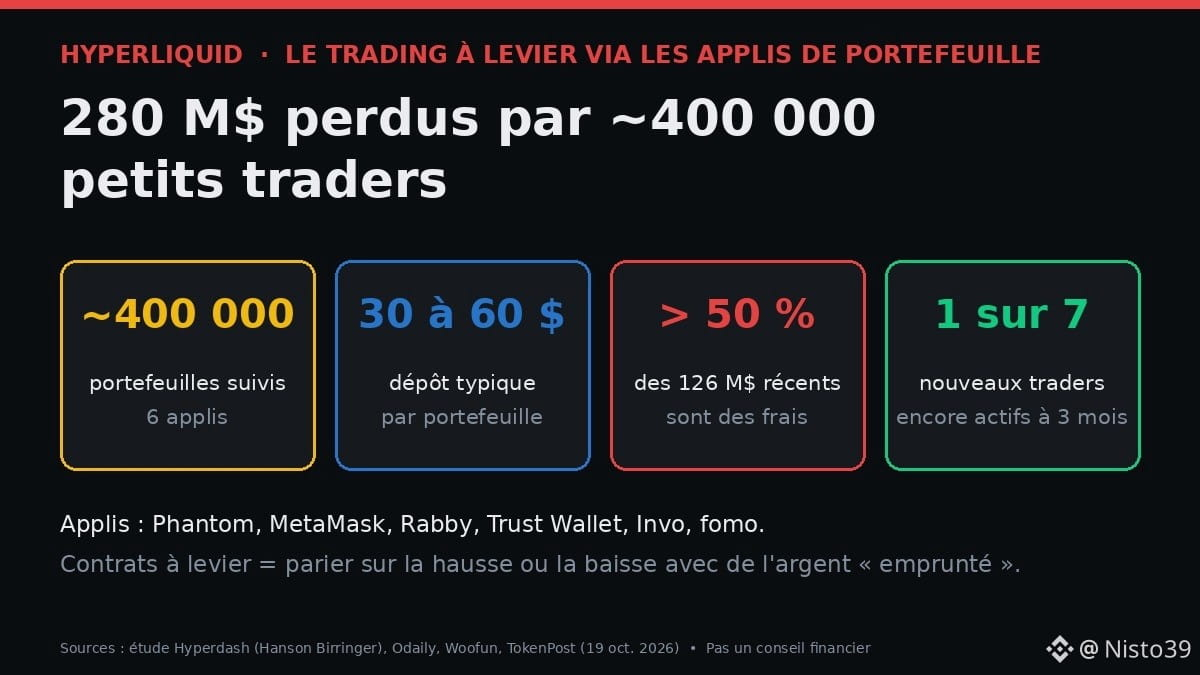
📉 400,000 small traders, $280M in losses. And for a large share of them, fees took the biggest bite.
📌 The facts (Hyperdash study, reported by Odaily on Oct. 19)
• ~400,000 wallets traded leveraged contracts on Hyperliquid through 6 apps: Phantom, MetaMask, Rabby, Trust Wallet, Invo, fomo
• Cumulative losses: $280M. Of that, ~ $126M since Nov. 10, 2025, through these apps
• Of that $126M, a little over half was fees
• Typical deposit: $30 to $60 per wallet (5 out of 6 apps)
• Only ~1 in 7 new traders is still active after 3 months
🧠 How it works
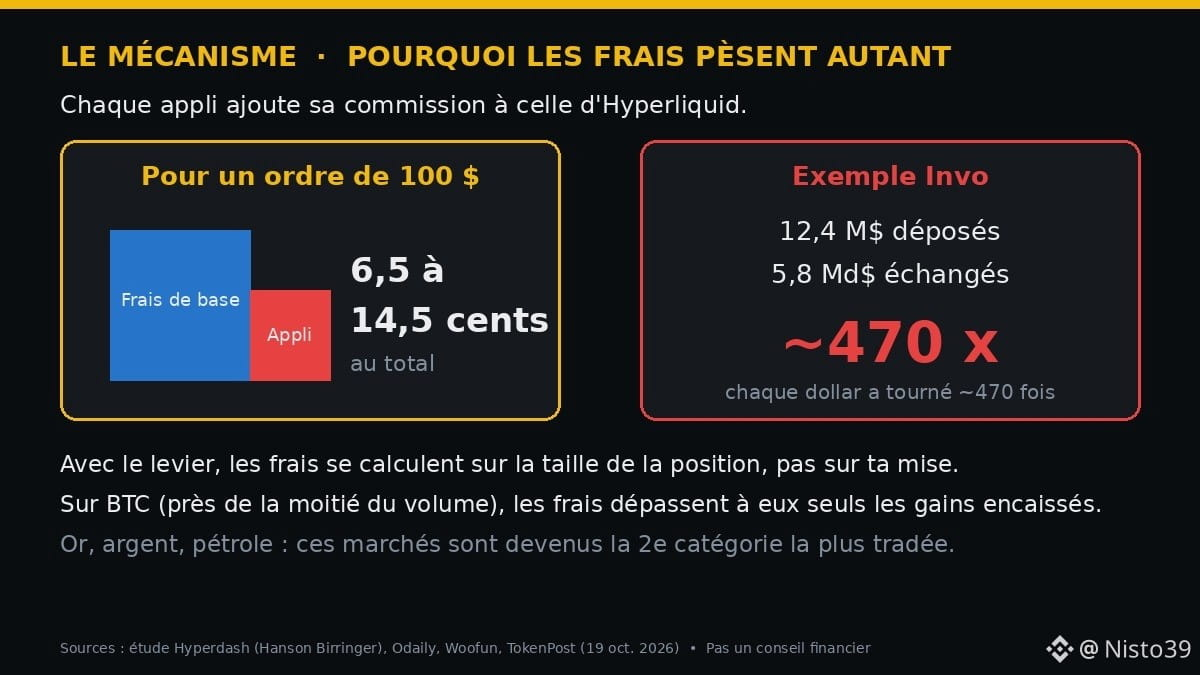
Each app adds its commission on top of Hyperliquid's: 6.5 to 14.5 cents per $100 order. It sounds tiny. But with leverage, fees are calculated on the position size, not on your stake. On Invo, $12.4M in deposits generated $5.8B in volume: each dollar was turned over ~470 times. For $BTC , which accounts for nearly half the volume, fees alone exceed the gains traders took home.
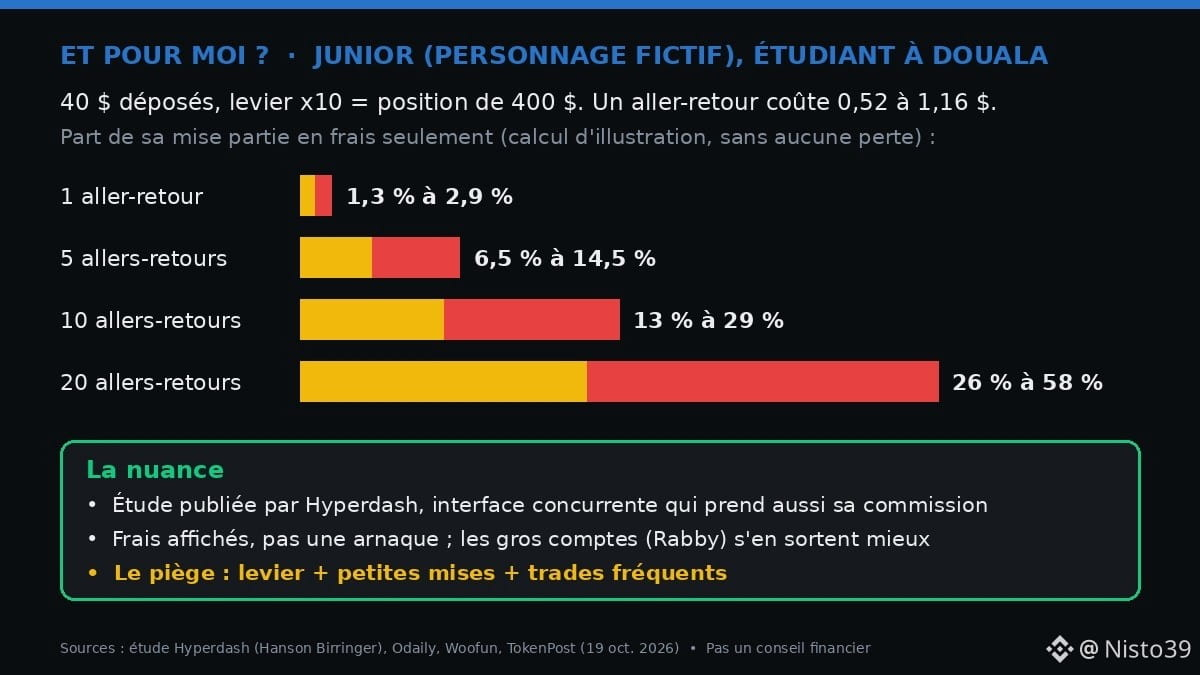
👤 Junior (a fictional character), a student in Douala, deposits $40 and trades with 10x leverage, for a $400 position. A round trip costs him $0.52 to $1.16: 1.3% to 2.9% of his stake. After 20 round trips, 26% to 58% of his capital is gone in fees, before a single loss (illustrative calculation).
⚖️ The nuance
• Study published by Hyperdash, a competing interface that also charges a commission
• Fees are displayed, so this isn't a scam, and larger accounts (Rabby) fare better
• The problem: leverage + small stakes + frequent trading
✅ In leveraged trading, the one sure winner is the one collecting the fees. $HYPE
Do you check your fees before trading? 👇
Not financial advice. DYOR.
Sources: Hyperdash (H. Birringer), Odaily, Woofun, TokenPost.
#Hyperliquid #Trading #Frais #Afrique