
Many people trade, and as soon as their account shows a profit, they think they've figured it all out. When it shows a loss, they start thinking about how to make the money back as quickly as possible. I used to be the same, until the contract market nearly wiped out both half a lifetime of savings and the factory I'd worked so hard to build. Only then did I truly understand: making money takes skill; keeping it takes discipline.
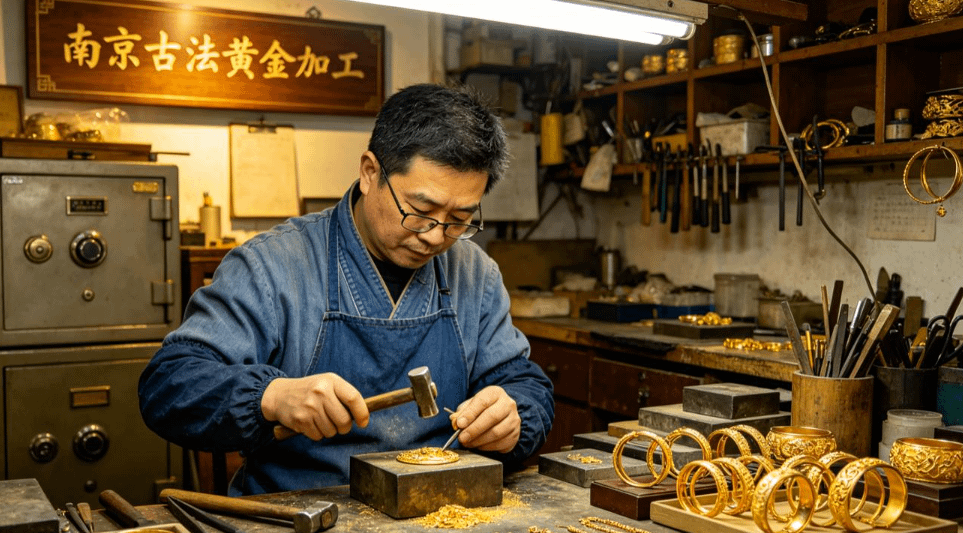
I'm 43 this year. I worked my way up from an apprentice in jewelry processing to running my own factory. At its peak, dozens of workers were on the job at once, with orders booked months in advance. I kept close track of raw material waste per gram, the cost of every step in production, and when each customer would pay. Back then, I thought that as long as I worked hard and dared to take risks, life would keep getting better.
Later, a customer who traded precious metals introduced me to Bitcoin. I started by buying spot, caught a bull run, and made over 400,000 yuan. To be honest, that money came much faster than anything I’d made from running a real business. That was when my mindset began to change: spot prices moved too slowly, so I started watching futures. I figured that after studying prices for so many years, catching a few ups and downs shouldn’t be hard.
I did make money at first. A few trades going with the trend made me think I’d found a fast track to wealth. But those were also the years when overseas orders at the factory started to dry up, and customers took longer and longer to pay. Machines, staff, and materials all cost money. The books showed we had business, but there wasn’t much cash in my pocket that I could access at any moment. I thought about it very simply: if I could make just one more profit on a futures trade, it would ease the factory’s cash-flow pressure.
That idea nearly landed me in a deep hole.
Once, I saw the market break through a level and added to my position several times in a row. Then the price suddenly reversed. I didn’t stop out as planned. I kept telling myself, “It’s just a pullback. I’ll wait for it to bounce back.” The further it fell, the more I refused to accept the loss. I even transferred in more money, hoping to win back everything I’d lost. For days, I chased customers for payment during the day and watched my account at night. Every time my phone buzzed, my heart skipped a beat. The irony was that I could calculate how to reduce material waste by a few grams in a batch of jewelry, but I hadn’t worked out how many hits I could take once leverage magnified the risk.
After my last major loss, I had to scale back the factory. Some equipment was shut down, and I had to make changes to the staff. What hurt most wasn’t the number in my account. It was watching workers who had been with me for years leave, while I couldn’t bring myself to tell them, “Things will definitely get better next month.” That was when I finally understood: the most expensive lesson in trading isn’t how much you lose. It’s taking money you’re responsible for and gambling it on one more bet.
After that, I forced myself to start over. The first thing I did was completely separate the factory’s money, my family’s money, and my trading funds. I recalculated the factory’s profit margins and stopped taking orders with slow payments and thin margins just to boost turnover. I also set rules for my trading: before every trade, I decide where my stop-loss will be, then decide whether to enter; losses on any single trade must stay within what I can afford; after a string of mistakes, I stop and review; and if the market hasn’t reached my planned entry point, I don’t chase it, no matter how sharply it’s rising. A bigger position doesn’t make you more capable. The real skill is knowing how to exit promptly when you’re wrong.
I still remember one time when the market suddenly plunged and lots of people in the group were calling for a dip-buying opportunity. I was tempted too, and was about to hit the buy button. But when I reviewed the charts, I saw that key support hadn’t held, and my entry conditions simply weren’t met. In the end, I held back. The price fell further after that. I missed out on the rebound, but I also avoided a risk I didn’t understand. That experience taught me this: missing an opportunity isn’t scary. What’s scary is risking your hard-earned money just to prove you were right.
Over the past two years, I’ve stopped fantasizing about turning my life around with a single futures trade. The factory has gradually stabilized by maintaining relationships with long-standing customers and increasing the value of our custom craftsmanship. I now trade only with a separate risk budget, look for opportunities according to my system, and use part of my profits to pay down debt and build up reserves. Life still isn’t easy, and I haven’t paid off all my debts, but at least the first thing I do when I wake up is no longer check my account to see if the market has thrown me a lifeline.
I’m sharing this experience not to portray myself as some kind of comeback guru. Anyone in the market can catch a favorable run. What really sets people apart is whether they have rules to follow when things turn against them. Don’t gamble with money for living expenses or business operations, and don’t treat a stop-loss as admitting defeat. You don’t have to win every trade. You need to make sure you can stay in the market long enough to wait for the next opportunity that’s truly yours.
If you’re also studying the markets or trading, and want to find a group of people who are willing to discuss charts, share trade reviews, and exchange risk-management experience, come learn and review trades with our team. We don’t claim to guarantee profits or promise overnight success. We just hope to think things through a little more before each trade, and show a little more restraint when the market isn’t right. In this market, lasting longer matters more than making a big profit once.$SNXXB $MVLL