But after deeply reflecting on and reviewing my trades this round, I realized I made two major mistakes:
1. My positions were too spread out. I was overly optimistic about the market and didn’t focus on the very best assets. Instead, I cast a wide net, buying assets like SNDK, RAM, MU, SOXL, LITE, and INTC at levels I thought were support. The asset I really wanted to trade most—SPCX—I only got into later. Looking at the results, SPCX is currently not losing money. In other words, casting a wide net means you’ll tend to get into the junk assets with the most downside first. The truly top-tier assets require more patience, because the market holds on to them. If you’re in a hurry to make money and buy the dips in junk assets too early, you might make money when the market is good, but when it’s bad, you’ll lose even more. You’ll keep adding to your positions, and as they grow, your losses will keep mounting. So every morning, I should ask myself: What do I consider the best core asset right now? Do I understand it completely? Am I fully focused on it? If I spread my capital across other assets, that means I’m effectively saying those assets are better than SPCX. Before placing an order, I should ask myself: Is the asset I’m about to buy really better than SPCX? If not, why allocate any of my portfolio to these weaker assets? The root cause of this major drawdown was a lack of focus—I lost money on junk.
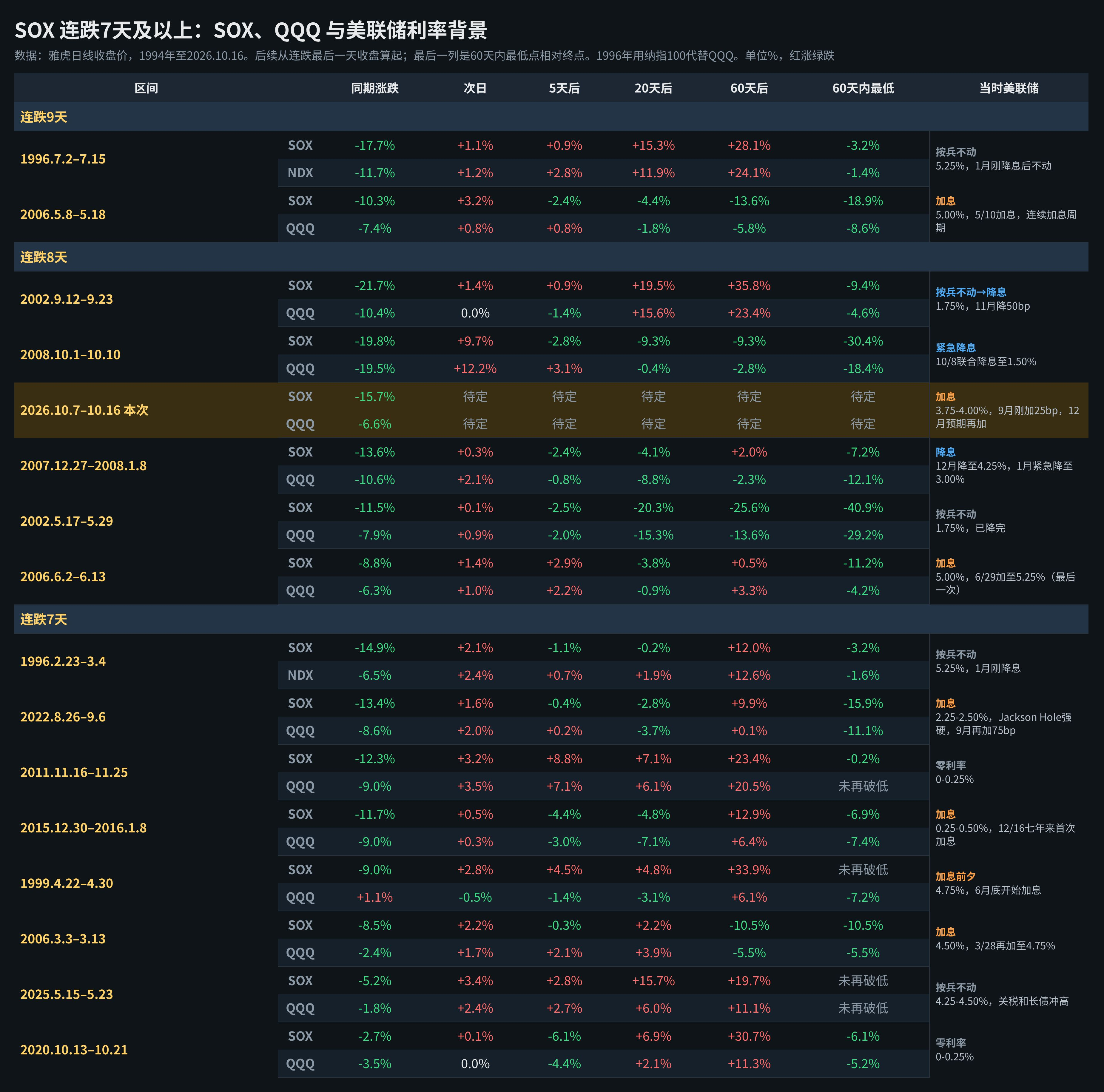
2. At key support levels, I was too subjective in assuming a rebound was likely. The fact is, this time we really did encounter the extremely rare event of the SOX falling for eight consecutive sessions for the first time in 20 years. At both support and resistance, I should wait for confirmation. The point of support isn’t to predict that it will probably hold; it’s to see how the market reacts once the price gets there. Does it actually show a confirmed pause and rebound, or not? I skipped this step in all my trades this round. Essentially, I was too subjective in assuming that key levels would probably hold, and the market taught me a harsh lesson. Going forward, I should stay objective and wait for confirmation. Although I may not be able to get in at the absolute lowest price, I can certainly avoid these extreme sell-offs. If I can’t avoid extreme sell-offs like this, all the small gains I made before won’t make up for this big loss. These assets—SNDK, RAM, MU, SOXL, LITE, and INTC—could all have been avoided as sources of such major drawdowns, because none of them showed a confirmed rebound at any point during the move. The market didn’t validate any of these supposed support levels, so why was I in such a hurry to get in?