



A brief look at the U.S.-Iran situation: the focus has shifted from overt geopolitical maneuvering to behind-the-scenes rivalry, with the main focus now shifting to the Saudi-Yemeni confrontation!
Over the weekend, the U.S. and Iran continued their behind-the-scenes rivalry amid diplomatic silence. There were fewer diplomatic statements in public, but behind the scenes, maneuvering surely continued. There are already explicit accusations that Iran and Yemen's Houthi forces are sharing real-time intelligence #法国众议院通过稳定币税修正案
Iran's goal is simple: the Houthis are its weapon, pressuring Gulf states to side with Iran or help it confront Trump amid the U.S.-Iran tensions. But this is also very risky. If the Houthis' actions push the Gulf states to form a defensive alliance, that would inevitably put Iran at an even greater disadvantage. So this is a risky move, and strategically, I think it is somewhat extreme and misguided.
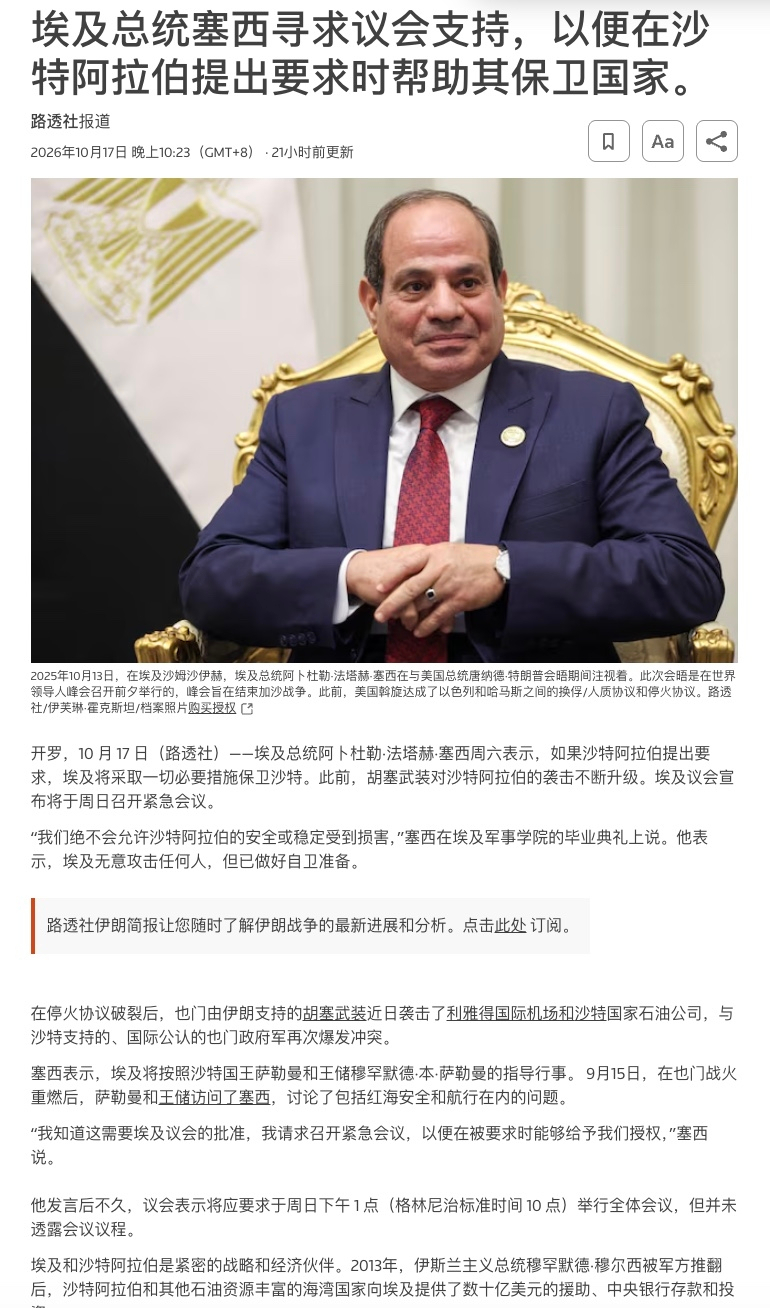
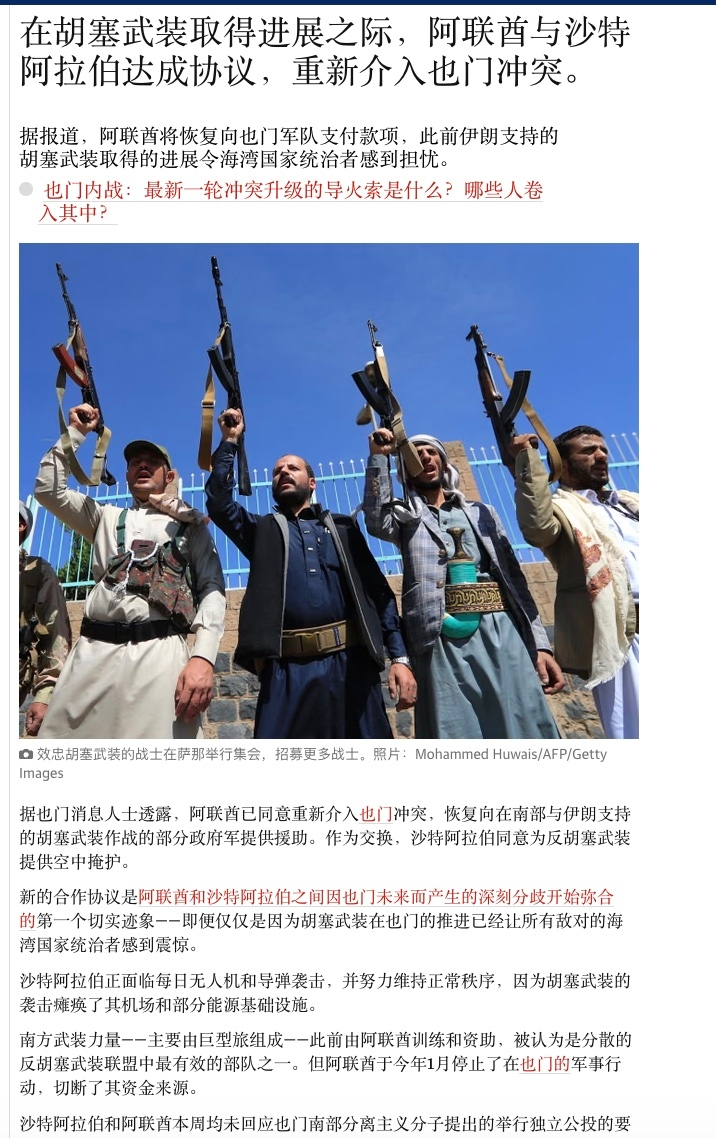
So far, Egypt has made a political statement, seeking to pass a parliamentary resolution authorizing it to assist Saudi Arabia in its defense if necessary. The UAE, meanwhile, has announced for the first time since launching its confrontation with the Houthis in January that it is once again backing anti-Houthi forces and providing funding. Faced with the Houthi threat, Saudi Arabia and the UAE are returning to military cooperation.
Overall, this is actually a fairly dangerous signal. Tensions between the United States and Iran are simmering beneath the surface. The risk may appear to have temporarily subsided, but a large-scale military conflict could easily erupt again. In my view, the only optimistic window to look forward to is the period between the results of Netanyahu’s election on October 27 and the U.S. midterm elections on November 3. If that window is missed, once Netanyahu and Trump have gotten past the pressures of their domestic campaigns, Iran will lose a valuable bargaining chip.
Under these circumstances, if the United States launches a large-scale attack on Iran, Israel will inevitably join in after six months of lying low. This would once again push the risk of a U.S.–Iran conflict toward large-scale military confrontation.
Also, unlike the U.S.–Iran war in March this year, this conflict would carry the added risk of geopolitical spillover. Saudi Arabia, Egypt, Turkey, Pakistan, and the Houthi forces are all entangled in complex relationships. This means that after November 3, if the United States resumes its attacks on Iran, the intensity of the conflict and the resulting geopolitical risks will escalate once again.
In fact, Trump doesn’t have many options. After the midterm elections, regardless of his chances of success, he has only two choices on Iran: soften his stance and seek a deal, or escalate the war. He will inevitably have to complete military operations against Iran before winter. And this winter, Gulf countries, Europe, and indeed the whole world will be under immense strain from energy demand!