

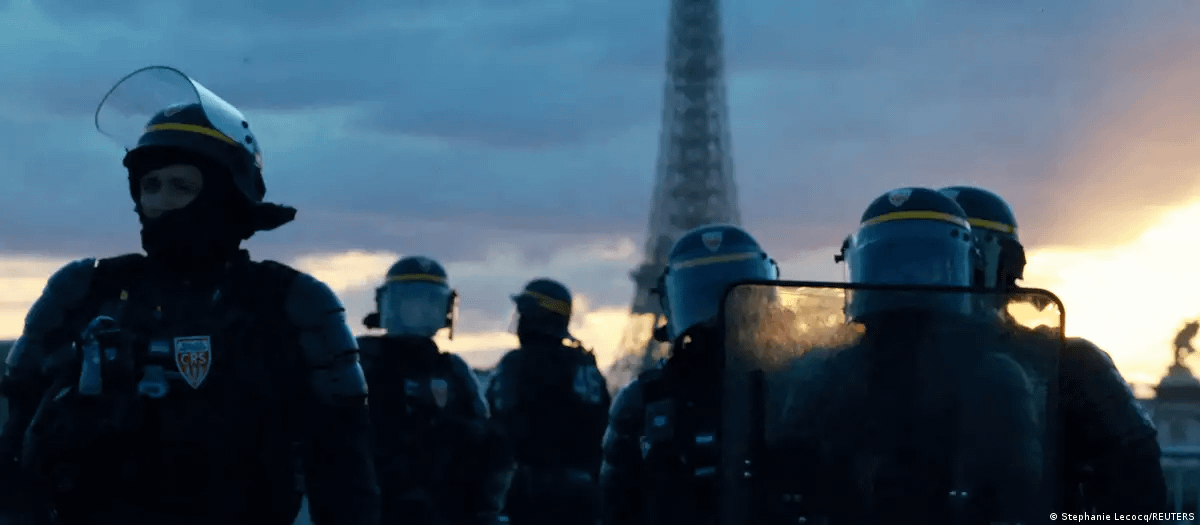
Around 550,000 people took part in another wave of mass protests on Saturday, October 17, which have been taking place across France for the past several weeks amid rising living costs. About 110,000 of them took to the streets of Paris, the country’s interior minister, Laurent Nuñez, said. According to the General Confederation of Labour (CGT), France’s largest trade union and one of the protest organizers, around 800,000 people took part.
Demonstrations took place in several major cities across the country. In addition to Paris, residents of Lyon, Marseille, Toulouse, Lille, Strasbourg, Limoges, Bordeaux and Grenoble expressed opposition to the authorities’ domestic policies. In some cases, the demonstrations were accompanied by looting, arson and property damage.
Late on Saturday evening, French Prime Minister Sébastien Lecornu said that 1,200 people had been arrested during protests across the country. He said that 150 police officers had been injured in clashes with protesters.
In Paris, Lyon and Strasbourg, law enforcement used tear gas against demonstrators. In addition, around 100 people were arrested in the capital, and weapons and other prohibited items were seized from them. In Marseille, protesters broke into the city hall, ransacked several shops and tried to storm a police station. In Lyon, a tourist information center was set on fire; in Avignon, demonstrators broke into the prefecture’s inner courtyard; and in Grenoble, they damaged the city hall. In Limoges, the city hall, built around 140 years ago, was set on fire, causing its bell tower to collapse.
French government holds emergency meeting
The number of protesters far exceeded the authorities’ expectations. According to their estimates, around 40,000 people could take to the streets of Paris on October 17, while the total number of demonstrators in the rest of the country was expected to be around 150,000.
Against this backdrop, the French government held an emergency meeting on Saturday evening. Lecornu blamed the unrest on “far-left groups.” “To those who want to use this violence as a ‘warm-up’ ahead of the presidential election, I say plainly: we will not allow ourselves to be intimidated. No one will succeed in imposing their political agenda through violence,” he wrote on X.
The country’s president, Emmanuel Macron, also commented on the protests. “There is no place for violence in our republic. Those who rioted, attacked prefectures and shops, and even looted our city halls will be held accountable and punished,” Macron stressed on X.
Protests also took place in other European countries
The rising cost of living also prompted Saturday’s protests in Belgium, Portugal and Italy, Reuters reports. Several hundred people took part in demonstrations in Brussels, where clashes with law enforcement broke out. Tens of thousands took to the streets of Lisbon on October 17, where protests have been ongoing for several days.
In the Italian city of Milan, demonstrations escalated into riots, and police used tear gas. In Bologna, law enforcement used water cannons at demonstrations and arrested seven people.
In addition, further protests took place in Albania on October 17, the latest in a series over the past month. Participants criticized government corruption, the shrinking number of jobs and the poor quality of education.