
1. What is dynamic NFT?
Dynamic NFTs are “living” NFTs that are designed to be programmable and responsive to external inputs or conditions, opening up new opportunities for personalization, interactivity, and value creation in the digital creator economy.
Non-fungible tokens (NFTs) are no stranger to the blockchain community, cryptocurrency enthusiasts, and even non-tech-savvy artists. That is, NFTs are digital items that can be anything from artwork to music to tweets. Each NFT has a special code that proves its authenticity, and it can be bought, sold, or traded like anything else of value.
As time goes by and NFT technology is adopted and developed, new use cases and NFT types emerge. One of these is the phenomenon of Dynamic NFTs, a major evolution in the NFT space that introduces new levels of interactivity and functionality to digital assets.
Dynamic NFTs, also known as dNFTs, are a new generation of non-fungible tokens that include programmable and interactive features, allowing for the creation of digital items that can change and evolve over time, allowing artists to provide more engaging experiences for buyers and fans.
Unlike traditional NFTs, which represent static digital assets with fixed properties, dynamic NFTs are architected to respond to external parameters or conditions, such as user behavior, real-time market prices, time of day, and weather or other environmental data. For example, Pearpop’s dynamic NFTs allow creators to mint NFTs of their social media posts on the Solana blockchain. The dynamic nature of these NFTs means that when posts become popular, their ranking increases, using metadata such as comments, shares, and likes.
2. How do dynamic NFTs work?
NFTs in general are based on advanced blockchain technology, which allows for the construction of a verifiable and unchangeable record of ownership and authenticity. Dynamic NFTs are no exception.
When creating a dynamic NFT, the artist defines the rules that govern how the NFT evolves or changes over time. These parameters can be stored in the form of code, such as the Solidity code of the Ethereum network.
The main difference between traditional NFTs and dynamic NFTs is the token standard. Therefore, dynamic NFTs work by storing data in an editable format. Static NFTs are usually created using the ERC-721 token standard, while dynamic NFTs use the ERC-1155 standard. This type of token standard is often referred to as "semi-fungible" because it can be changed as needed.
Furthermore, dynamics in NFTs are made possible through the use of smart contracts, which are self-executing programs encoded in NFTs. These smart contracts automatically perform certain functions, such as changing the appearance, animation, or behavior of the NFT based on specific circumstances. In addition, they enable various interactions – for example, enabling users to interact with NFTs in a virtual environment.
Basically, dynamic NFTs are modified using oracles. The oracle sends external data to the smart contract, which causes the metadata of the NFT to change. After that, the features and appearance of this particular NFT are updated, as well as its appearance.
Smart contracts also define how dynamic NFTs can be bought, sold or traded, and how royalties are distributed to their creators. To use dynamic NFTs, users need a crypto wallet that supports smart contracts. They can then collect, sell or trade NFTs on the NFT marketplace, or use them in decentralized applications (DApps) that support and utilize the dynamic features of NFTs.
3. What are the benefits of dynamic NFT?
Dynamic NFTs offer several key advantages, such as interactivity, programmability, versatility, and the creation of new revenue streams for artists and collectors.
First, dynamic NFTs offer a high degree of interactivity. The flexibility and ability to change make them more attractive and interesting to collectors and audiences, while opening up new possibilities for creative expression.
Second, dynamic NFTs are programmable, which means that creators can define rules for how NFTs behave, providing a high level of automation and control, and enabling new use cases and applications across industries. For example, a dynamic NFT could represent a character or item in a game that evolves and gains new abilities based on the player’s progress.
Third, dynamic NFTs can be used in a wide range of services beyond digital art, such as games, social networks, etc. Their versatility opens up new possibilities for developers and creators to innovate and create new immersive experiences for users.
Finally, dynamic NFTs offer artists a new revenue stream. Dynamic NFTs offer creators an exciting long-term revenue stream as they can earn royalties through continued use or interaction with their NFTs.
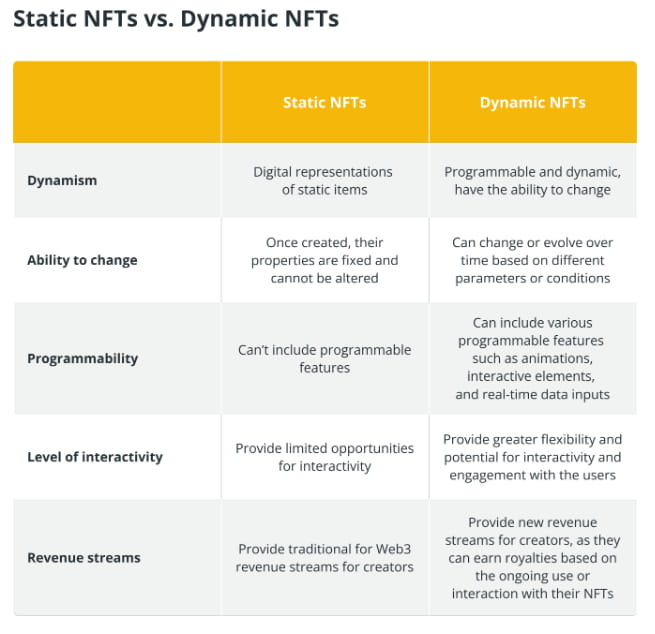
4. What is the difference between static NFT and dynamic NFT?
Static NFTs are fixed and represent a single version of a digital asset, while dynamic NFTs are programmable and can change or adjust based on specific conditions or inputs. Both types of NFTs have unique properties and can be used in a variety of applications, depending on the specific needs and requirements of the use case.
5. What are the various use cases for dynamic NFTs?
Dynamic NFTs have a wide range of potential use cases that go beyond traditional applications of static NFTs such as digital art.
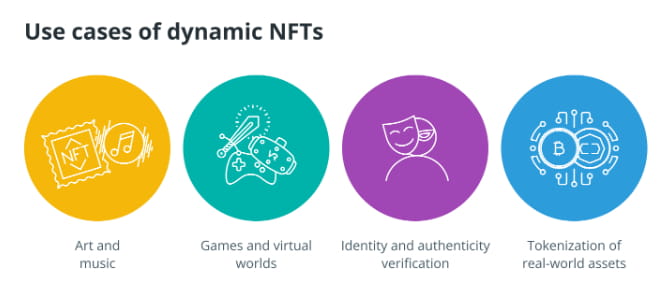
Similar to traditional NFTs, dynamic NFTs can be used in art and music to create and present unique artworks or rare recordings that change over time. For example, an NFT representing a digital painting could automatically change color or pattern, or an NFT representing a live concert recording could update itself to include more songs as they become available.
Additionally, dynamic non-fungible tokens can be used in games and the metaverse to represent in-game items and characters that can evolve or transform based on the player’s actions and interactions. Thus, a digital weapon in a game can gain new abilities or properties as the player progresses, with these changes reflected in the corresponding NFT.
Another interesting use case is using dynamic NFTs for identity management and authenticity verification. Dynamic NFTs can be used to represent a user’s digital identity, with the NFT changing based on the user’s behavior or preferences. Similarly, dynamic non-fungible tokens can be used to represent a user’s profile on social media, with the ability to update and evolve based on their behavior and interactions on the network.
Most importantly, dynamic NFTs can be used to represent assets that have changing values and require consistent updates. With oracles providing a gateway to external data sources, bringing reliable valuations to on-chain assets, dynamic NFTs can facilitate the tokenization of property, physical goods, and more.
6. Are there any examples of dynamic NFTs?
There are many examples of dynamic NFTs in the cryptocurrency space, including gaming items that evolve as players progress and digital artworks that change due to collectors’ actions, time, or even the surrounding environment.
The first example of a dynamic NFT is the unique piece “ Crossroad ” by Mike Winkelman, also known as Beeple. The NFT was created ahead of the 2020 U.S. presidential election and was supposed to change its appearance depending on the results. After Joe Biden became president, the image changed to show former President Donald Trump lying in a pile.
In 2022, the most expensive experimental NFT art project called Merge, created by pseudonymous digital artist Pak, sold nearly $92 million worth of “mass” tokens on the Nifty Gateway marketplace. These tokens are combined to form dynamic NFT collectibles that vary in part based on the number of tokens merged. The artwork is generated on-chain using custom scripts, similar to the popular “Art Blocks” NFTs.
Art Blocks is a platform for creating and selling generative artworks represented by dynamic non-fungible tokens. These artworks are algorithmically generated and can be customized by the owner to create a one-of-a-kind work of art.
Async Art is another platform for creating and collecting programmable artworks that can change and evolve over time based on different external inputs or conditions. These artworks are represented by dynamic NFTs, making them unique and valuable to collectors.
The permissionless NFT marketplace Rarible also allows for the creation and sale of dynamic NFTs. An example of a dynamic NFT on Rarible is the “Crypto Warrior” series, which allows collectors to upgrade their non-fungible tokens with additional features and abilities over time.
The “Organic Growth Crystal Reef” is a dynamic NFT that evolves over time. Over a three-month period set by the developers, the crystals grow and change appearance based on transactions and time. Additionally, the crystals can be used in augmented reality (AR) and physical replicas will soon be on display in art museums.
Another notable example of a dynamic NFT is LaMelo Ball’s dynamic NFT collectible, which maintains a record of the professional basketball player’s game statistics and changes based on updates to points, rebounds, and assists.
These are just a few examples of how dynamic NFTs created in the cryptocurrency space can be implemented. As this phenomenon continues to grow, we can expect to see more innovative and creative uses of them.
7. What is the future of dynamic NFTs?
The possibilities for future development and adoption of Dynamic NFTs seem endless.
Dynamic NFTs represent a groundbreaking innovation in the digital asset space. With their ability to change and evolve over time, these tokens offer a level of interactivity and engagement that traditional non-fungible tokens cannot match. From gaming and entertainment to art and collectibles, Dynamic NFTs have demonstrated a wide range of use cases and applications. And this is just the beginning.
As the technology and ecosystem around dynamic NFTs continue to develop, it is clear that this exciting phenomenon will play an increasingly important role in shaping the future of digital ownership and value exchange. In addition, individuals who are creators, collectors, or technology enthusiasts may find it valuable to keep a close eye on trends in dynamic non-fungible tokens.