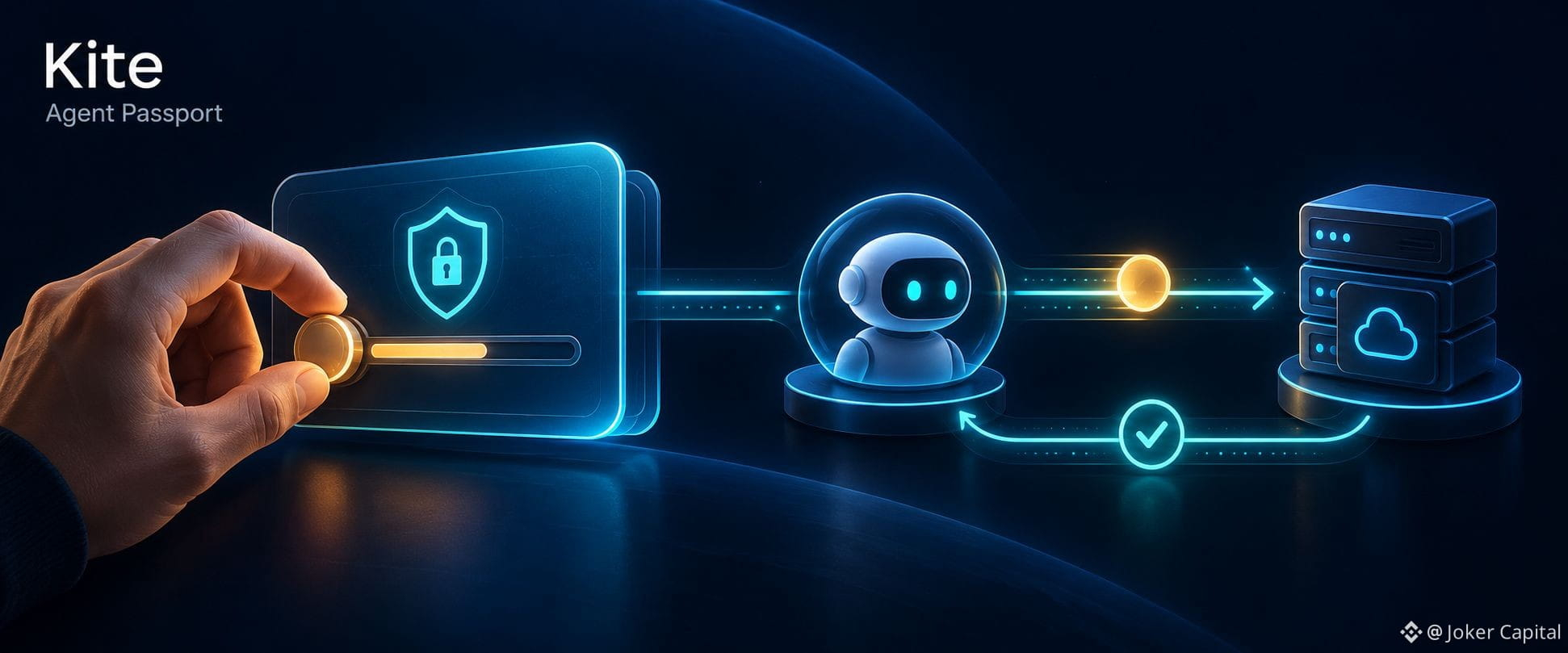

AI agents don’t just need to know how to work—they need to know how far they’re allowed to go when making transactions.
An agent can analyze data very quickly, but to hire a service or pay for a tool on its own, it needs more than intelligence: it needs an identity so it can be recognized, clearly defined permissions so it doesn’t exceed its limits, and a payment method suited to machine-to-machine transactions.
That’s why Kite caught my attention. The project is building infrastructure for the agent economy, with Kite Agent Passport handling identity and permission controls, while Kite Chain supports payments and coordination. In my view, what matters isn’t just what agents can do, but how they can act autonomously while staying within the boundaries set by people.
Imagine an agent that needs data to complete a task: it finds a suitable service, sends a request, and pays within its allocated budget. This is the kind of scenario the agent economy could enable—not something that’s already widespread today. To bring that vision closer to reality, identity, access permissions, and payments need to work together.
Kite still needs to prove this approach through its products and real-world adoption. But the question the project raises is worth considering: if AI agents become a type of internet user, who will build the systems that allow them to transact with proper controls?
To me, Kite is focused on an essential layer of infrastructure for that future.
@GoKiteAI #KiteBBW $KITE