
Markets don’t crash. They revert to the mean.
One of the most common sayings in investing is, “It’s time in the market, not timing the market.”
Honestly, I think this is one of the most misleading sayings in investing. It completely ignores valuation, market cycles, and the price you pay for an asset. Whether it’s real estate, stocks, precious metals, or commodities, they all go through the same process. Markets are forward-looking. Investors price in growth over the coming years, and during major bull markets, prices can move far above their long-term averages. Eventually, they become too expensive. So what happens next?
Mean reversion.
I’ve studied the performance of markets across multiple asset classes for years, and one thing I’ve learned is that what people call a “crash” is often just an asset returning to its long-term average.
It may never have been worth those extreme prices in the first place.
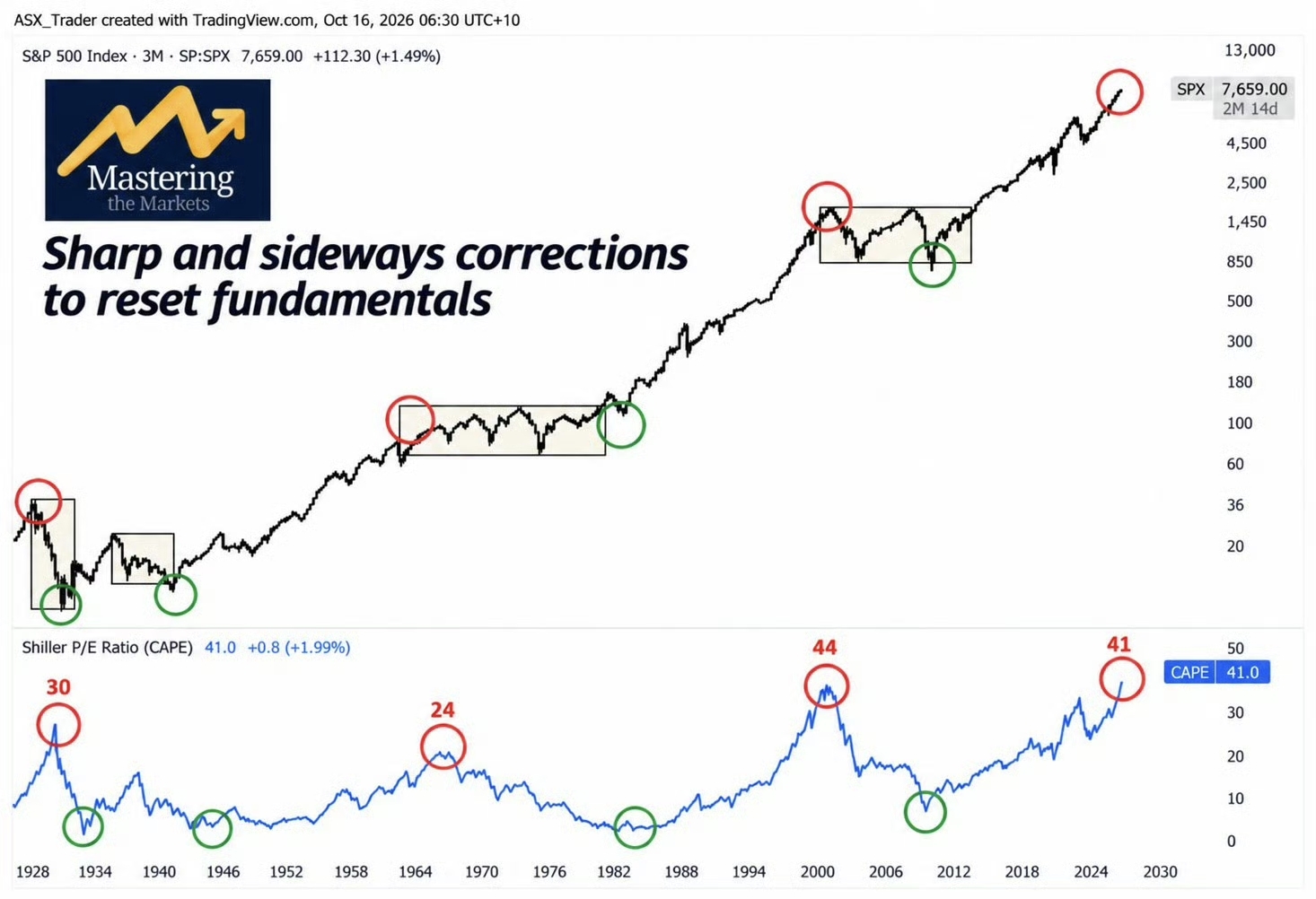
Take a look at the S&P 500’s 100-year history.
This chart tells an incredible story.
Look at those red circles.
1929, the late 1960s, 2000, and today.
These were periods when U.S. stocks were extremely expensive, following huge bull markets. What happened after those earlier extremes? Years of disappointing returns, especially after accounting for inflation. And one thing people often overlook is this: markets don’t always need a massive sell-off to reset valuations. They can correct sharply, or move sideways for 10 to 15 years while earnings and fundamentals catch up.
Either way, valuations eventually reset.
Now look at the green circles.
These represent periods when valuations were more attractive.
Think of the early 1930s, the 1940s, the early 1980s, and the Global Financial Crisis.
Investors who bought around those major valuation lows generally went on to enjoy stronger long-term returns.
Same market. Same companies. Completely different starting valuations. That’s why I believe the price you pay matters.
We see this everywhere.
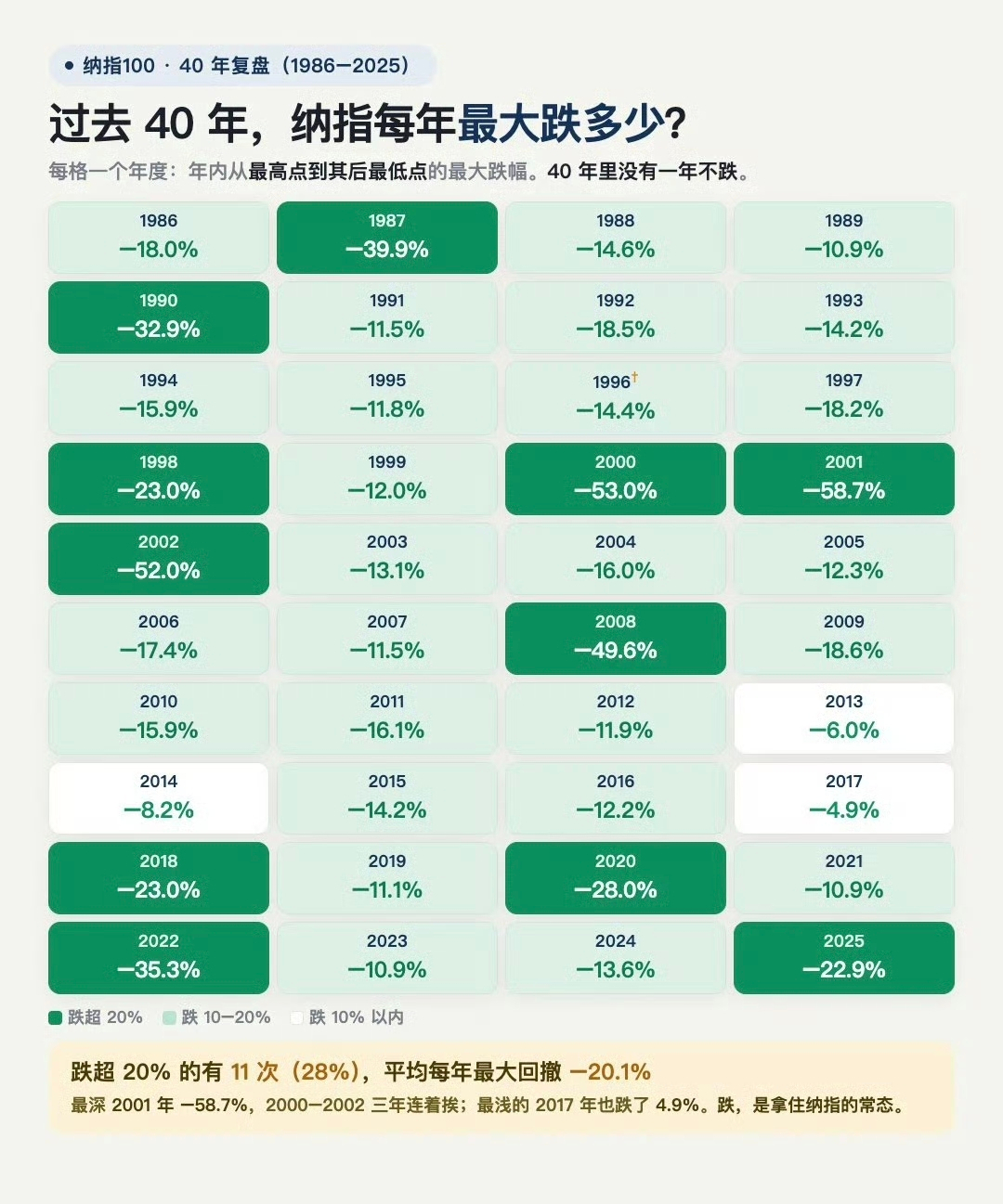
Remember the Nasdaq in 2000? It fell nearly 80% from its peak. People called it a crash. I see it as mean reversion. Tech valuations had become completely detached from reality. Look at silver recently surging to $120, then falling back to $55. Once again, people called it a crash. My take? It had simply gone too far, too fast. Even U.S. real estate during the Global Financial Crisis followed a similar pattern. Land values in many markets had become extremely stretched relative to historical norms, and the correction that followed helped unwind those excesses. Different assets. Different cycles. The same underlying behavior.
So what about today?
Look at the Shiller P/E ratio on the chart. We’re currently at around 41. That’s historically expensive—the second-highest level ever. Now ask yourself one thing: if you had a large sum to invest today, would you rather buy when the stock market is historically expensive, or when it’s historically cheap? This is the same question I ask about Australian real estate. Are we looking at a historic buying opportunity, or a market where growth over the next few years has already been priced in?
Warren Buffett built much of his investment philosophy around the concept of a margin of safety. Why don’t we apply the same thinking to entire asset classes? I’m not saying markets can’t keep rising from expensive valuations. Of course they can. But the more expensive an asset is, the more you’re paying today for future growth—and the less room there is for things to go wrong. And when the cycle eventually turns, you need to be prepared to weather the storm. Because what the headlines call a crash may simply be the market returning to more reasonable valuations.
The biggest risk isn’t necessarily a market correction. It’s paying too much for an asset in the first place.