

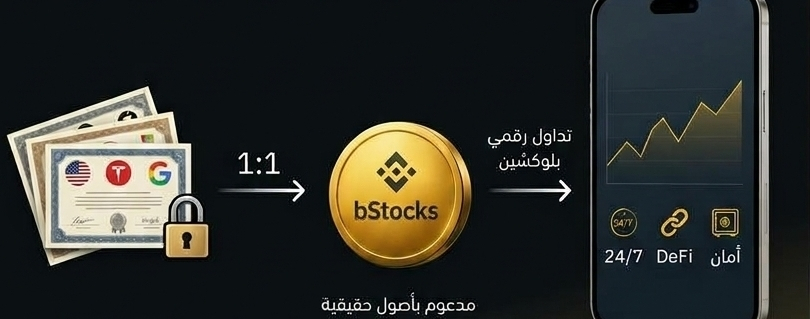

Before buying a tokenized stock, ask: What do you legally own?
In the case of bStocks, the regulatory framework defines the difference between owning the token and directly owning the share:
• Legal classification:
Certificates representing financial instruments under paragraph 92 of Schedule 1 to the Financial Services and Markets Regulations (FSMR) in the Abu Dhabi Global Market (ADGM). Holding them gives you exposure to the asset, but not direct ownership of the company.
• Issuance and listing:
The issuer is BTech Holdings Limited, and bStocks issuances appear on the official list of the Financial Services Regulatory Authority (FSRA). According to Binance, they are issued under a prospectus approved by the Authority.
• Geographic restrictions:
The public offering is limited to ADGM. Access outside it is available to eligible users in permitted jurisdictions through the secondary market. The product is not available in the United States or to U.S. persons, and is not registered under the U.S. Securities Act of 1933.
• On-chain compliance:
Holding the token in your wallet does not remove legal restrictions; the issuer reserves the right to add addresses that violate laws or sanctions to a blocklist.
I think this is a key point in the evolution of asset tokenization: technology is changing how trading works, but your rights are determined by the legal documents. Having a regulatory framework is no guarantee of capital, nor does it automatically mean the product is available in every country.
This is not financial advice. Do your own research.
-The Pharaoh
#AIAndSemiconductorStocksLoseOver $1TThisWeek