

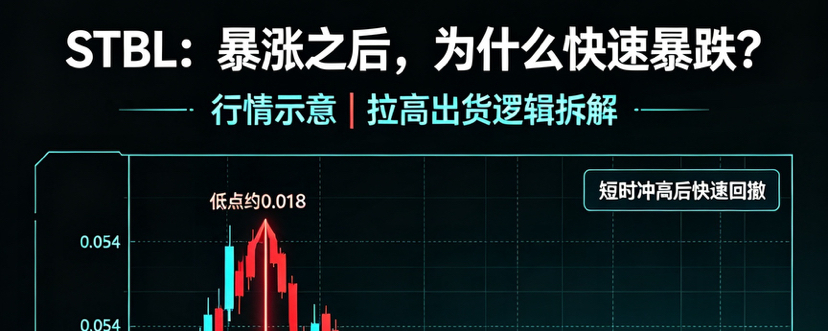

STBL just played out the crypto market’s most familiar script: a rapid, explosive surge that doubled its price in a short time, drawing retail traders in from all over the internet, followed by a swift plunge that left a long upper wick on the candlestick chart. Over 24 hours, it climbed from a low of around $0.018 to a brief high of $0.054, at one point gaining more than 100%. After peaking, the price quickly retraced, leaving anyone who bought in at the top sitting on immediate paper losses.
At first glance, many people see the name STBL and instinctively assume it’s a stablecoin. That’s the project team’s most cunning bit of branding. STBL is not a stablecoin pegged to the U.S. dollar; it’s simply a governance token riding the RWA narrative. It borrows highfalutin concepts like real-world U.S. Treasury assets and on-chain yield to pass itself off as a low-risk asset. But the token itself offers no guaranteed redemption whatsoever—its price movements depend entirely on how the market makers play their hand.
This token has a very small market cap and highly concentrated circulating supply, making it a classic small-cap coin controlled by market makers. Coins like this have one notable characteristic: it doesn’t take much capital to quickly double the price. Today’s rally came with no new business developments, no increase in asset reserves, and no material positive news. It was purely a price-pumping effort designed to create the illusion of easy profits.
The goal of the pump is crystal clear: flood communities and Twitter with talk of a huge surge, creating the impression that you can “double your money if you seize the opportunity.” Retail investors who see the sharp rise on the chart get swept up in the fear of missing out and buy in at the top. Once there are enough buy orders, the controlling investors start dumping their holdings, and the price plunges almost instantly.
Small-cap coins have extremely poor liquidity. When prices are rising, it can seem easy to buy; when the sell-off begins, buyers can vanish in an instant. Investors who bought near the top and try to sell to cut their losses may face massive slippage or find that their orders don’t get filled at all, leaving their on-paper losses locked in. STBL’s historical price movements show wild swings year after year, with a maximum one-year decline of over 60%. It is a highly volatile speculative asset to begin with.
Many promotional materials repeatedly emphasize RWA and Treasury yields, but the authenticity of the underlying reserve assets and redemption rights are entirely controlled by the project team, with no backing from domestic regulators. Audit reports cannot eliminate the risks of smart-contract vulnerabilities or asset misappropriation. The so-called “asset yield” is just a narrative; it cannot support the token’s market price.
This kind of “pump first, then crash” Pump & Dump scam has remained unchanged in the crypto world for decades. A price surge isn’t an opportunity—it’s bait laid by the hunters. That long upper wick is damning evidence: the gains during the pump were only numbers on paper; after the market makers dump their holdings, the losses suffered by those who bought at the top are real losses of principal.