


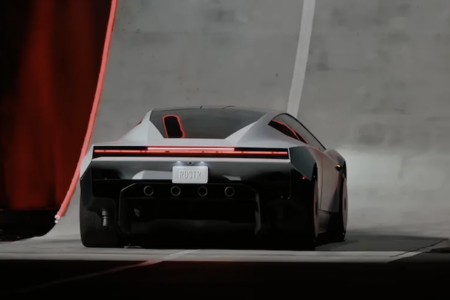
Tesla’s second-generation electric sports car, the Roadster, has finally made an official appearance after nearly nine years. On the 15th, CEO Elon Musk unveiled the redesigned Roadster in Texas, demonstrating how a vacuum adhesion system allows it to drive along an inverted ramp, before onboard thrusters propel it through an aerial flip and landing. The design showcases a combination of electric vehicle and aerospace technology. Musk said production is expected to begin in 2028, but the price, actual delivery timeline, and road-use regulations for some of its special features have yet to be confirmed.
Featuring SpaceX technology, with three versions designed for different purposes
The Roadster showcased this time was developed in collaboration between Tesla and SpaceX, the space company owned by Elon Musk. During the event, the car first drove along an inverted ramp while secured by a vacuum suction system, then launched off the ramp, flipped in midair, adjusted its position with thrusters, and landed. In another demonstration, the car jumped over several Tesla vehicles before performing a similar aerial maneuver.
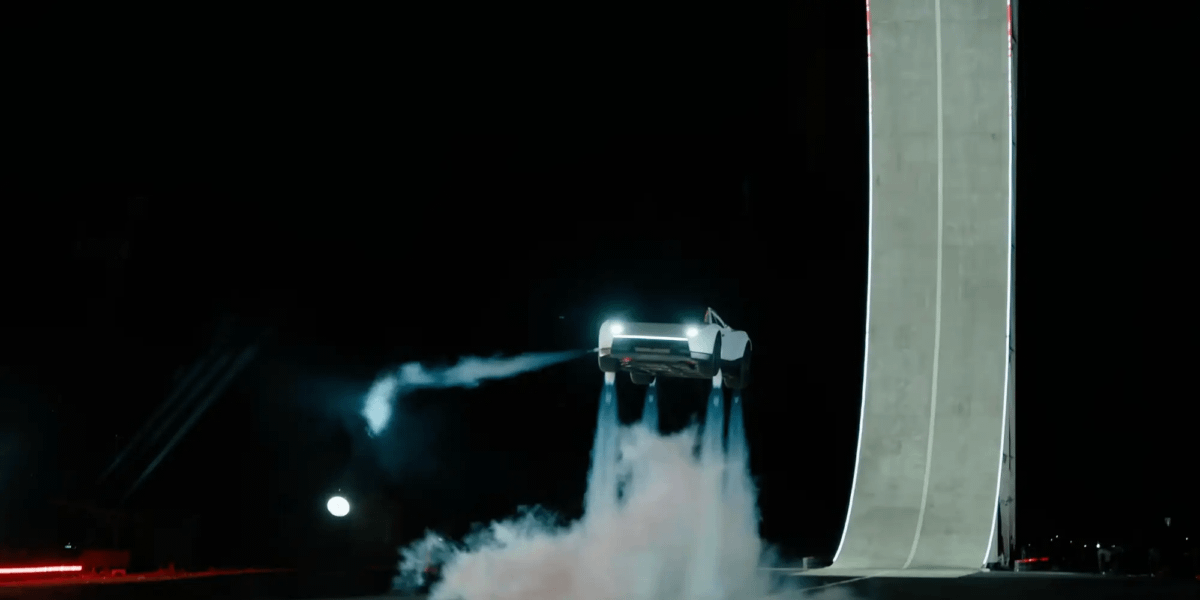
Tesla has divided the new car into three versions: Performance, Thrust, and Rocket. The Performance is geared toward road and track performance, and features active aerodynamics and a multi-mode suction system. The Thrust version adds cold-gas thrusters at the rear, emphasizing extreme acceleration. The Rocket version has a single-seat layout and cold-gas thrusters mounted around the body, designed to provide thrust forward, upward, and for sideways rotation.
Specifications released by Tesla show that the three versions can accelerate from 0 to 60 mph (about 96.6 km/h) in under 1.6 seconds, 0.9 seconds, and 0.59 seconds, respectively, and each has a range of more than 300 miles (about 483 km). At the event, Musk said the Roadster could accelerate in under one second and stated that the production car's target top speed might even reach 0.5 times the speed of sound. However, these figures should be viewed separately from the final production specifications and real-world test results.
The aerial maneuvers made possible by the thrusters were a highlight of the event, but it remains unclear whether the technology can be used on ordinary roads. In particular, the Rocket version's design involves briefly lifting off the ground, and how it will meet vehicle safety and road regulations remains an open question.
Price not yet announced; maximum deposit is $250,000
Tesla has yet to announce the official price of the next-generation Roadster. On reservation pages in recent years, the company has set different deposit requirements for each version: $50,000 for the Performance and $250,000 for the Thrust. The Rocket version is invitation-only and positioned as a single-seat car with a complete flight system.
According to reservation information, the Performance version requires an initial deposit of $5,000, followed by a wire transfer of another $45,000 within 10 days. The Thrust version requires a $250,000 deposit. Since the official price has not been disclosed, these amounts are required to reserve the car and should not be taken as its final purchase price.
Tesla first unveiled a prototype of the second-generation Roadster in 2017, announcing a starting price of $200,000 and projecting that deliveries would begin in 2020. Musk also said at the time that the new car could have four seats and a range of 620 miles (about 1,000 km) on a single charge. However, the original delivery timeline has been pushed back multiple times, and nearly nine years have now passed. To date, Tesla has not provided more detailed information about production progress or an official delivery date, leaving reservation holders waiting for further updates.
The Roadster's significance is greater than its sales volume
The Roadster's significance for Tesla lies not only in the sports car's performance, but also in how it showcases the company's engineering capabilities and brand image. Last month, Morningstar analyst Seth Goldstein said Tesla currently lacks a high-performance luxury car that represents the company's best engineering and technology, and that the Roadster could serve as the brand's flagship model.
However, Musk has downplayed the Roadster's financial impact on the company in the past, describing the car as a “minor thing” for Tesla in 2023 and saying it was unlikely to make a significant difference to its financial performance. Goldstein estimates that Tesla could sell about 2,000 Roadsters a year, a relatively small share compared with the roughly 1.6 million vehicles the company sold last year.
The first-generation Roadster launched in 2008, used the Lotus Elise chassis, and remained on sale until 2012. It was Tesla's first electric vehicle and helped change perceptions of electric-car performance. Since then, Tesla's sales focus has shifted to models such as the Model Y, Model X, Model S, and Model 3.
As the second-generation Roadster makes its debut, Tesla's direction is also shifting from traditional car manufacturing toward artificial intelligence, autonomous driving, and robotics. This year, the company stopped selling the Model S and Model X to make room for production of its Optimus humanoid robot, and introduced the Cybercab autonomous taxi, which has no steering wheel, pedals, or mirrors.
The Roadster's appearance this time therefore seems more like a concentrated showcase of Tesla's engineering capabilities and brand image. Although its aerial flips and thrusters have attracted market attention, whether the car will ultimately enter production on schedule, whether its unusual features can be put into practice, and whether the high reservation threshold can translate into steady sales remain to be seen.
Source