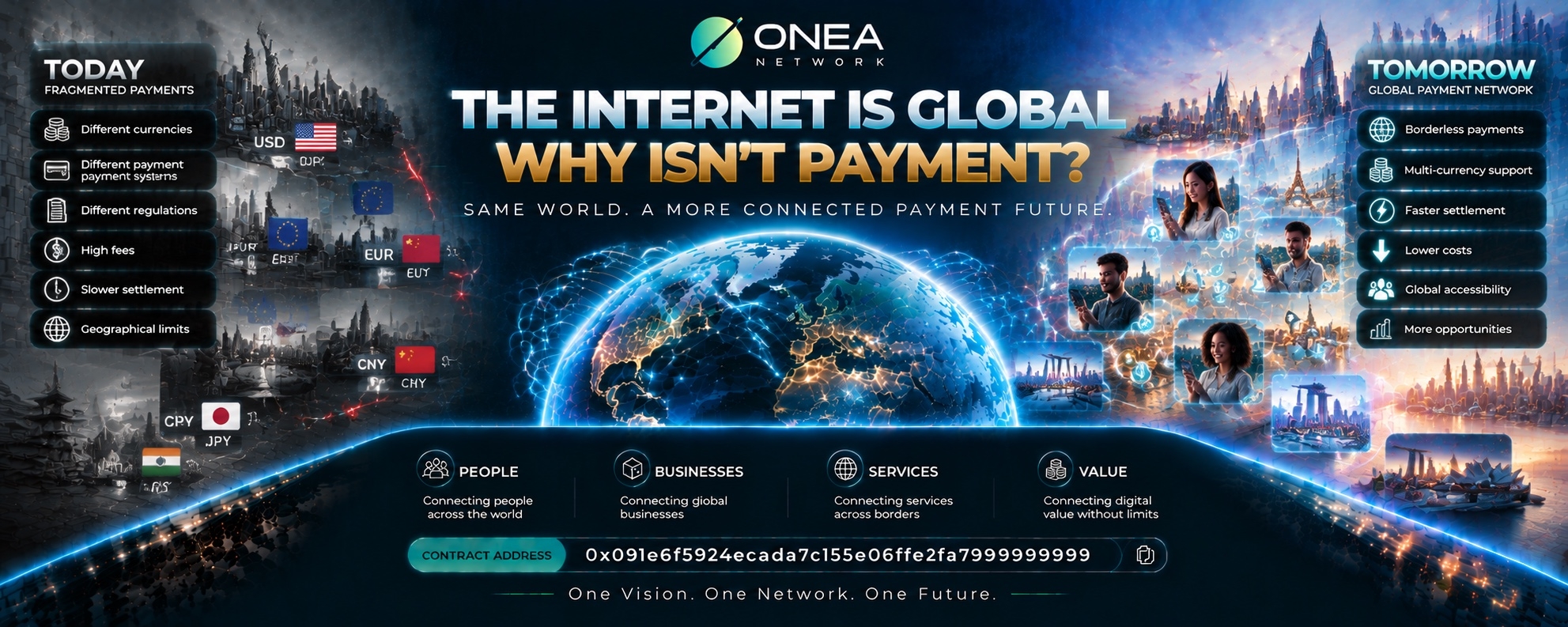
🌍 The internet has connected the whole world. So why hasn’t the exchange of value truly gone global?
The internet has transformed the world.
People in Asia can communicate with people in Europe in just seconds.
A creator can share content around the world.
A business can serve consumers thousands of kilometers away.
Information can cross borders almost instantly.
But “value” hasn’t quite managed to do the same.
Cross-border payments can still involve:
Different currencies.
Different payment systems.
Different platforms.
Different rules.
Extra fees.
And wait times.
And so, an interesting phenomenon has emerged:
The internet has gone global.
Business is going global.
Communities are going global.
But value exchange remains highly fragmented.
Therefore, what deserves attention in the next phase of the digital economy is not just faster payments.
It is:
Can we make it easier to connect value across different countries, regions, and platforms?
Imagine:
A creator in one country.
A consumer in another country.
A service provider in another region.
Different forms of digital assets.
Different digital platforms.
All ultimately brought together in a more seamless network for exchanging value.
This is not just a matter of “payment speed.”
More importantly, it is about reducing friction caused by geography.
Connecting people with one another.
Connecting businesses with users.
Connecting services with needs.
Connecting different forms of digital value.
This is exactly the direction ONEA Network hopes to explore over the long term.
So that geography is no longer an unavoidable barrier to connection in the digital economy.
The internet solved the question of “how to connect the world through information.”
The next generation of digital networks needs to think further:
“How can value connect the world?”
This may become a very important shift in the next phase of the digital economy.
One Vision.
One Network.
One Future.