



When it comes to Solana, just about everyone in the crypto world has heard of it.
Solana was founded by Anatoly Yakovenko, who was born in Ukraine. Early in his career, he spent more than a decade as a senior software engineer at Qualcomm in the U.S., working day in and day out on high-speed communications and distributed systems. He’s a bona fide tech-minded engineer.
In 2017, he realized that one of the biggest problems with many blockchains was how slow they were: nodes constantly had to sync information back and forth, making transaction processing sluggish. So he came up with a new idea called Proof of History (PoH), which gives the blockchain verifiable timestamps. That way, nodes don’t have to repeatedly check with one another, helping the network reach top speed. And that’s how Solana’s story began.
Solana teamed up with former Qualcomm colleagues and launched its mainnet in 2020. Its biggest selling points are speed and low transaction fees.
It took off during the bull market, with countless meme coins and DeFi projects building on the chain. For a time, it became Ethereum’s strongest competitor. But it also hit some major bumps: it suffered several network outages in its early days, then got caught up in a series of major institutional failures, and its token price took a serious hit. The team kept iterating and fixing bugs, and Solana gradually bounced back. Today, it remains one of the leading public blockchains in crypto.
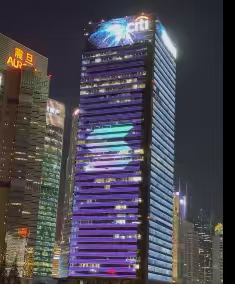
And here’s the news that’s recently set the crypto community abuzz: amid China’s strict restrictions on cryptocurrency trading, Solana has put its brand on a skyscraper in the heart of Shanghai’s Lujiazui district and opened a Shanghai developer space called Builder Station.
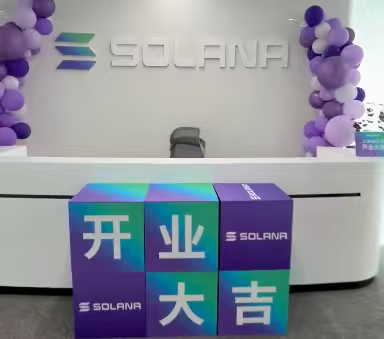
Many people’s first reaction is confusion: if cryptocurrency trading isn’t allowed in China, why can Solana rent a space in Shanghai and advertise on a landmark building?
There’s one important distinction to make here:
This office isn’t here to open a crypto exchange or teach people how to trade crypto. Its focus is solely on blockchain infrastructure, developer networking, and incubating projects. It’s aimed at programmers and technical teams in China, and it won’t promote virtual currency trading. All trading-related business is conducted overseas.
China prohibits financial activities such as exchanging virtual currencies and speculative trading, but it does not prohibit research into blockchain technology itself or technical exchanges.
Solana’s strategy is clear: China has a population of 1.4 billion, plenty of top programmers and technical talent, and huge amounts of capital. Even with trading channels restricted for now, Solana can establish a foothold in the developer community and familiarize a large number of local tech professionals with its underlying technology.
Put simply: build a community and an ecosystem first, without getting into buying and selling tokens.
Many crypto investors have already started speculating:
For now, this is just a show of presence on the technology front. If industry policies change in the future, could this become a catalyst for a major market rally?
After all, if a large number of developers in China build products on this chain and its ecosystem takes off, the potential is enormous.
But we also need to stay clear-eyed: the current policy environment hasn’t changed, and virtual currency trading still isn’t protected by law. Don’t mistake this brand exposure for a sign that a bull market is about to begin. It’s more about securing a position in the ecosystem—a long-term move that may not have an immediate impact on the market.
Overall, Solana’s move into Shanghai is a signal worth keeping an eye on across the industry. It doesn’t mean the market is about to take off, but it does show that leading overseas public blockchains are starting to pay attention to China’s vast developer market in a different way.
#Solana #PublicBlockchain #web3