


Reasons behind the crypto market decline:
The cryptocurrency market has pulled back over the past few weeks. The latest wave of selling was triggered by a U.S. inflation report. Consumer prices rose, increasing the likelihood of the Federal Reserve raising interest rates.
The crypto market is down today, with Bitcoin and most altcoins declining. Bitcoin fell to $81,000, while the total market capitalization of all crypto assets dropped 3.7% over the past 24 hours to $2.7 trillion. The worst-performing assets in the industry include Raydium (RAY), Zcash (ZEC), Lighter (LIT), and Starknet (STRK). All of these altcoins fell by more than 12%.
U.S. inflation data trigger a cryptocurrency market crash
One of the key factors behind today's cryptocurrency market crash was the stronger-than-expected U.S. consumer inflation data released on Wednesday. The Consumer Price Index (CPI) rose 3.7% year over year in September, moving further away from the Federal Reserve's 2.0% inflation target. Core inflation also continued to rise this month.
U.S. inflation has surged as the U.S.-Iran conflict and ongoing hostilities between Saudi Arabia and Houthi forces have driven up crude oil prices. Brent crude has remained above $100 a barrel throughout the week, while West Texas Intermediate (WTI) has climbed to $95. Gasoline and diesel prices have also stayed elevated this month.
Rising inflation is affecting cryptocurrency prices by pushing up U.S. Treasury yields. Data show that the 10-year Treasury yield rose to its highest level in decades this month, while yields on five- and two-year Treasuries also continued to climb.
These figures mean the Federal Reserve may decide to raise interest rates this year. On Polymarket, the probability of a rate hike by December has surged above 80%. Whenever inflation and interest rates are on an upward trajectory, Bitcoin and most altcoins tend to underperform the broader market.
Rising liquidations are weighing on cryptocurrency prices
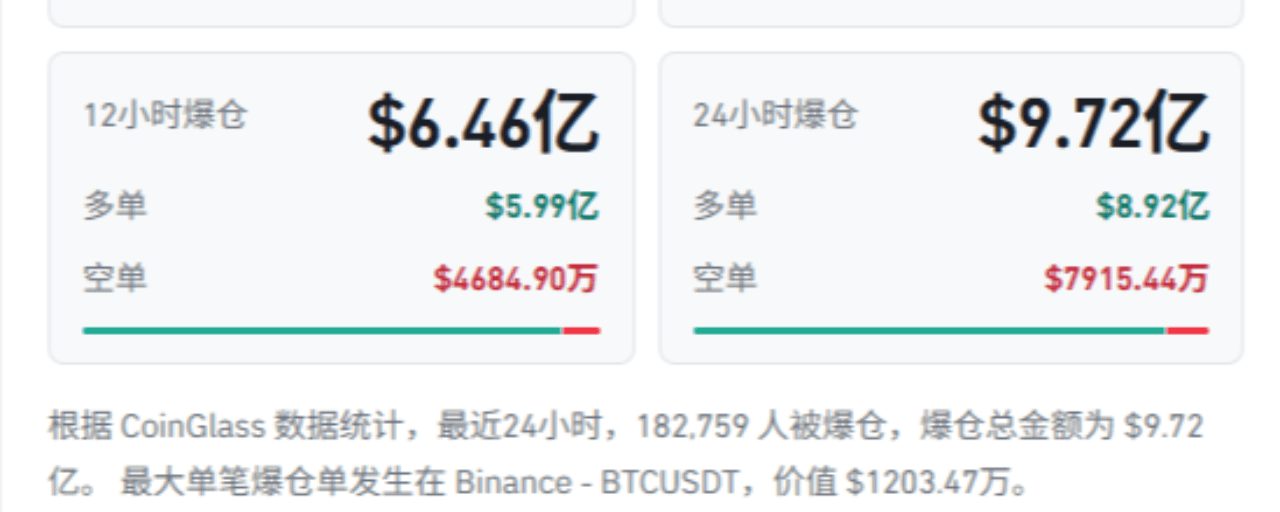
Bitcoin and other altcoins have fallen amid a continuing wave of liquidations across the crypto industry. Data show that liquidations over the past 24 hours surged 393% to more than $938 million. Ethereum accounted for the largest share, at $281 million, followed by Bitcoin at $194 million. Solana, Zcash, Dogecoin, and XRP were also among the most heavily liquidated tokens.
A forced liquidation occurs when market prices move to a level where a trader no longer has enough margin, forcing the broker to close their leveraged position. In most cases, forced liquidations tend to intensify selling pressure in the cryptocurrency market.
These liquidations coincided with a decline in open interest. Open interest over the past 24 hours fell 2.25% to $138 billion, well below the level at the same time last year.
Demand for cryptocurrencies is declining
The crypto market's continued weakness stems from waning investor demand. Data show that spot Bitcoin ETFs saw outflows of more than $278 million, while funds tied to Ethereum lost $695 million. Other altcoin ETFs, including those for Dogecoin, XRP, HYPE, and Zcash, attracted only limited inflows this month.
This weakness stands in sharp contrast to the past three months, when Bitcoin funds grew their assets by more than $6 billion and Ethereum ETFs added more than $3 billion. This suggests that U.S. investors are gradually exiting the market and locking in profits.
Disclaimer: The above content reflects only the author's personal views and does not constitute investment advice.