




If you wait until the rally starts to decide what to write, you’re already too late. Jeni-kun has put together some go-to angles for three common scenarios so you can prepare in advance.
I. During a big rally
1. Why did it rise? Was it driven by capital flows, news, or a short squeeze?
2. Market sentiment: Check the Fear and Greed Index. I once wrote, “It takes just three green candles to go from fear to greed.” It was at 30 last week and 76 this week—a contrast readers love.
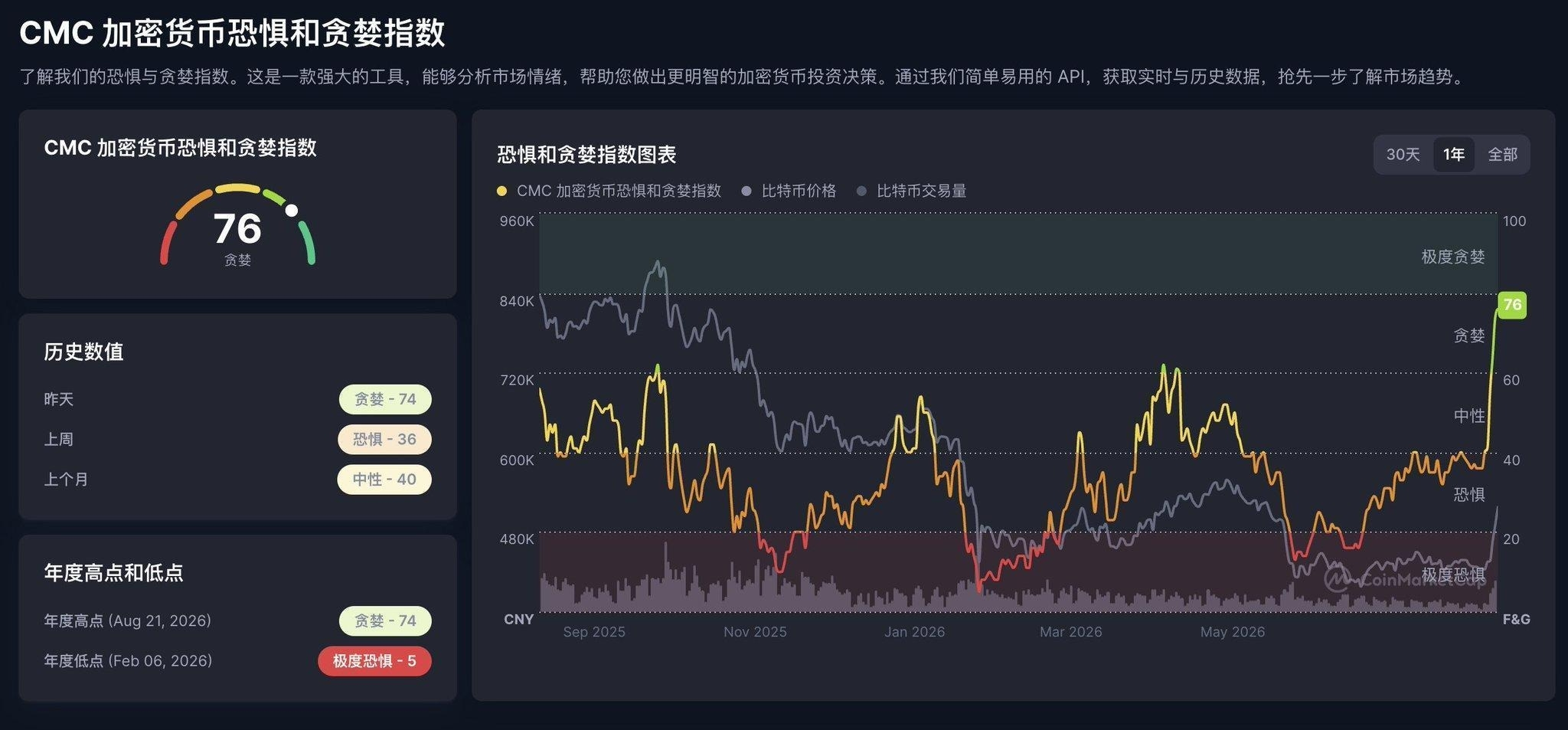
Figure 1: The Fear and Greed Index featured in Jeni-kun’s post. At 76, it’s already in the Extreme Greed zone.
3. Which sectors followed the rally, and which didn’t?
4. What should you do? Take profits or hold?
5. Watch three metrics: the Fear & Greed Index, futures funding rates, and total liquidations across the market. Looking at all three together can help you gauge whether fresh capital is coming in or whether a short squeeze is driving the move. But they’re only indicators—don’t draw conclusions based on these three metrics alone. If funding rates get absurdly high, it means longs are overcrowded, so remind readers not to chase the rally.
A reminder: when prices surge, it’s easy to sound like you’re shilling. Focus on what “I” am doing, and avoid brainless calls to buy something like “Buy XXX.”
II. During a sharp drop
1. How have similar drops played out historically?
2. Is the reason for this drop different from previous ones?
3. What to keep in mind when buying the dip: scale in, manage your position size, and don’t use leverage.
4. Reassure people. During a sharp drop, readers need someone to offer comfort and encouragement to help them get through the bear market—not a pile of panic-inducing data.
5. Warn people about scams. Scammers are most active during sharp drops, and offers like “I’ll help you break even” and “earn back your losses through staking” start popping up everywhere. Jeni saw a guy on Square who was scammed out of 60,000 USDT by a so-called staking scheme. After scamming him, they even asked him to deposit the same amount again to “unstake” his funds. Remember: anyone who messages you out of the blue and asks you to send money to a specific address to “unfreeze” or “unstake” your funds is almost certainly a scammer. Only contact customer support through the official app or by navigating to the official website yourself.
III. When major news breaks
1. Quick take: explain what happened as soon as possible.
2. How does it affect ordinary users? Are their funds safe, and should they do anything?
3. Once the news is confirmed, write a follow-up review.
4. Distinguish between sources. Official announcements and official X accounts are primary sources; media alerts are secondary; screenshots in group chats are thirdhand. If a claim hasn’t been officially confirmed, make that clear when you write it, with phrases like “according to XX” or “there’s no official confirmation yet.” Don’t present it as fact. Square’s rules prohibit false statements, rumors, and malicious defamation. Adding “according to reports” isn’t a disclaimer, either—if you know it’s false, don’t post it.
IV. When macroeconomic data is released
Around U.S. CPI and nonfarm payrolls releases, and Fed rate decisions, crypto prices tend to fluctuate more than usual. CPI and nonfarm payrolls are usually released at 20:30 Beijing time (21:30 during U.S. standard time); rate decisions are announced at 02:00 Beijing time (03:00 during U.S. standard time).
1. Post a preview the day before, clearly stating market expectations.
2. As soon as the data comes out, post “actual vs. forecast,” then add your take.
3. Review the market the next day: how did it move, and did it match your prediction?
One data release can give you three posts, and there’ll be an audience for each.
There are two rules that apply in all three scenarios: First, verify your data. Rumors spread most during major news events, and spreading them is a serious violation on Square. Second, add the relevant token tag when you mention a specific token. Trading activity is highest when markets are volatile, so readers are also more likely to click the tag and trade.
Jeni’s habit is to prepare and save opening lines and templates for these three types of posts in advance. When the market moves, all that’s left is to fill in the data and post.
Here are three versatile opening templates you can use right away—you're welcome:
Big rally: “From fear to greed in just X days” + why prices rose + what I’m doing now
Sharp drop: “Another test of faith” + why prices fell this time + which historical drop it resembles + whether I’d buy the dip and how
Major news: “Jeni has learned” + what happened + how it affects ordinary people
【Quick Reference】Times and Data
1. U.S. CPI and nonfarm payrolls: 20:30 Beijing time (21:30 during U.S. standard time)
2. Fed rate decision: 02:00 Beijing time (03:00 during U.S. standard time), followed by the chair’s press conference half an hour later
3. Funding rates: Binance USDⓈ-M perpetual contracts don’t all use the same settlement interval. Some are 8 hours, some 4 hours, and a few are 1 hour. Check the contract page for the interval. For the same interval, a higher positive rate means longs are more crowded.
4. Content mining settlement week: Monday through Sunday, UTC
5. Rank your sources: official announcements and official X accounts are primary; media alerts are secondary; screenshots in group chats are thirdhand. Don’t state anything as fact without official confirmation.
6. Red lines: posting false statements, rumors, or malicious defamation, and faking candlestick charts are all serious violations.
What are you planning to write the next time the market crashes?