


Over the past 30 days, Uniswap v4 has processed more than $44 billion in trading volume, accounting for 49.9% of the protocol’s total volume—just a few tenths of a percentage point ahead of v3 at 44.9%. Many people see that figure and immediately think, “The new version has replaced the old one.” But for those building in Web3, the real questions aren’t “Did v4 win?” but “Why did v4 win, and will the way it won change how you approach things from here on?”
01 This Isn’t an Ordinary Version Upgrade
First, some context. Uniswap v3 launched in 2021 and cemented its dominance in the DEX space with “concentrated liquidity.” In the years that followed, almost every DEX copied its design. v4 took two years to develop, with repeated delays along the way. It’s only now that its share of trading volume has finally caught up with v3—49.9% versus 44.9%, a gap of just half a percentage point.
In other words, this isn’t a case of the old version being displaced. For the first time, the two generations of the protocol are truly running side by side. What’s more notable is where this trading volume is coming from: not just Ethereum mainnet, but new chains like Robinhood Chain and Base are also seeing heavy v4 usage. Stablecoin swaps, RWA tokens, and one-click Meme coin launches and pool creation are all flowing into v4. This activity isn’t being pulled away from v3—it’s growing out of new use cases.
02 How did v4 gain ground? By turning DEXs from “standardized products” into “programmable” ones
The core innovation in v4 is called Hooks—in plain English, “hooks.” The rules for v3 pools are hard-coded: fees are fixed, and the logic is fixed. If you want customization, you have to write a separate contract. Hooks let developers insert custom logic before or after a trade.

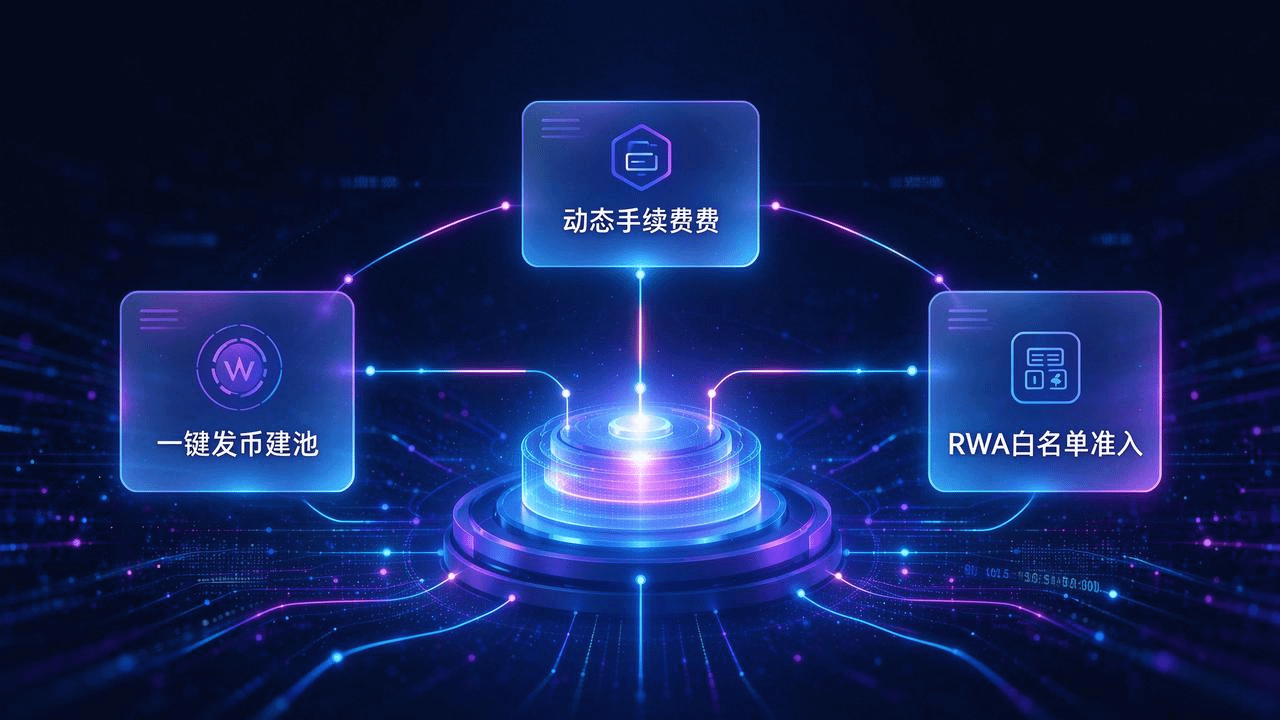
For projects, this makes three things possible that were previously difficult to achieve:
· Dynamic fees: When markets are volatile, fees automatically rise; when volatility is low, they automatically fall.
· Launch a token and create a pool directly: Meme coins like Clanker can be launched and have a pool created in a single step on v4, with liquidity available immediately.
· Connect institutional assets such as RWA: Pools can add whitelists and KYC, making them viable for compliant institutions.
Essentially, the power to decide “who sets the rules” has been delegated from the protocol to each individual pool. That’s also why, according to Gate Research, more than 40,000 Hooks have already been initialized in v4—the ecosystem is genuinely taking shape.
03 A reality check: more than half the trading volume doesn’t mean everything
We need to take a step back here. Trading volume ≠ TVL. v4 is approaching half of trading volume, but the funds LPs have actually locked up haven’t shifted over in the same proportion. Much of v4’s trading volume comes from high-frequency stablecoin swaps: lots of volume, but low margins.
One more thing: some data shows that certain Hook pools engage in wash trading, and these meaningless trades can also “inflate” trading volume. So don’t rush to conclude that v4 can monetize effectively just because it has “more than half the trading volume”—a surge in trading volume doesn’t mean protocol revenue, let alone project revenue, will rise by the same amount.
04 The biggest danger lies precisely in the freedom
The greater the freedom Hooks offer, the more powerful they are—and the more vulnerable they become. Freedom means every pool can have different code, multiplying audit costs. A recent 0x report states plainly that more than half of Uniswap v4 Hooks pose malicious risks. In other words, when you trade on v4, you’re no longer interacting with a single “standard, repeatedly audited contract,” but with countless custom contracts of varying quality.
For users and projects alike, this is something you must remember: before using a v4 pool, find out who wrote its Hook and whether it has been audited. Don’t assume every pool is safe just because the protocol is called Uniswap.
05 What to watch going forward
Here’s a simple three-point framework for thinking about it:
· Follow the trend: v4 isn’t a passing fad. It marks a turning point where programmable liquidity is moving from “experiment” to “mainstream.” DEXs will keep evolving toward “a different set of rules for every pool.”
· Follow the data: Don’t look only at trading volume share. Consider TVL migration and genuine trades, and adjust for wash trading before drawing conclusions.
· Watch the risks: The more freedom there is, the more security responsibility falls on you. Audit Hook pools before using them.
At its core, Uniswap v4 surpassing half of trading volume is DeFi reminding us that when “who sets the rules” becomes programmable, the key to winning shifts from “who offers the most features” to “who knows how to use the rules and control the risks.” It’s an opportunity for projects and a reminder for users.