


Creating Value, Organizing Value with HELIX: What Kind of Closed-Loop Economic System Is AWAKE Building?
The evolution of AI technology has long moved beyond the basic stage of “intelligent Q&A.”
The industry’s core transformation today is no longer about whether AI can become smarter, but about how AI can participate deeply in the real economy, how value can be verified and allocated, and how it can be accumulated over the long term.
Technology creates productive forces; mechanisms define relations of production.
The core mission of the AWAKE HELIX Spiral Protocol is to address the AI industry’s biggest shortcoming—
by providing a practical, cyclical, and governable on-chain economic model that can capture the real value of the AI industry.
This article examines three dimensions—the underlying trends in the AI industry, HELIX’s closed-loop mechanisms, and the latest on-chain data—to provide a comprehensive analysis of the industry pain points addressed by AiLGNS and the HELIX Spiral Protocol, and the new ecosystem cycle they are building.
I. The Next Phase of the AI Industry: Technology Is Plentiful, but Value Systems Are Scarce
Looking at AI’s development in recent years, large models, computing clusters, and intelligent agent tools have grown explosively. AI’s “production capabilities” are now fully mature.
But the entire industry has always had one fatal flaw:
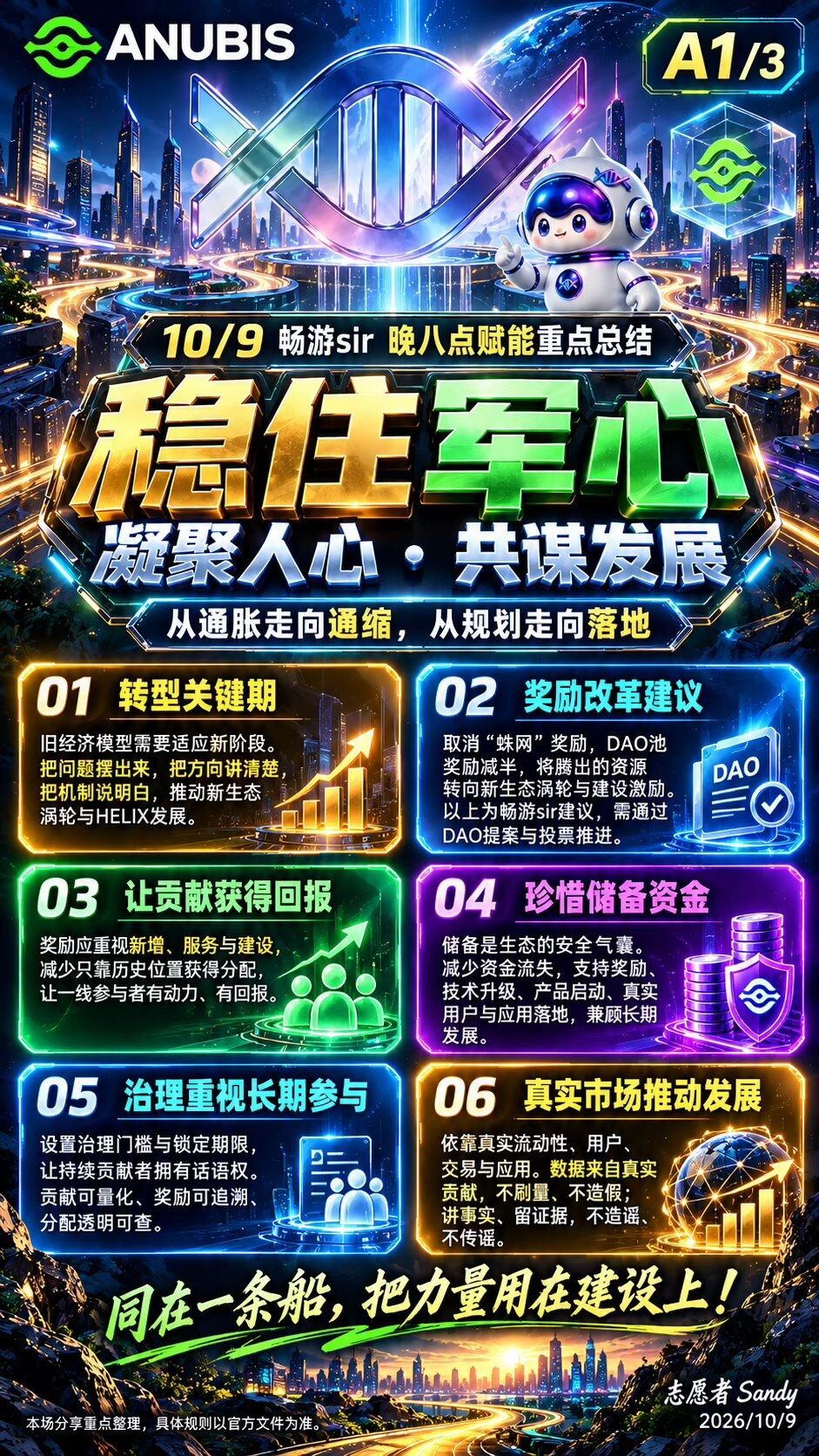
AI can continuously create value through services, but no system exists to quantify contributions, distribute returns, accumulate assets, and provide ongoing incentives.
At present, the vast majority of AI projects have only completed the front-end “technical delivery”:
User needs → AI computation → output. That’s all.
But value creation ≠ value realization:

🔹Computing-power contributors have no long-term incentives
🔹Ecosystem builders have no way to establish ownership of value
🔹Value generated by AI services cannot be accumulated on-chain
🔹The rights and responsibilities of participants, users, builders, and governance participants are completely disconnected
Simply put: AI has solved “the ability to get things done,” but not “the rules for sharing returns, accumulating value, and keeping the system running.”
This is the core unmet need in the next phase of the AI industry:
A decentralized protocol is needed to organize distributed computing power, services, liquidity, and governance, turning fragmented AI productivity into a closed-loop, sustainable on-chain economic system.
And this is precisely the underlying design logic of the AWAKE HELIX Spiral Protocol.
II. HELIX’s Core Logic: AI Creates Value, the Protocol Organizes Value, and AiLGNS Connects Value
Unlike traditional token projects focused solely on “issuing, hyping, and circulating tokens,” HELIX builds an ecosystem-wide, end-to-end value circulation model.
The entire system can be summed up in one core narrative:
AI creates value, HELIX organizes value, and AiLGNS connects value.
The Complete Closed-Loop Process
🔹Real user needs
→ AI models/agents/computing power deliver services
→ Real economic output delivered
→ Verification of ecosystem contributions
→ Empowerment through computing power
→ AiLGNS tokens circulate
→ Liquidity support
→ Decentralized community governance
→ Accumulation of ecosystem assets
→ Reinvestment in AI technology iteration and ecosystem expansion
This is not a simple juxtaposition of concepts. It deeply integrates five dimensions: AI productivity, user needs, ecosystem contributions, tokenized assets, and community governance:
1. Source of value: AI services delivered
The foundation of all ecosystem value is real demand for AI services and the output of computing-power operations, avoiding unsupported narratives built purely around money flows.
2. Establishing ownership of value: HELIX mechanisms quantify contributions
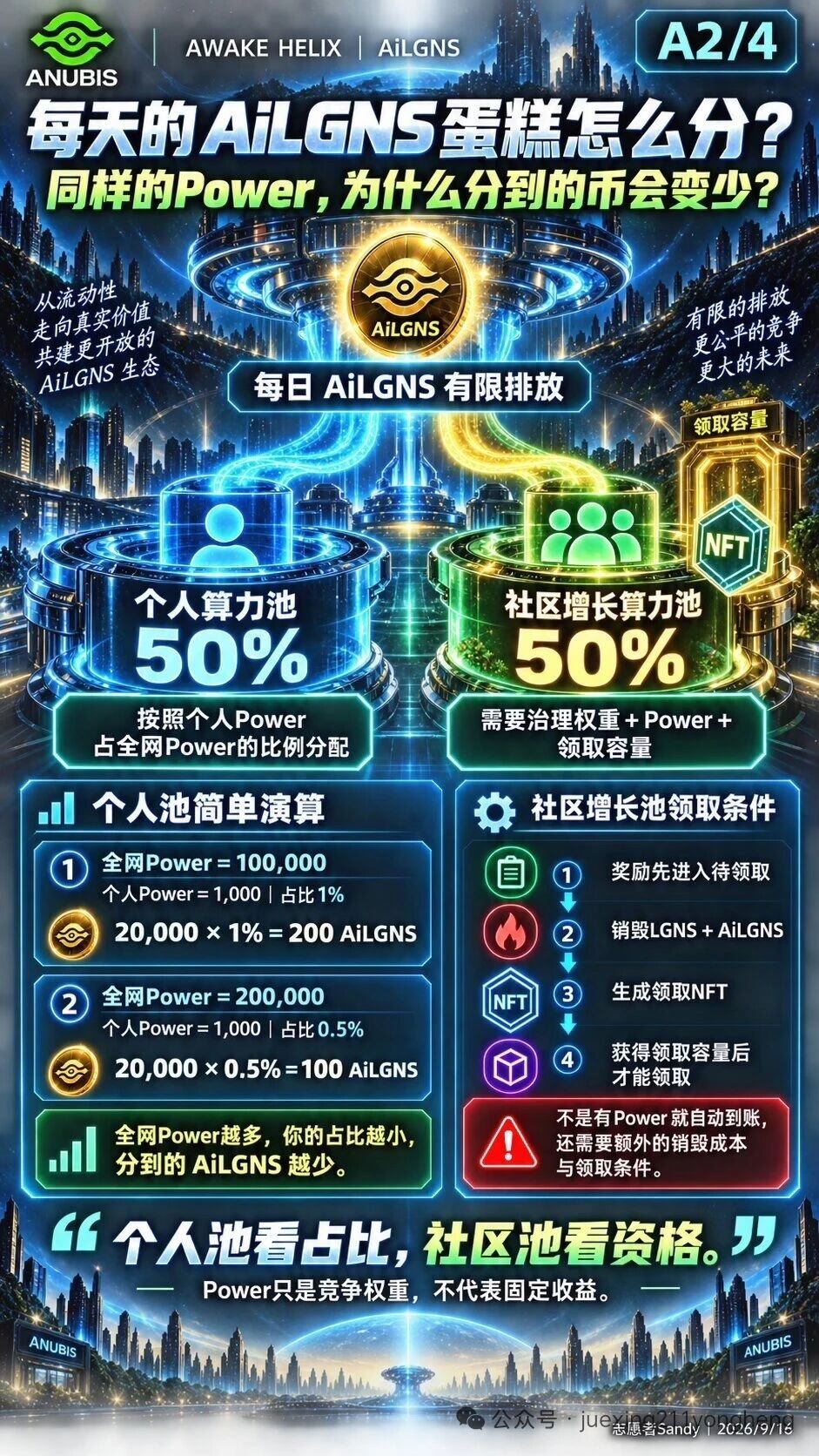
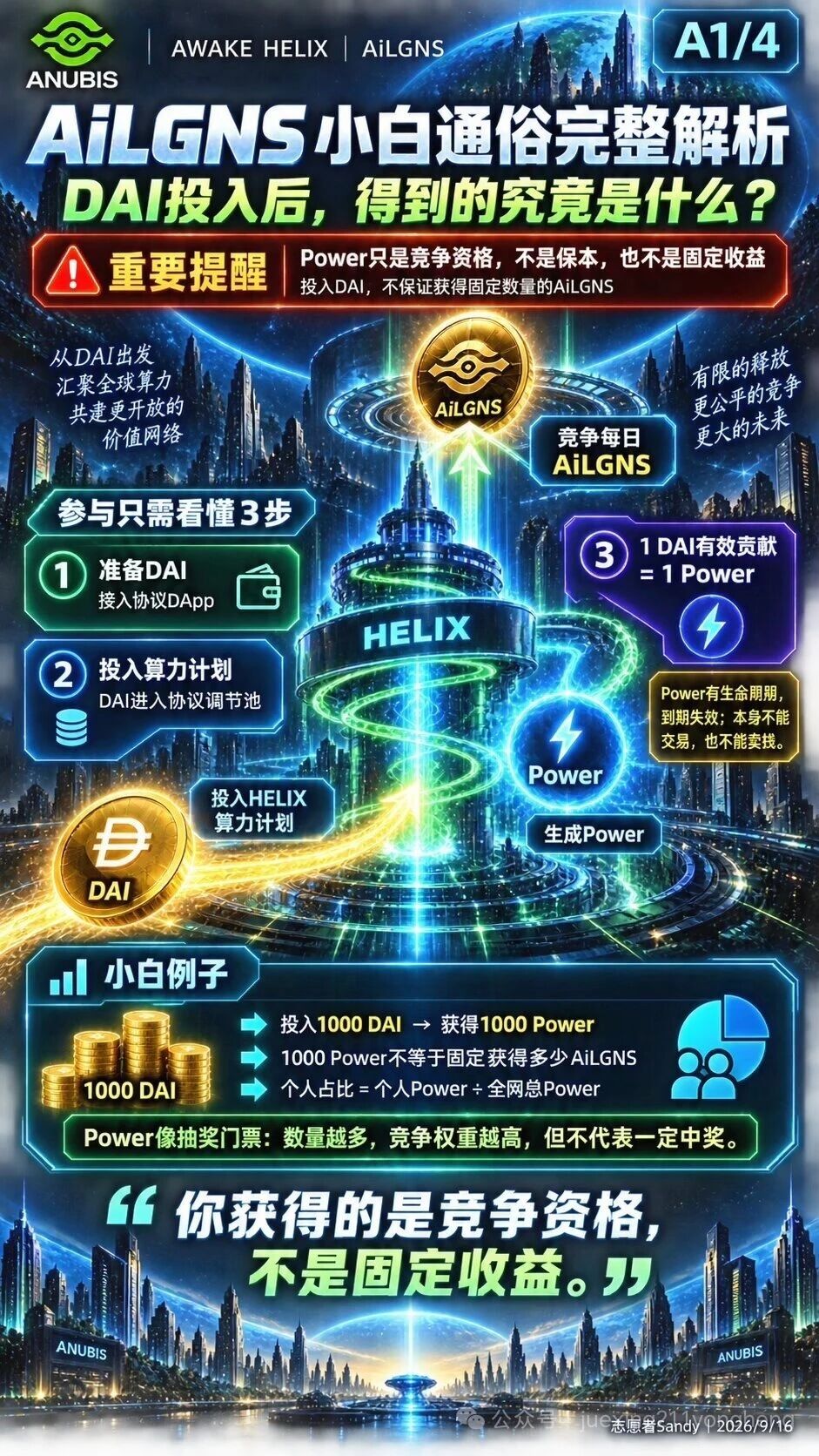
The protocol automatically identifies contributions from computing power, liquidity, governance, and ecosystem building, enabling multidimensional contributions to be standardized, attributed, and incentivized intelligently.
3. Value circulation: AiLGNS serves as the ecosystem’s core vehicle
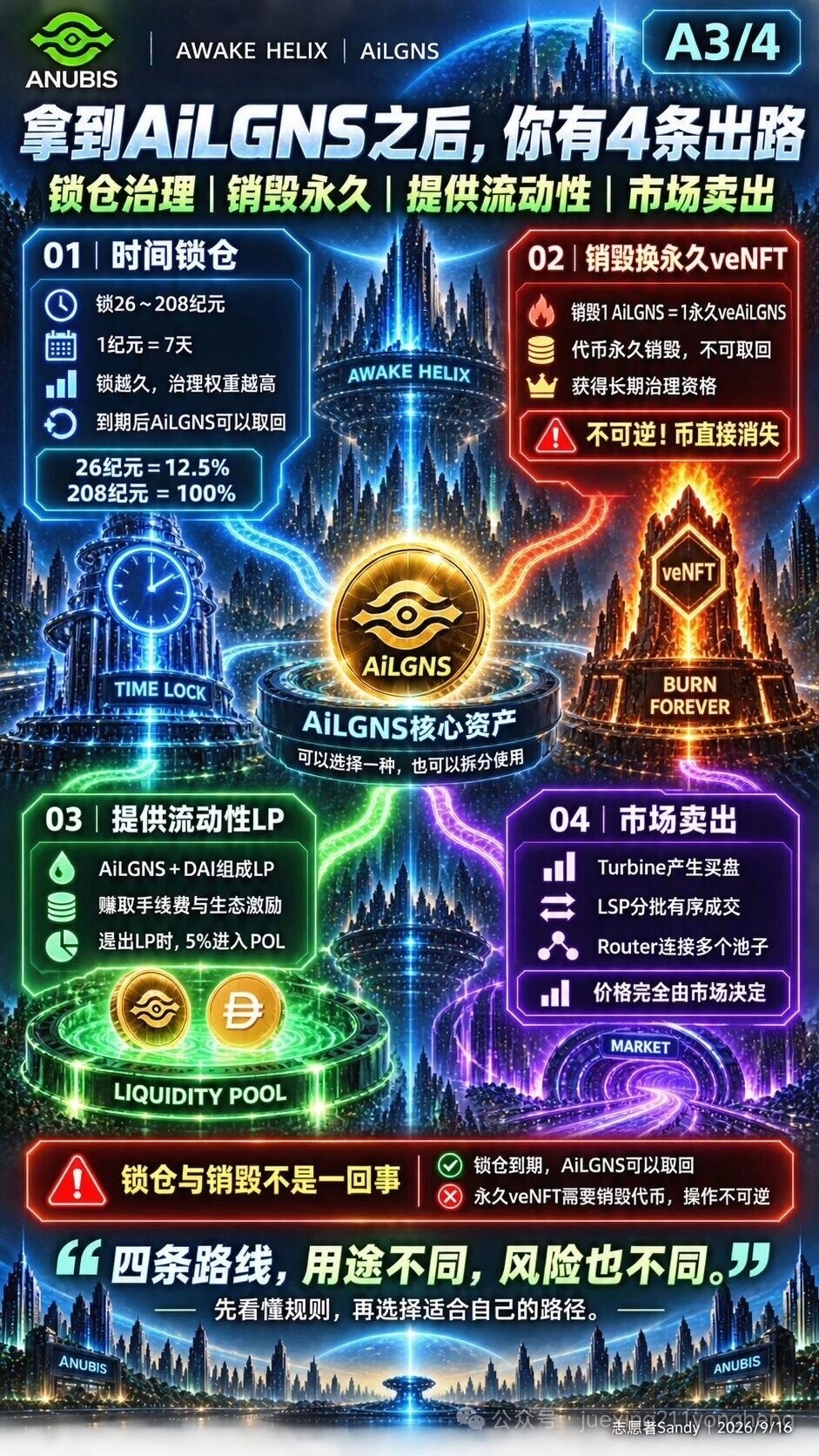
AiLGNS is not merely a trading token, but the value connector for the entire ecosystem, serving core functions in distributing incentives, granting governance rights, accumulating assets, and deflating the ecosystem’s token supply.
4. Value accumulation: Governance and reserves build a long-term foundation
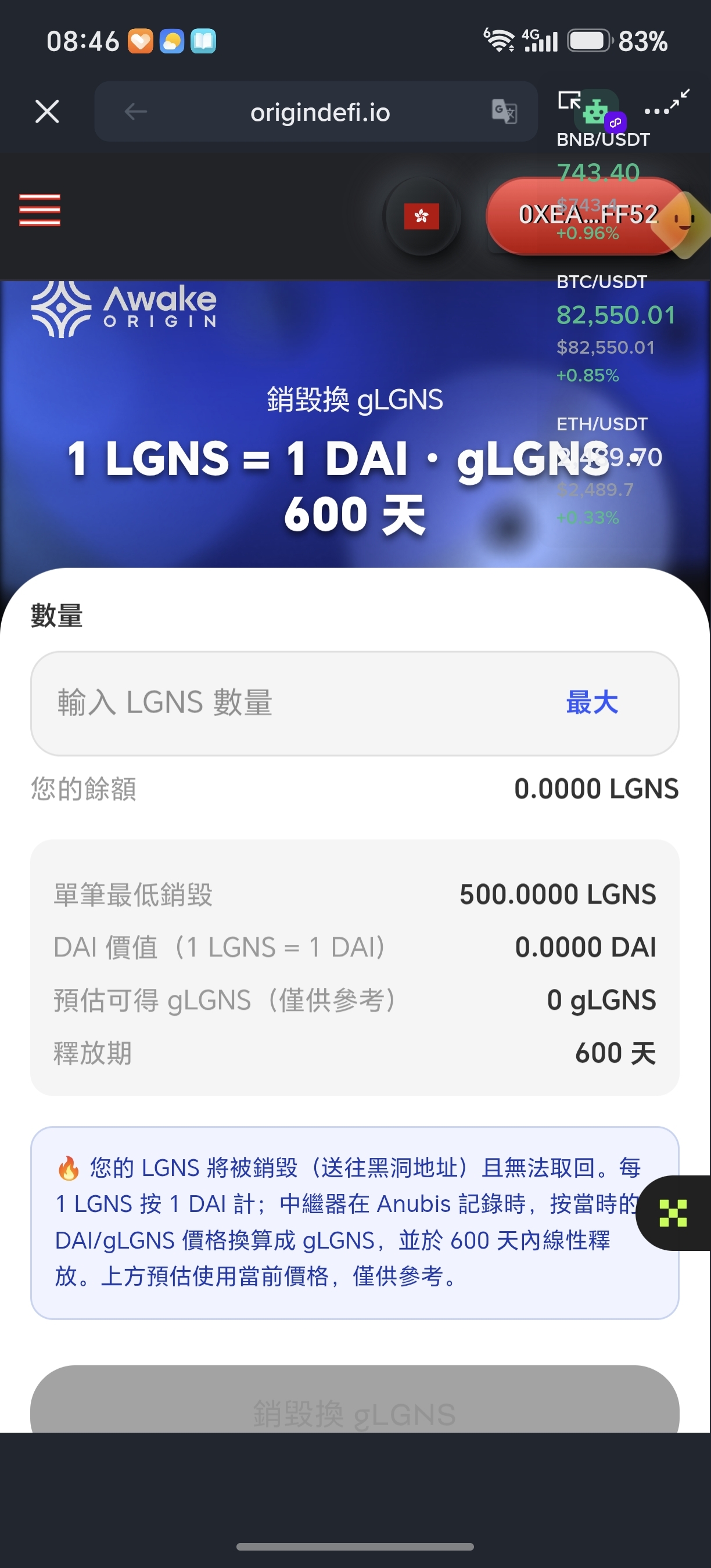
Permanent governance locking, protocol reserve funds, and ecosystem burn mechanisms turn short-term ecosystem activity into long-term ecosystem assets and growth drivers.
5. Value reinvestment: A self-sustaining closed loop
Ecosystem growth → more diverse AI service use cases → increased contributions → greater ecosystem value → attracting more users and computing power, creating a positive, upward spiral.
Important Objective Note
HELIX has currently implemented a mature mechanism and is operating on-chain. The complete commercial ecosystem loop is still being iterated and developed.
A complete mechanism design does not mean that the ecosystem’s ultimate value has been fully realized. Long-term development still depends on four key factors: genuine user demand, sustained computing-power contributions, effective governance implementation, and the stability of financial reserves.
III. How to Properly Understand AiLGNS: Understand the Mechanism, Not Just the Price
The vast majority of market participants assess an ecosystem solely by its token price, price gains, and circulating supply. This is a typical surface-level perspective.
Within the HELIX system, the potential value of AiLGNS should be assessed across three core dimensions:
1. Are incentives tightly linked to contributions?
Every token issued must correspond to genuine computing-power contributions or ecosystem-building activities that can be verified on-chain. This prevents arbitrary minting and uncontrolled releases, ensuring that every token is backed by an ecosystem contribution.
2. Is the liquidity system healthy and sustainable?
Ecosystem TVL, financial reserves, and trading liquidity form the foundation for stable ecosystem operations.
Liquidity is not a short-term bubble; it is essential for accommodating ongoing user participation, supporting ecosystem operations, and withstanding market volatility.
3. Are governance and deflation mechanisms effective in the long term?
Permanent governance locking, ongoing burns, and rule-based adjustments to quotas determine whether the ecosystem can self-correct, empower itself, and sustain long-term deflationary appreciation.
In short: AiLGNS derives its value not from a narrative, but from an entire set of verifiable, traceable, and self-reinforcing on-chain mechanisms.
IV. Ecosystem in Practice: HELIX’s Actual On-Chain Data as of 2026.10.12
As of 10:07 Beijing time on October 12, all AWAKE HELIX ecosystem metrics had been fully implemented and were operating steadily on-chain. The results demonstrate how the mechanisms are working across four dimensions: financial foundations, user participation, computing-power scale, and token supply and demand.
1. Protocol Funds and Liquidity Foundation
🔹Total ecosystem TVL: 99,525,184.16 DAI
🔹24-hour ecosystem trading volume: 731,940.64 DAI
🔹Cumulative reserve inflows: 31,407,418.62 DAI
🔹Current protocol reserve balance: 53,783,788.74 DAI
🔹AiLGNS/DAI main pool TVL: 21,883,837.38 DAI
Ample protocol reserves and a stable liquidity pool provide the ecosystem with strong resilience and liquidity support, forming the core foundation for stable, long-term operations.
2. Network-Wide Computing Power and User Participation
🔹Active participating addresses across the network: 24,944
🔹Total effective computing power: 112,269,036.13 DAI
🔹Percentage of computing power active: 96.77%
🔹New computing power added in one day: 3,749,999.99 DAI
🔹New participating addresses added in one day: 960
🔹Total ecosystem governance positions: 4,283 (including permanent governance positions)
🔹Addresses holding locked tokens: 2,046
The very high share of active computing power, together with continued growth in users and computing-power capacity, demonstrates strong ecosystem participation, stable consensus, and growing user retention—not a short-lived hype bubble.
3. AiLGNS Releases and Burn/Deflation Data
🔹Base release quota for the day: 31,500 tokens
🔹Ecosystem dynamic adjustment coefficient: 65%
🔹Actual adjusted quota for the day: 20,475 tokens
🔹Actual amount released on October 11: 427.726149 tokens
🔹Cumulative actual ecosystem releases: 7,868.649048 tokens
🔹Cumulative tokens burned through permanent governance: 701.899929 tokens
Dynamic coefficients regulate the pace of releases, while tokens held in permanent positions are continuously burned. Together, these mechanisms create a token economy with controlled supply, ongoing deflation, and balanced supply and demand, avoiding the uncontrolled issuance that plagues traditional tokens.
Notes on Interpreting the Data Objectively
1. Ecosystem TVL and computing-power scale represent the extent of ecosystem participation; they are not directly equivalent to commercial revenue;
2. Participating address counts are on-chain statistics and do not all correspond to unique, real users;
3. Token release quotas are parameters set by the mechanism; actual circulating supply is based on real on-chain releases;
4. All data reflects only the ecosystem’s current operating status and does not indicate future returns or guaranteed price appreciation.
V. Long-Term Outlook: Can the Ecosystem Last? Look at the Four Foundational Loops
Setting aside the data and narrative, the long-term survival of an AI on-chain economy comes down to four fundamental questions. These are also the core criteria we use to continually assess the AWAKE ecosystem:
1. Is demand genuine and sustainable?
Does the ecosystem continuously deliver real-world AI service use cases, moving beyond a bubble driven by “purely internal circulation of funds” and grounding value in genuine user demand?
2. Can contributions be verified and quantified?
Do all incentives, computing power, and returns correspond to genuine ecosystem contributions that can be checked and traced on-chain and cannot be falsified?
3. Is the financial foundation healthy and transparent?
Are protocol reserves, liquidity pools, and financial inflows and outflows transparent and verifiable, with sufficient capacity to support ongoing operations?
4. Is governance effectively implemented?
Can community self-governance, rule enforcement, risk management, and deflationary burn mechanisms be implemented reliably, rather than remaining rules on paper?
Technology determines an ecosystem’s potential; mechanisms determine its longevity.
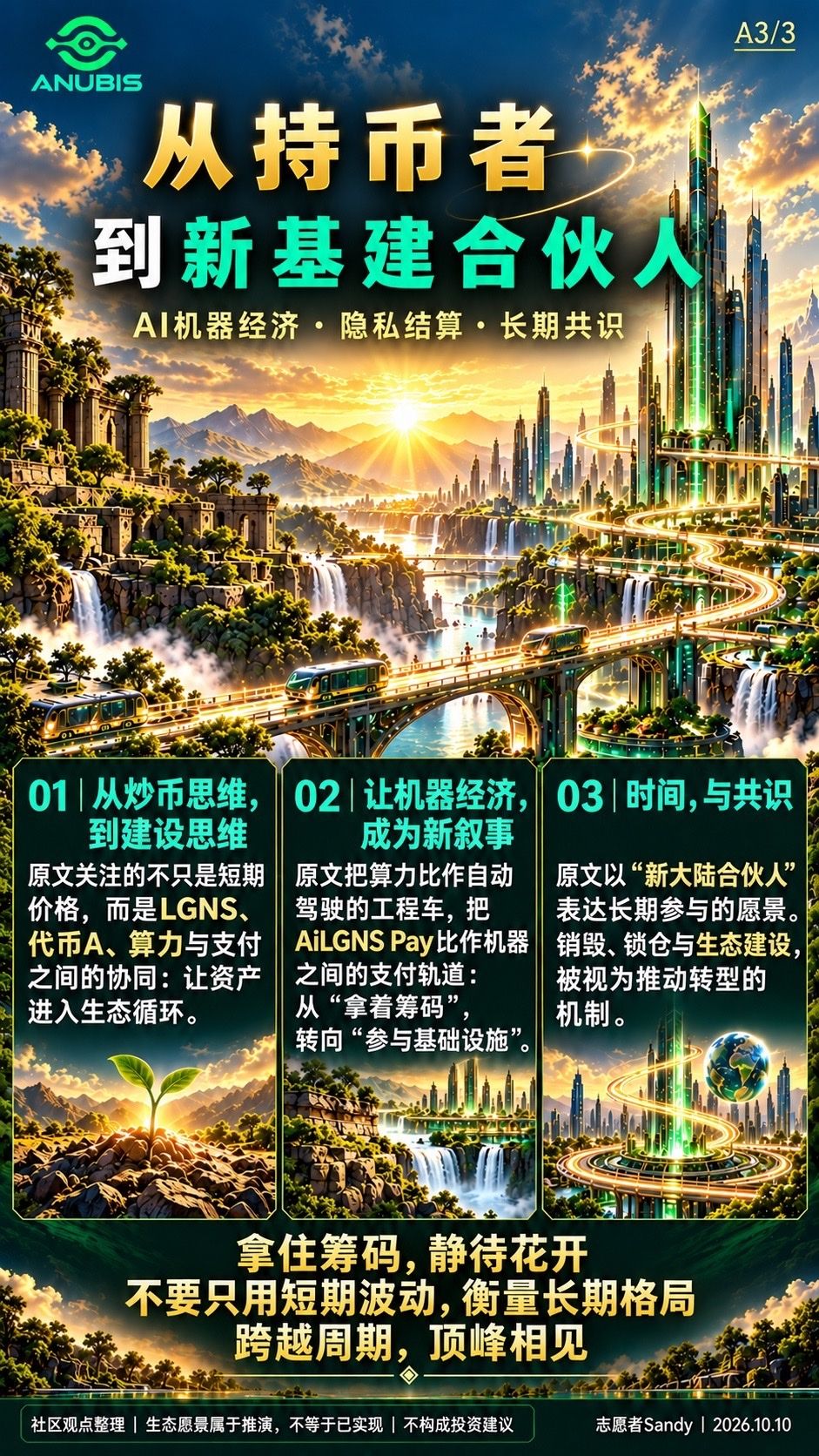
HELIX’s core value is not short-term data growth, but the creation of a sustainable economic model suited to the long-term development of the AI industry.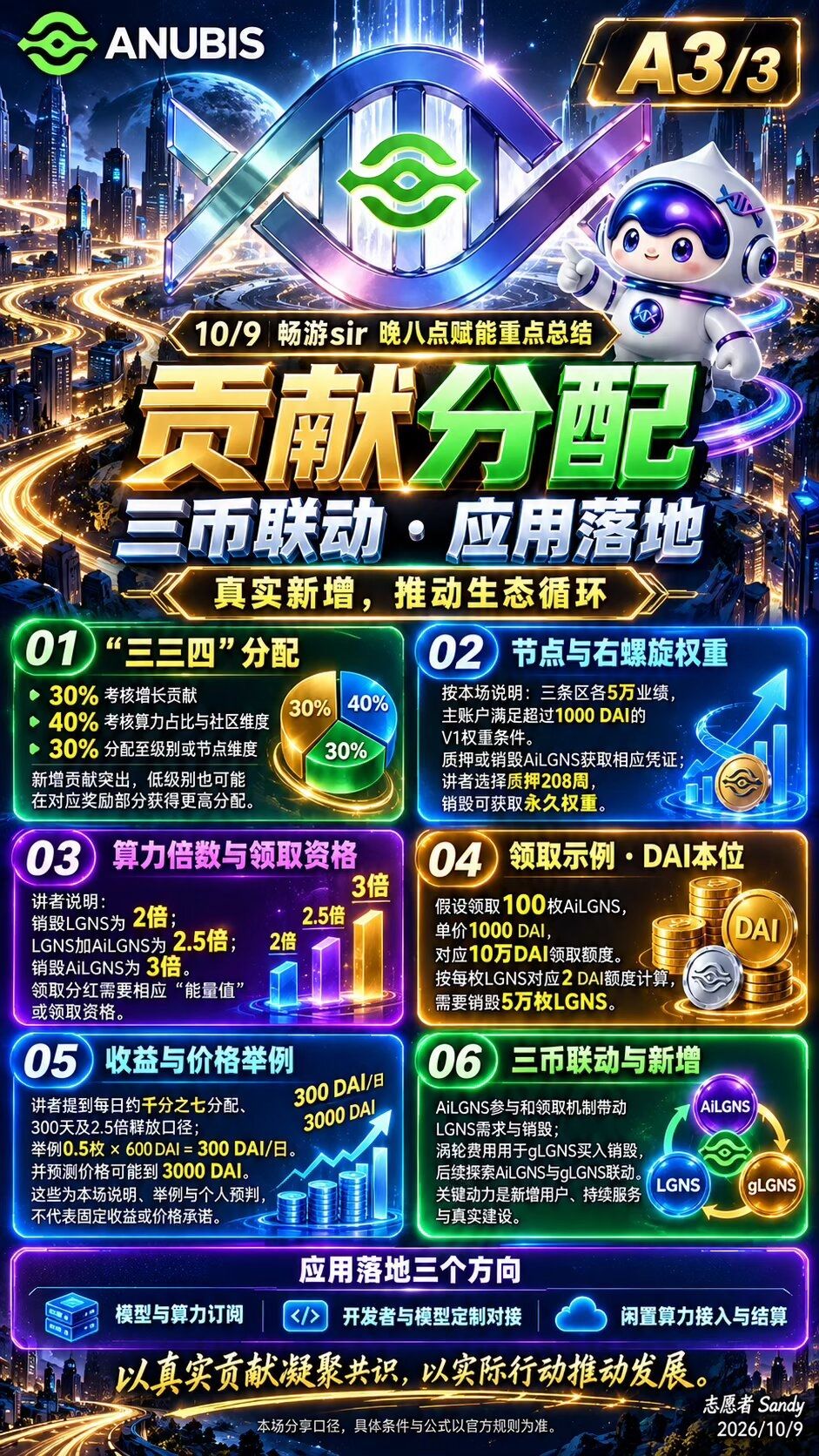


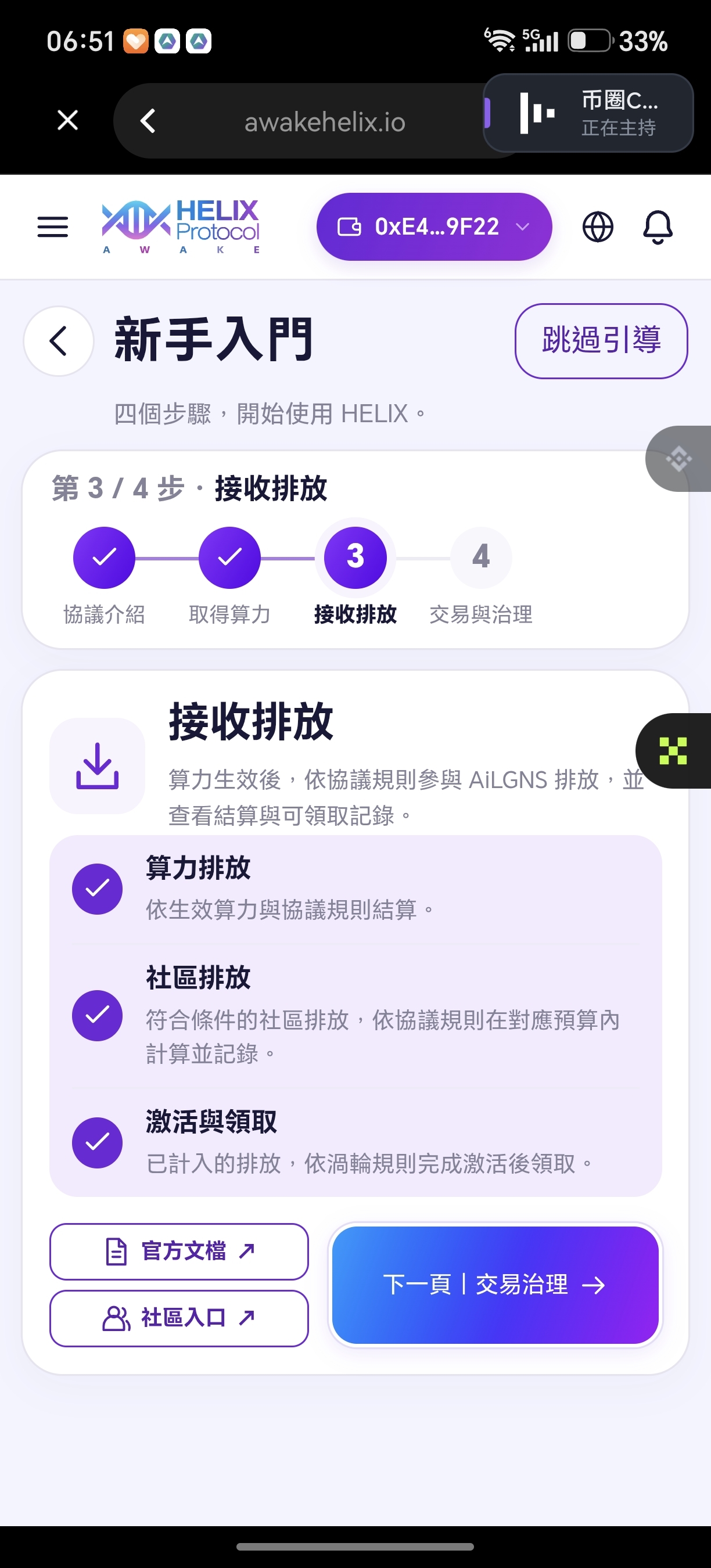
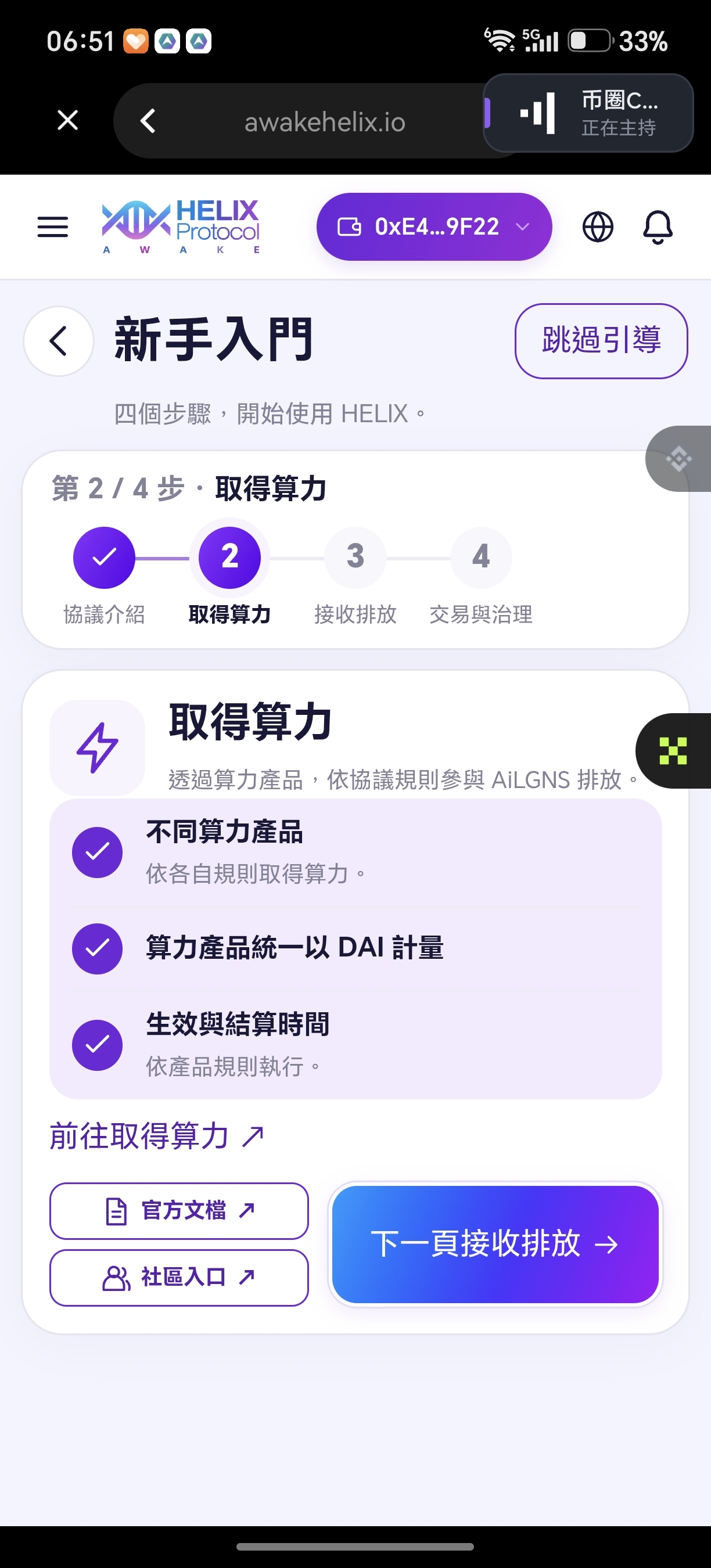
Conclusion: Turning AI Productivity into a Sustainable On-Chain Value Cycle
The entire AI industry is moving beyond a “technology race” and entering an era of competition over value mechanisms.
Even the most advanced AI technology is ultimately like a tree without roots if it lacks systems for value distribution, accumulation, and governance.
The core significance of the AWAKE HELIX Spiral Protocol and AiLGNS is that they address this industry gap:
Let AI create productivity, let on-chain protocols define the relations of production, and let every ecosystem contribution become a real, accumulable, and appreciating on-chain asset.
AI creates value, HELIX organizes value, and AiLGNS connects value.
An ecosystem that spirals upward does not rely on fleeting hype, but on the real implementation of every mechanism and the long-term commitment of every participant to the shared vision.
Risk Notice: This article is for informational and educational purposes about the ecosystem only. It does not constitute investment advice or an invitation to trade. No returns are promised, and principal is not protected. The relevant assets are subject to significant volatility. Please assess the risks independently and make decisions prudently.