


Key Takeaways
Bitcoin transaction fees accounted for just 0.64% of miner revenue over the past 30 days, compared with 0.65% a week earlier.
Transaction fees have remained below 1% of total mining revenue since mid-August 2025.
At electricity costs of $0.05 per kWh, mining one BTC with an Antminer S19 costs approximately $86,700 in electricity alone, exceeding Bitcoin's reported $84,000 price.
The more efficient Antminer S21 requires approximately $44,300 in electricity per BTC, providing a wider operating margin before other expenses.
Bitcoin Mining Revenue Remains Dependent on Block Rewards
Bitcoin miners continue to rely overwhelmingly on newly issued BTC rather than transaction fees, even as Bitcoin's recovery from $59,000 to approximately $84,000 improves mining economics.
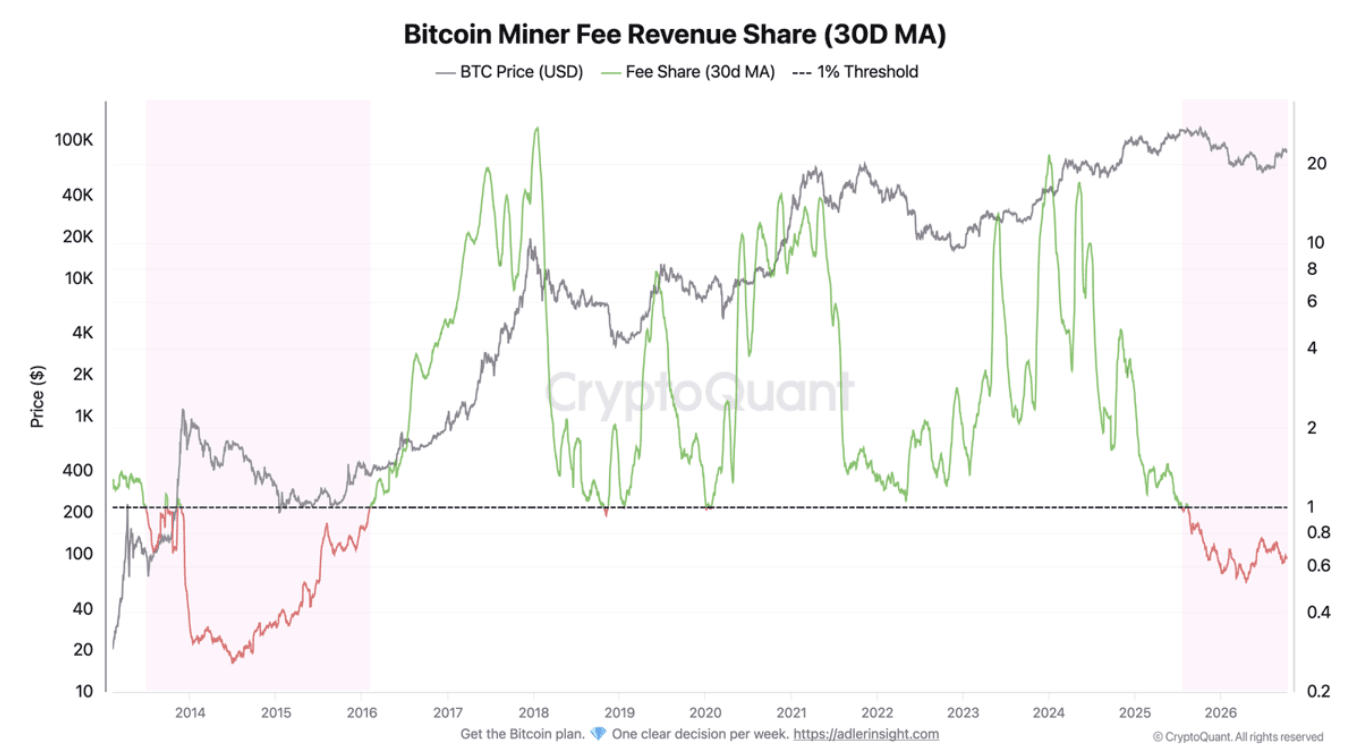
Over the past 30 days, transaction fees contributed an average of just 0.64% of daily miner revenue, equivalent to $0.64 for every $100 earned.
The figure declined marginally from 0.65% a week earlier and has remained below 1% since mid-August 2025.
This leaves miner revenue highly sensitive to Bitcoin's market price and the efficiency of mining equipment.
Antminer S19 Faces Higher Electricity Costs Than Bitcoin's Price
At an assumed electricity rate of $0.05 per kilowatt-hour, the cost of mining one Bitcoin varies substantially between older and newer hardware.
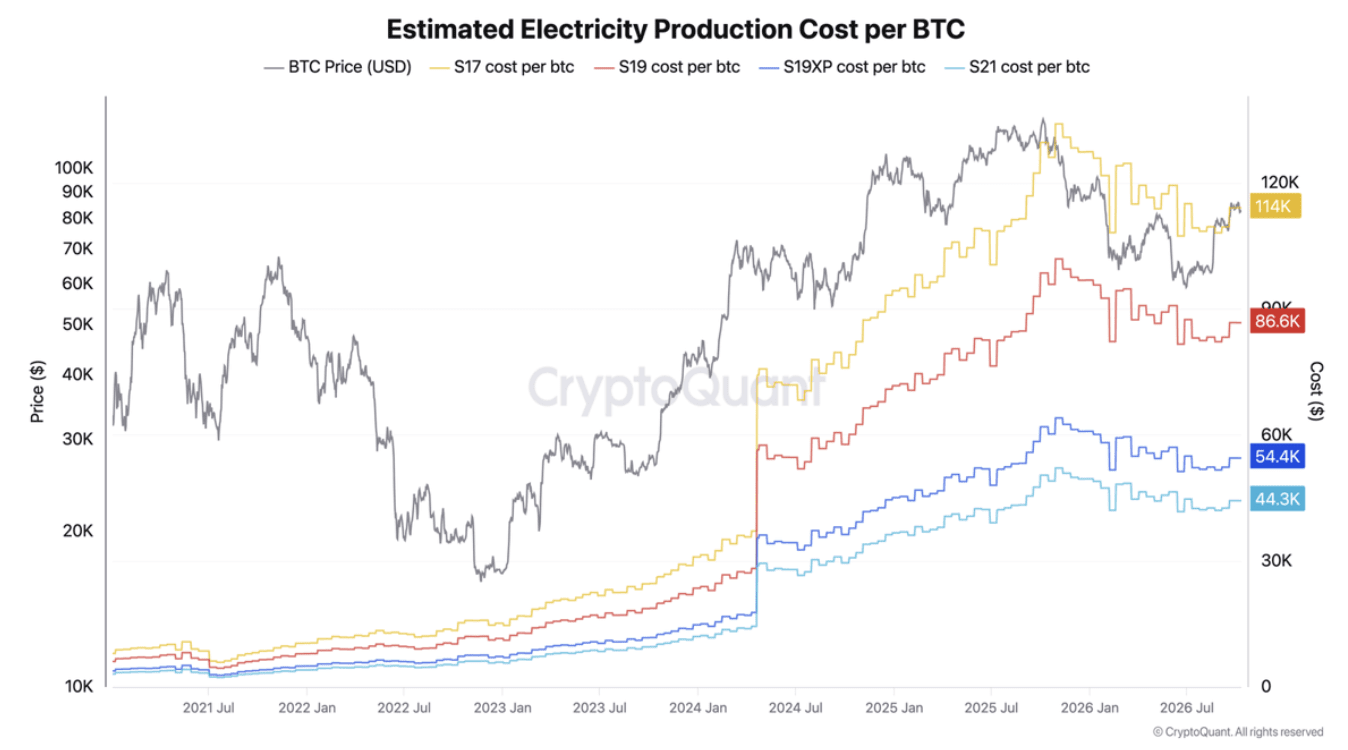
The Antminer S19's estimated electricity expenses exceed Bitcoin's reported market value, indicating negative margins before equipment depreciation, maintenance and other operating costs.
By comparison, the Antminer S21 maintains a substantially larger cushion between electricity costs and mining revenue.
These figures are illustrative and depend on electricity prices, network difficulty, hardware performance and operating conditions.
Low Transaction Fees Keep Focus on BTC Price and Mining Efficiency
The persistently low fee share indicates that transaction activity is providing limited additional revenue to miners.
A sustained increase above 1% would signal a larger contribution from fees, although it would not necessarily establish that overall mining profitability had improved.
For now, Bitcoin price movements and mining efficiency remain the principal factors influencing miner economics.
Further BTC price gains could narrow the operating shortfall for older machines while improving margins for more efficient hardware. However, changes in network difficulty and operating expenses could offset some of those benefits.