

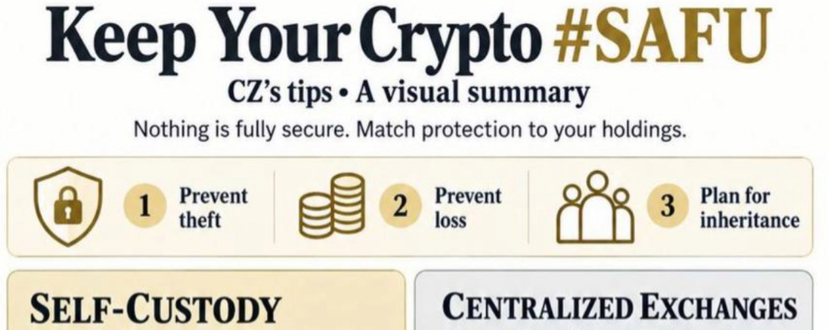

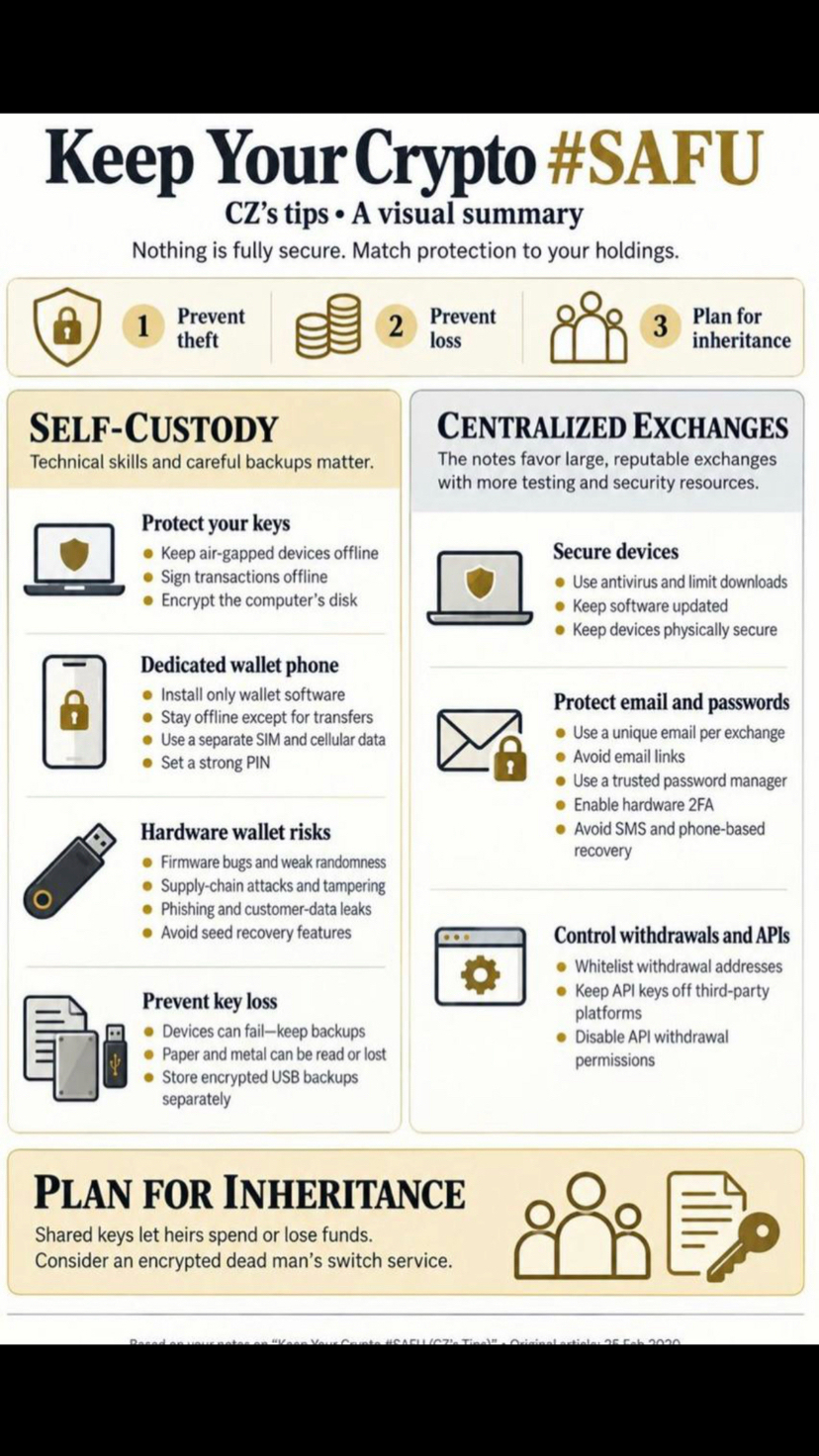
Binance founder Changpeng Zhao published recommendations for safely storing cryptocurrency in 2026. The key point is that the security of your funds depends not only on your wallet, but also on your own actions.
➠ Hardware wallets. Use trusted devices, and always verify the recipient’s address directly on the wallet’s screen—not just on your computer or phone.
➠ Seed phrases. Keep several backup copies in different secure locations. No photos, screenshots, cloud storage, or sending them through messaging apps. Anyone who obtains your seed phrase could potentially gain full access to your assets.
➠ Crypto exchanges. Use a separate email address, unique passwords, two-factor authentication, and withdrawal address whitelists. It’s better to use an authenticator app or a hardware security key rather than SMS.
➠ Device security. If possible, use a separate phone or computer for cryptocurrency. The fewer third-party apps and extensions you install, the lower the risk of malware infection.
➠ Capital allocation. Don’t keep all your assets in one place. Divide your funds between personal wallets and exchanges, depending on what you use them for.
These recommendations are especially relevant after the recent incident involving Ledger, where an unauthorized hardware implant was discovered in one of its devices.
📌 Most importantly, even the most expensive hardware wallet won’t protect your capital if you reveal your seed phrase, approve a malicious transaction, or send funds to a substituted address.
For a long-term investor, security isn’t a one-time hardware wallet purchase—it’s an entire system for storing and managing capital.
After all, the main goal of a long-term investor is not only to build up assets for years to come, but also to retain access to them regardless of what happens to exchanges, devices, or the market itself.