



CoinDesk, citing data from Growthepie, reports a significant decline in on-chain activity on Robinhood Chain. In mid-September, the exchange’s proprietary L2 processed an average of 10.8 million transactions per day. But between October 2 and October 8, the daily average fell to 6.2 million, a week-on-week drop of as much as 42%. Notably, Robinhood continues to subsidize gas fees for swap transactions, allowing users to exchange tokens without paying network fees. Yet the subsidies have still failed to sustain on-chain activity. These figures clearly expose the cold-start challenge faced by exchange-backed blockchains: on-chain metrics inflated by Meme speculation and subsidies are difficult to turn into a sustainable ecosystem over the long term.
Looking at related metrics, the on-chain slowdown reflects a contraction in speculative activity, not a large-scale withdrawal of user funds. Over the same period, daily active on-chain addresses fell by 31% and spot trading volume declined by 21%. However, on-chain deposits remained steady at over $1 billion, while perpetual futures trading volume even rose 26% against the trend. Funds were not withdrawn on a large scale; rather, high-frequency on-chain Swap transactions used to churn coins fell sharply. This divergence also helps clarify a concept that is often misunderstood: on-chain transaction counts are not the same as the amount of real capital. Much of Robinhood Chain’s earlier surge in transactions came from Meme coin launches and repeated small-value Swaps, not large asset transfers or genuine business demand.
The primary reason the ecosystem’s momentum collapsed is that the chain’s early traffic was heavily tied to speculation in Meme coins. After Robinhood Chain launched, the Pons launchpad became the ecosystem’s main source of traffic, with more than 70% of on-chain DEX trades involving various Meme coins. The transaction peak in mid-September coincided with the height of FOMO in the Meme sector. Large numbers of users flocked to Pons to launch and trade tokens, repeatedly buying and selling on DEXs to rack up transactions. A single token launch and multiple swap operations could be split into many on-chain transactions, rapidly driving up transaction counts.
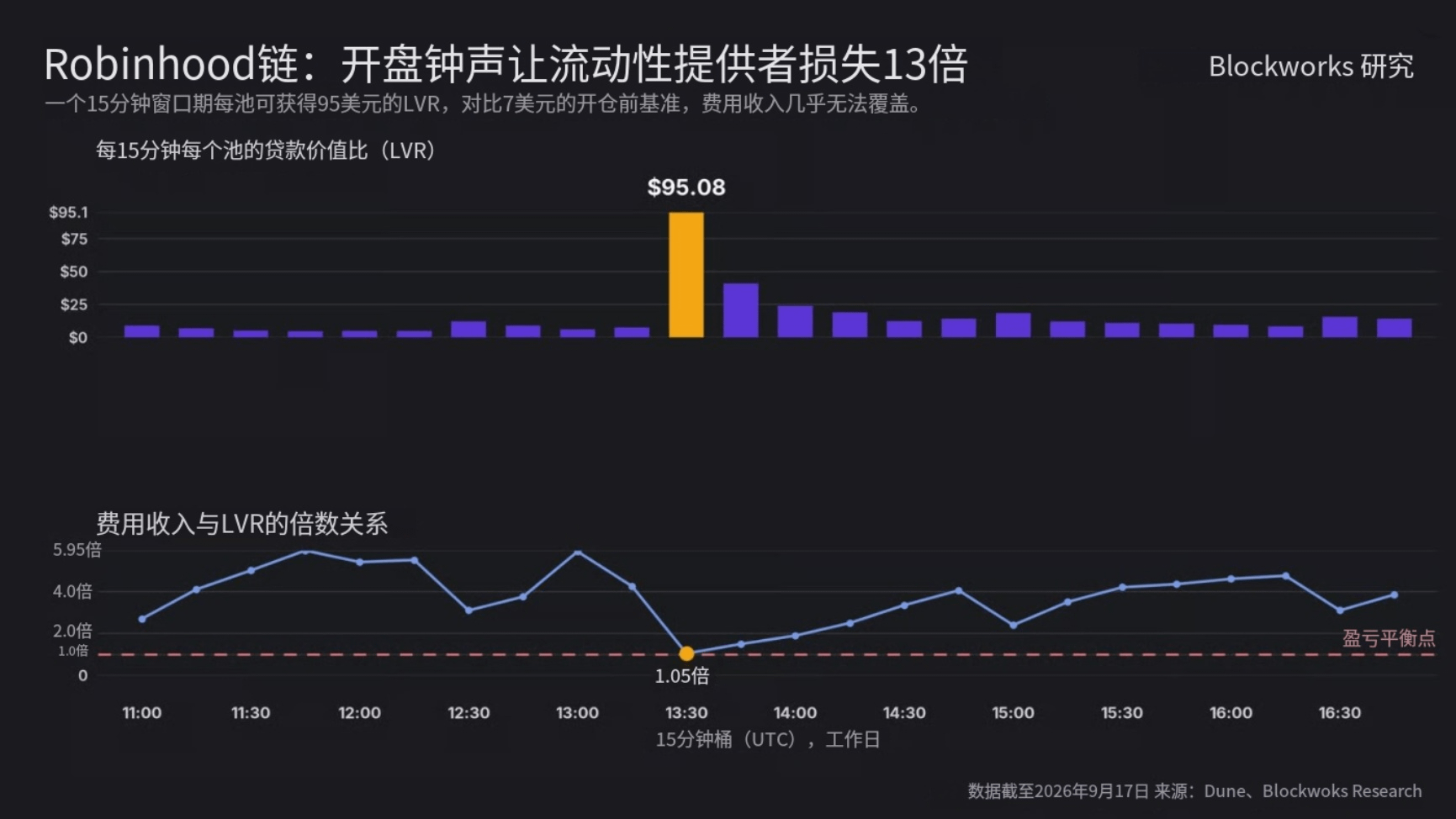
From late September into early October, market sentiment shifted rapidly. The number of newly launched Meme tokens on-chain plunged by 72%, and the prices of many Meme coins were cut in half or fell even further. Rug pulls became common, and speculators quickly lost the appetite to participate. As the Meme hype cycle reached its end, the high-frequency Swap transactions originally used to inflate volumes naturally disappeared, and on-chain transaction counts plunged. The rise and fall of the Meme market directly dictated activity across the entire L2, exposing the fragility of its ecosystem foundations.
Second, Gas subsidies can only lower transaction costs; they cannot create genuine user demand. Robinhood Chain’s free Gas strategy is essentially a short-term user acquisition tool. It addresses the barrier of “transactions cost money,” but not the fundamental question of “why should users come to this chain to trade over the long term?” Most users attracted by free Gas are speculators looking to farm incentives and inflate trading volumes. These users have no loyalty to the chain itself. Once the Meme narrative fades and market conditions weaken, the subsidies lose their appeal, and speculative capital immediately shifts to other public chains with Meme ecosystems, such as Solana. Relying solely on subsidies to boost on-chain metrics is essentially creating a short-term data bubble. Once the bubble bursts, the ecosystem’s true state is revealed.
Robinhood Chain’s original core narrative was to leverage the brokerage platform’s vast base of existing users to bring tokenized stocks and other RWA assets on-chain, drawing traditional finance users into the Web3 world. This was also the key reason the market was initially optimistic about this exchange-backed L2. But the reality fell far short of expectations: very few of Robinhood’s traditional stock investors converted to on-chain wallets and began trading on-chain, and the vast majority never entered the Web3 ecosystem. The much-anticipated tokenized stock RWA sector has seen persistently low trading volumes, making it entirely unable to absorb the traffic left behind as the Meme market cooled. Beyond Meme token launches, the ecosystem lacks high-frequency, essential applications such as lending and derivatives, and has no second growth engine to sustain on-chain activity.

Robinhood Chain’s case also serves as a warning to the industry: exchange-developed L2s can easily fall into the same development trap. Exchanges have a huge base of existing users and ample financial resources, and the easiest way to quickly generate impressive on-chain metrics is through Meme coins and Gas subsidies. This approach can create the illusion of on-chain prosperity in a short time, quickly attract attention, and draw in speculative capital. But this prosperity is fragile, entirely dependent on short-term market sentiment. Once the Meme cycle ends, on-chain activity quickly recedes unless it is supported by endogenous business demand.
By contrast, mature public chains derive their core competitive strength from a diverse range of applications. Users engage with them on-chain to meet genuine needs such as trading and lending, rather than simply chasing short-term token speculation. For Robinhood Chain, the key to future ecosystem development is no longer to keep subsidizing Gas and stimulating short-term Meme activity, but to bring RWA assets on-chain in a meaningful way, build a rich range of DeFi applications, and attract long-term users.
The decline in Robinhood Chain’s metrics does not mean the chain has failed completely, but it is a classic stress test. It clearly demonstrates that on-chain activity cannot be conjured up through subsidies and Meme narratives alone. For exchange-backed chains to go further, they must move beyond short-term volume inflation and build a sustainable native ecosystem, converting speculative traffic into genuine users. Otherwise, no matter how impressive the short-term on-chain metrics look, they amount to nothing more than a brief bubble.