Most beginners hear the word “#OnChain” every day but still don’t really understand what it means.
Here’s the simple explanation:
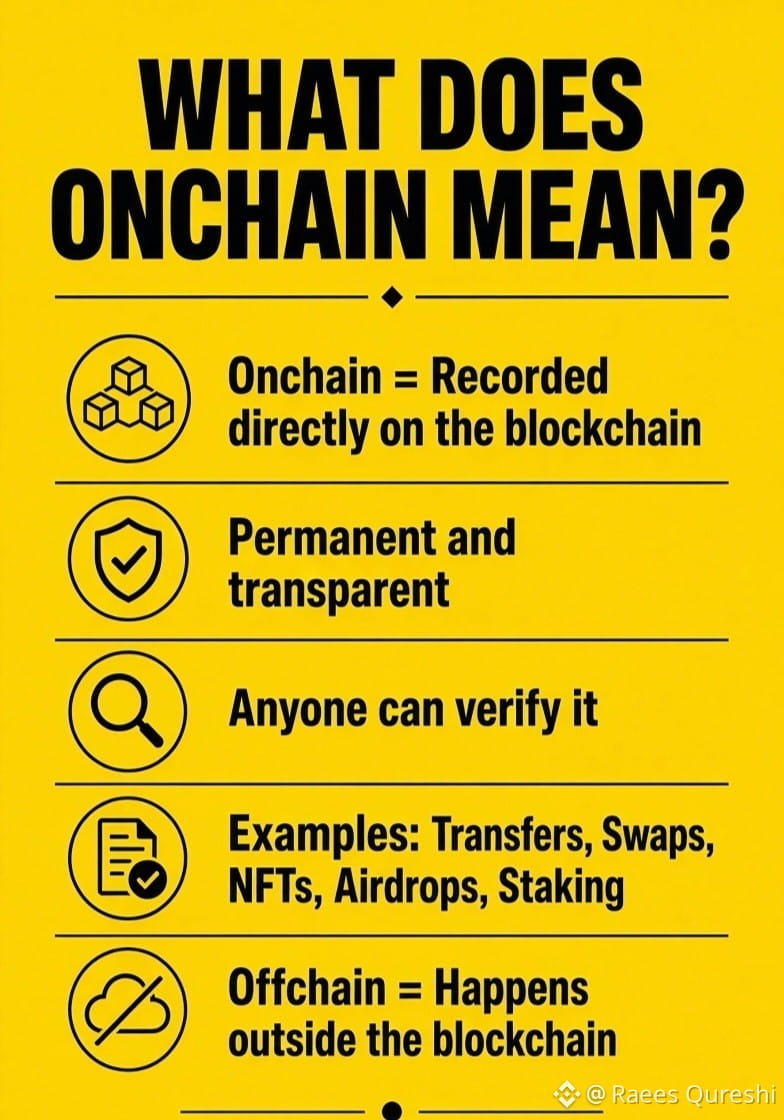
Onchain means anything that happens directly on the blockchain and is permanently recorded there.
When something is onchain:
Anyone can verify it
It can’t be changed or deleted
It’s transparent and public
Examples of onchain activity:
Sending crypto from one wallet to another
Swapping tokens on a DEX
Minting an NFT
Claiming an airdrop
Staking tokens
Offchain is the opposite.
It happens outside the blockchain (like trading on Binance or keeping records on a company’s server).
Why onchain matters:
More transparent
Harder to fake
You don’t have to trust a company
Everything is verifiable
Simple way to remember:
If it shows up on a blockchain explorer (like Etherscan or Solscan), it’s onchain.
Key Takeaway:
Onchain = recorded on the blockchain forever.
Offchain = happens outside the blockchain.
Do you prefer keeping most of your activity onchain or still use centralized exchanges more? Drop your answer below.