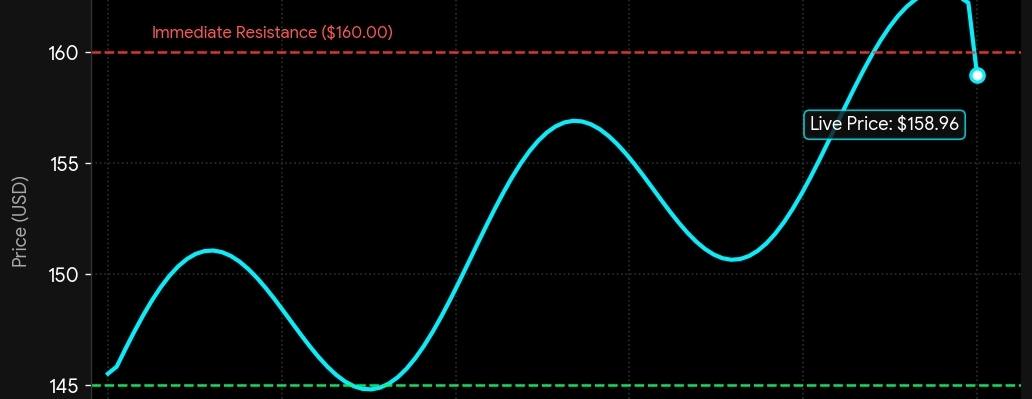

In financial markets, every ticker tells a story, but understanding that story takes more than simply watching the price move up or down. $SPCX deserves a careful, research-based approach, with market sentiment, trading activity, risk management, and broader financial conditions all playing a role in shaping an investor’s outlook.
One of the important lessons I’ve learned from following the markets is that a rising price doesn’t automatically mean an asset is getting stronger, just as a falling price doesn’t always mean the opportunity has disappeared. What matters is understanding the reason behind the move. Is buying pressure increasing? Is trading volume supporting the move? Are traders reacting to new information, or is the market simply experiencing a temporary shift in sentiment?
For anyone following $SPCX, these are the questions worth asking before making a decision. Rather than chasing a sudden green candle, I prefer to watch the price structure, identify potential support and resistance zones, and look for confirmation from volume and momentum. A breakout can quickly lose strength without convincing trading volume, while a pullback toward an established support zone may offer a useful opportunity to reassess the market.
Another factor worth paying attention to is the broader environment. Interest rate expectations, liquidity conditions, economic data, and overall risk appetite can all affect how traders approach individual assets. Even a promising chart pattern can fail when broader market conditions become unfavorable. That's why technical analysis should be combined with fundamental research, rather than treated as a guarantee of future performance.
My approach to $SPCX is based on three principles: patience, confirmation, and discipline. Patience helps prevent emotionally driven entries. Confirmation reduces the temptation to trade on assumptions. Discipline keeps risk under control when the market moves in an unexpected direction.
It is also important to remember that no indicator can predict every market move. Moving averages, the Relative Strength Index (RSI), and volume analysis can provide useful context, but they work best when interpreted together. No single signal should replace a comprehensive trading plan, and position sizes should always reflect a person's risk tolerance.
Ultimately, successful market participation isn't about perfectly predicting every candle. It's about developing a repeatable process, protecting capital, and learning from both successful and unsuccessful decisions. The real edge isn't being the first to react, but understanding what you're reacting to.
What do you think of $SPCX? Are you watching its technical structure, waiting for stronger confirmation, or focusing on fundamentals? Share your analysis and perspective in the comments. Let's exchange ideas, challenge assumptions, and learn from the market together.
Note: Verify the exact underlying asset represented by the $SPCX ticker, and review current market data before drawing conclusions or making trading decisions. This post is intended for educational discussion and is not financial advice.