Day 13/100 — Learning on-chain analysis from zero. 🙌
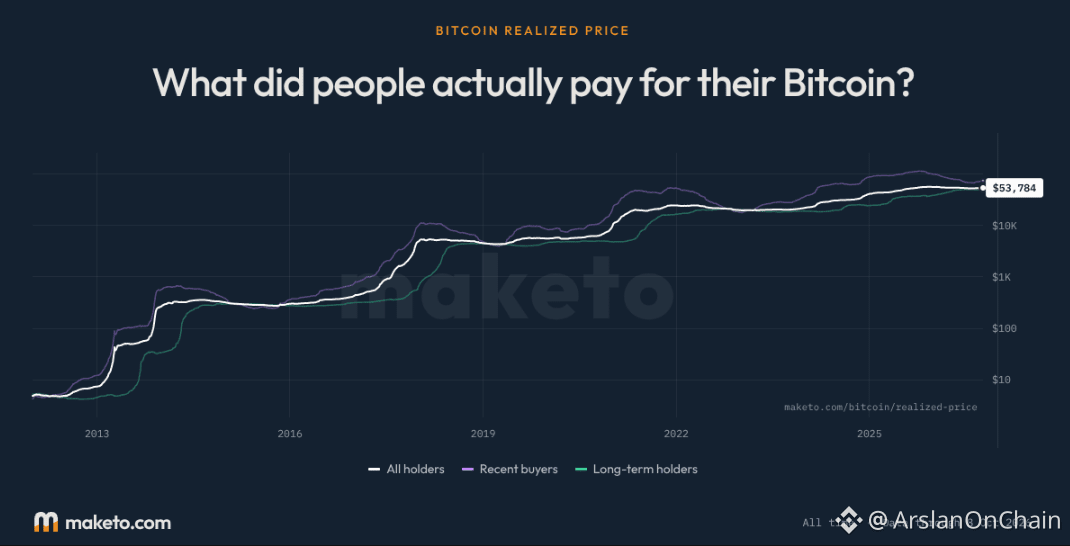
Today: the price new buyers paid — their pain line. 👀
Imagine buying $BTC near the top, then watching the price fall.
You're no longer in profit. Now you're waiting for a bounce just to get your money back.
That's why the price new buyers paid matters.
It's called cost basis — the average price a group paid for their coins.
Here's the simple read:
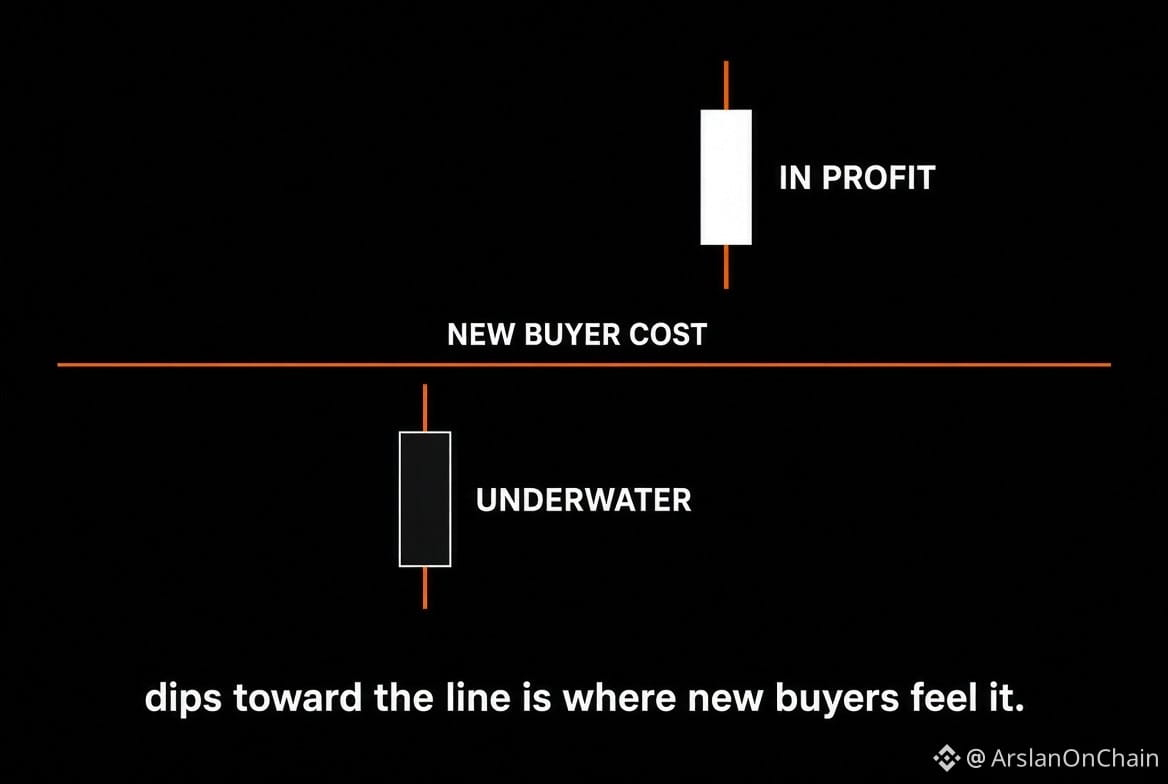
🟢 Price above their cost basis = they're in profit.
🔴 Price below it = they're underwater.
And when price returns to their entry area, some holders may sell just to break even.
It's not a magic support level. It's a way to understand how a group of holders might react.
A recent reading from early October:
Short-term holder cost basis was around $74,600, while BTC had recently pushed toward $87K.
That gap matters. Newer buyers were sitting on profits, but a pullback toward their average cost could change how they react.
Now try it yourself. 👇
Open Arkham. Find a wallet with a recent BTC acquisition and investigate where those coins came from and what price they were acquired at, where the data allows.
Then compare that price with BTC's current level.
Homework:
Screenshot your example and comment:
ABOVE THEIR LINE or BELOW THEIR LINE 👀
Tomorrow: three cost lines — new buyers, old holders, and everyone.
87 days left. New here? Start today. You can catch up. 🙌
$LUMIA $STRK