


U.S. funds are flowing out, and the liquidity squeeze brought on by rate-hike expectations and a high-interest-rate environment is beginning to show!
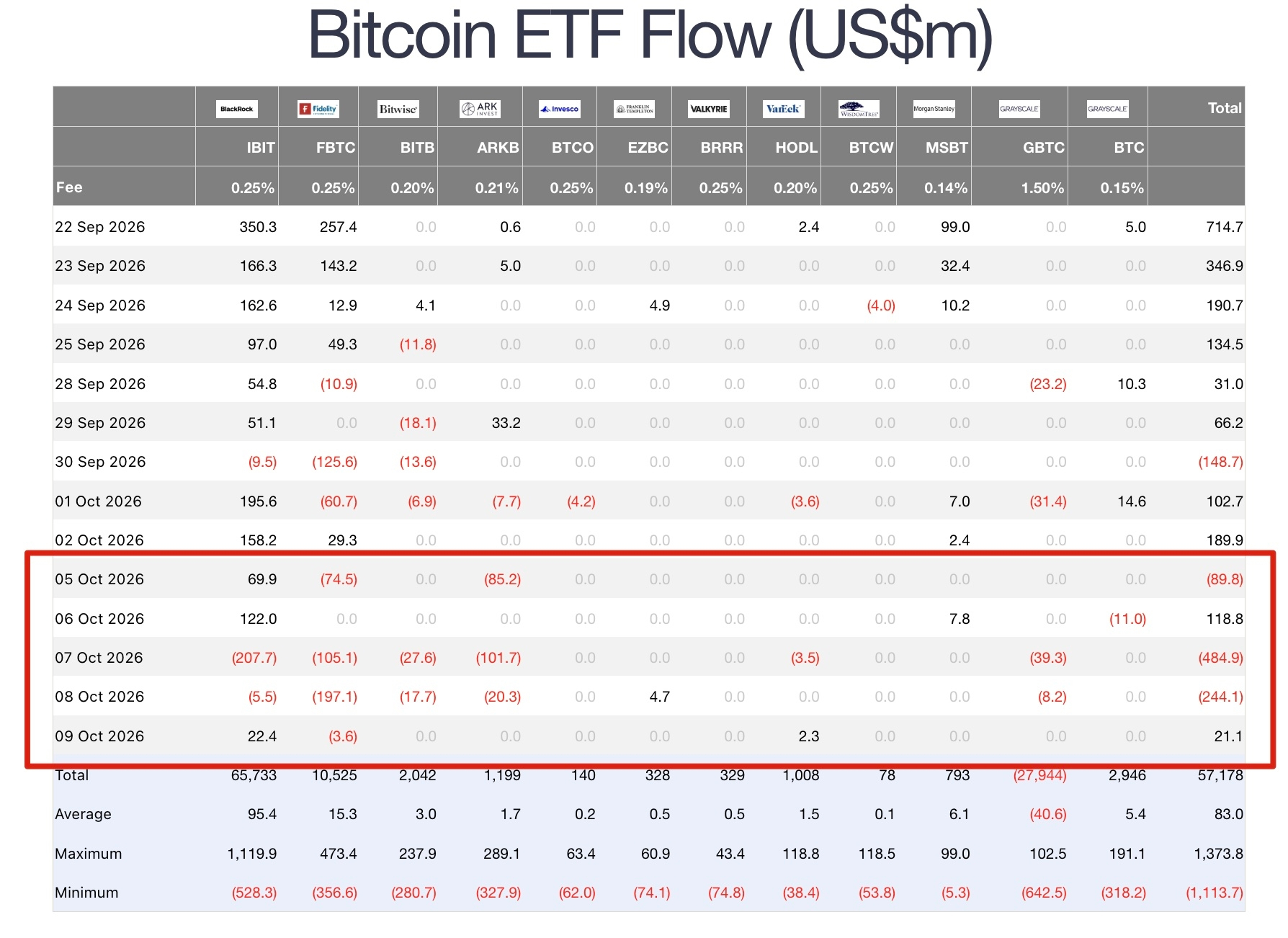
I missed a week, so here’s this week’s #Bitcoin ETF data:
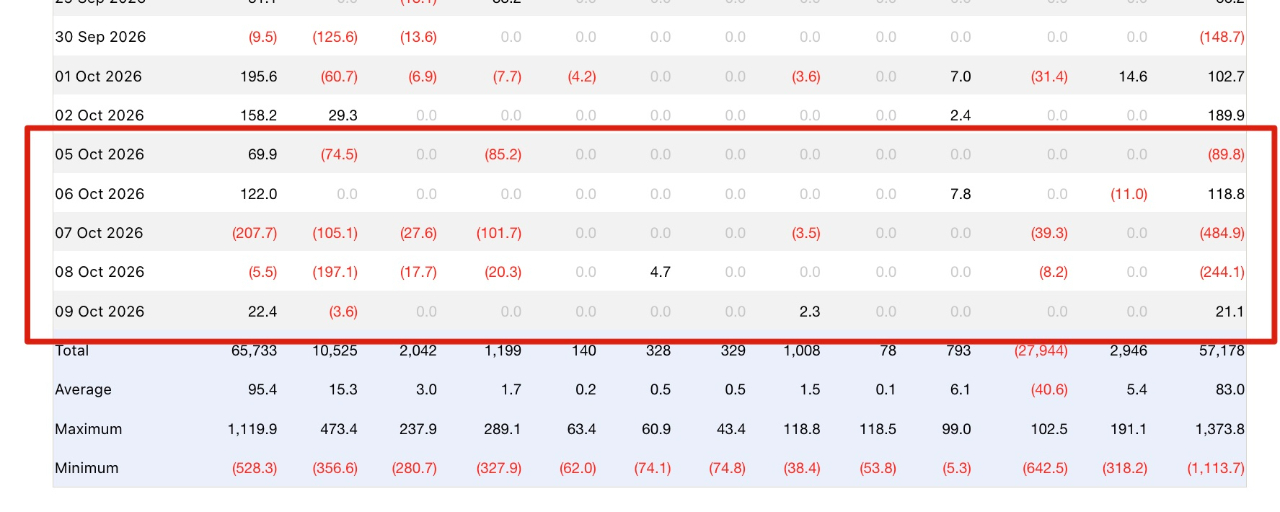
Monday: net outflows of 0.898 hundred million; Tuesday: net inflows of 1.188 hundred million; Wednesday: net outflows of 4.849 hundred million; Thursday: net outflows of 2.441 hundred million; Friday: net inflows of 0.211 hundred million. Total net outflows this week: US$678.9 million #以太坊ETF连续9日净流出
IBIT saw net outflows on Wednesday and Thursday, while all the others recorded net inflows. On Wednesday, however, there were net outflows across the board—it was no longer just a simple rotation of funds. The inflows on Friday were only 0.211 hundred million, a weak rebound that does not bode well for sentiment.
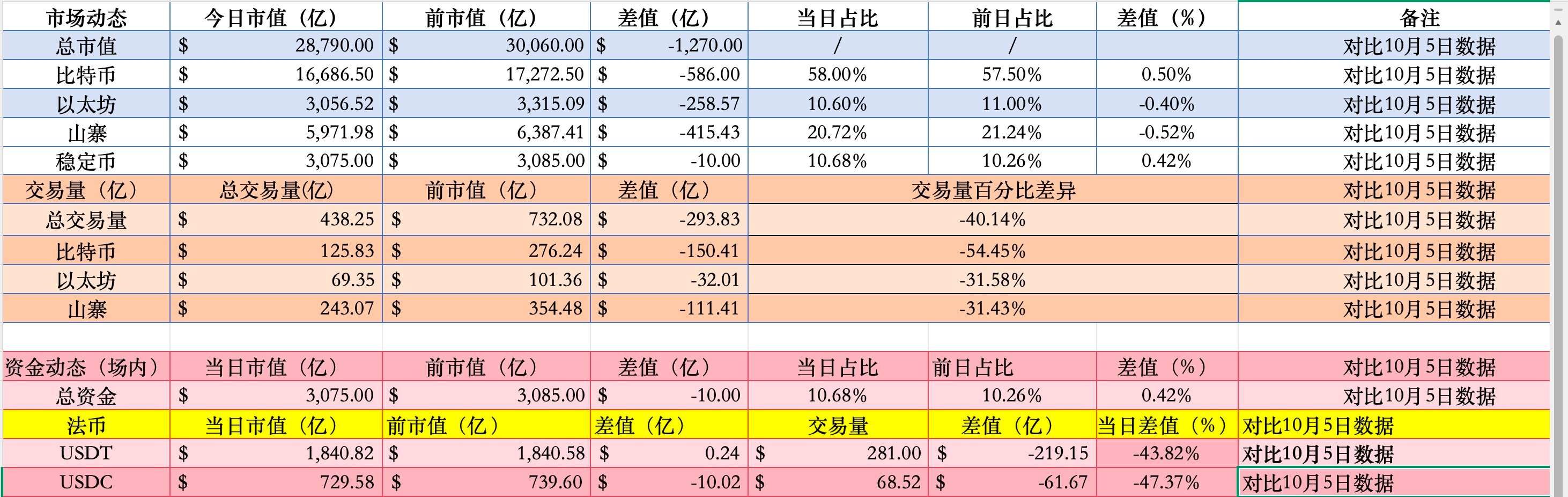
Crypto market data: Compared with the October 5 figures, the market cap decline was concentrated in #BTC and altcoins. Total capital decreased by $1 billion; the total USDT supply was unchanged, while USDC saw $1 billion in net outflows. Net outflows from major U.S. funds were concentrated.
Looking at ETF and crypto market data, it's clear that U.S. funds were the main source of outflows this week. This is certainly not a good sign for crypto prices. On the ETF front, IBIT saw two large net outflows this week.
As BTC fell, we saw the rise in 10- and 30-year U.S. Treasury yields slow, with both gradually shifting into a choppy downward trend. Clearly, this is the effect of October rate hikes and high bond yields squeezing liquidity in risk assets.
When risk-free-yield assets are at elevated levels and further rate hikes are all but certain, some capital will naturally be constrained by current interest rates, prompting investors to sell and rotate out of risk assets. So rate hikes do have a negative impact—the effect has simply diminished.
Of course, this liquidity squeeze is temporary. Going forward, we need to keep watching how certain a December rate hike will be, and when long-term rates will start to stabilize instead of continuing to fall. If the market demands excessively high yields on bonds, this temporary liquidity drain won't last long. Of course, if long-term rates continue to rise, the issue will persist.
The pressure that a high-interest-rate environment puts on risk assets isn't entirely bearish. Capital is simply more cautious, so strong narratives can still attract liquidity—for example, U.S. tech stocks. However, their short-term growth potential will be limited.
Secondly, for BTC, this capital outflow can only be described as a temporary rotation and valuation adjustment. It doesn't mean the trend has directly reversed and returned to a bear market. If the macro environment improves and BTC pulls back to a suitable level, then unless macro conditions continue to deteriorate, this liquidity drain won't keep happening! So there's no need to be overly pessimistic.
Next week, we need to keep an eye on ETF flows. Friday's inflows were too weak. If daily inflows next week fail to exceed $100 million—or if net outflows continue—we should remain alert to the risk of capital outflows and a price correction!