


The market lacks momentum and is moving within a range. Lao Cui finds it dull to watch, so let’s talk about some basic theory. As it happens, China has issued a set of guidelines (Opinions on Developing New Quality Productive Forces), which Lao Cui has read and summarized. Most of Lao Cui’s followers are also in China, so you can assess your own industry against them. The central message is that we must not shift from the real economy to the virtual one, create bubbles, hollow out expertise or cause breaks in industrial chains, or pursue novelty blindly at the expense of other priorities. This sets the tone for the future: China will remain committed to industrialization, rather than developing finance and services like the US. How should we understand today’s industries? It’s simple: industry is the backbone, and AI is there to support it. There won’t even be an excessive focus on computing power. The guidance on new quality productive forces also directly identifies eight key industries that will receive strong support in the future, so Lao Cui won’t list them all here. The point Lao Cui wants to make is simple: crypto isn’t among them, and that is unlikely to change for at least the next 5–10 years.
Everyone should take this kind of policy guidance seriously. If this is where the future’s key pillars will lie, then the most profitable industries will surely emerge here. For ordinary people like us, investing in related stocks is the least desirable option, because the financial sector isn’t one of China’s economic pillars. The areas ordinary people can get involved in are naturally the supporting industries. For example, the advantage in central and western China lies in industries related to electricity supply, which don’t require huge investments in things like power plants. Producing electrical equipment, acting as a middleman, or finding ways to obtain computing equipment can all be ways to build up capital quickly. Naturally, there are industries you can’t get into, such as electric vehicles. The supply chains supporting this kind of industry are already becoming saturated, so the only way to get involved is by investing in related stocks. One industry that never goes out of style is materials science. If you have a better material, you can build up capital quickly. That’s the kind of work research institutes do.
There are still many industries people can get involved in along the way, such as home renovation. The future will clearly be geared toward smart renovation: how can you create a safe, reliable renovation plan at low cost? And what about information security? These are the kinds of questions you need to think about. How can you apply this guidance to your own development? Here’s a small piece of information: I designed and renovated my own home, and I’m quite satisfied with it so far. One thing that divides people in China is that many can’t tell the difference between the virtual economy and the real economy. Warren Buffett is a representative figure of the virtual economy, as are Jensen Huang, Elon Musk, and CZ today. Li Ka-shing, on the other hand, represents the real economy. What’s the difference between the two? The real economy is almost impossible to replace, while the virtual economy can easily fall from grace.
The two sides’ ability to cash out also differs greatly. When selling assets in the real economy, discounts are usually around 20–30%. In the virtual economy, even assets with a 50% bubble may not find a buyer. That’s why the term “bubble” comes up so often in China. In the crypto market, looking at the holdings involved in the transfer of assets between Grayscale and BlackRock, their positions suggest that they exchanged 300,000 BTC in the $20,000–$80,000 range. Grayscale acquired its holdings at an average cost of almost under $20,000. Lao Cui doesn’t know exactly what price it got from BlackRock, but it would have been no more than $40,000. Selling that much depends on the outcome of negotiations between the two sides. Cashing out in the virtual economy involves many factors, and BlackRock is the only player in the industry capable of taking on an order to sell 300,000 BTC. If they had sold it on the open market, the price would have been around $30,000 at most, and it would have required a long-term plan. The process could also have dragged down the entire crypto market. A private deal was clearly the safer option; it appears the transaction wasn’t conducted on-chain, but through cold wallets instead.
Lao Cui personally leans firmly toward pragmatism. Even though he got his start in the virtual economy, there is nothing wrong with this guidance, and he would definitely support it. At first glance, companies like Nvidia and Apple have enormous market capitalizations—but what will their actual value look like when it comes time to cash out? At this stage, we can only value and cash out these kinds of companies at their current prices. This isn’t the area we should be pursuing. If you share Lao Cui’s thinking and feel a strong connection to your homeland, wanting to make a living here, then naturally you should follow domestic guidance. At the same time, if you want to invest, you should choose the best options. There’s no conflict between the two, and it has nothing to do with international influence. That’s all I have to say about this interpretation. Let’s get back to the crypto market. I’ve noticed a few signals recently that I can share with you—they’re quite interesting. Sun Yuchen’s personal account has apparently been restored in China. That’s a very ambiguous signal. You can speculate about what it means and then see whether your views hold up.
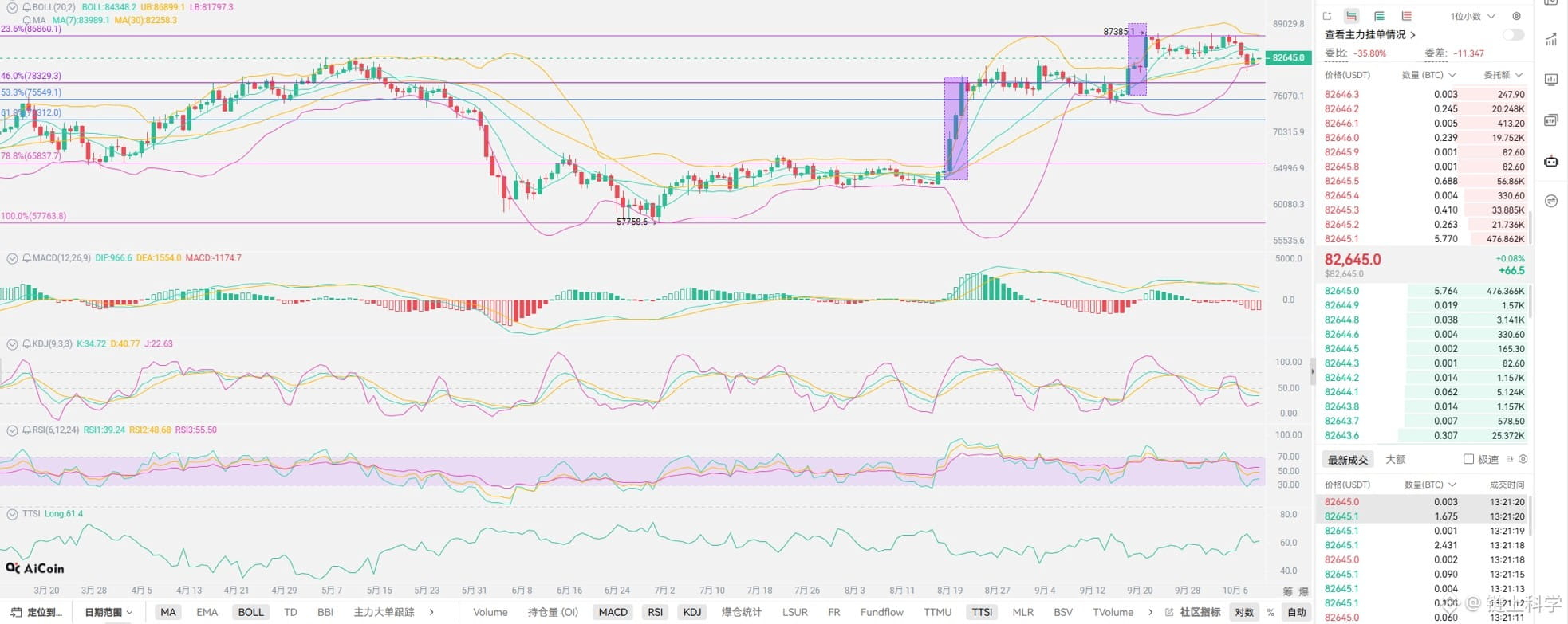
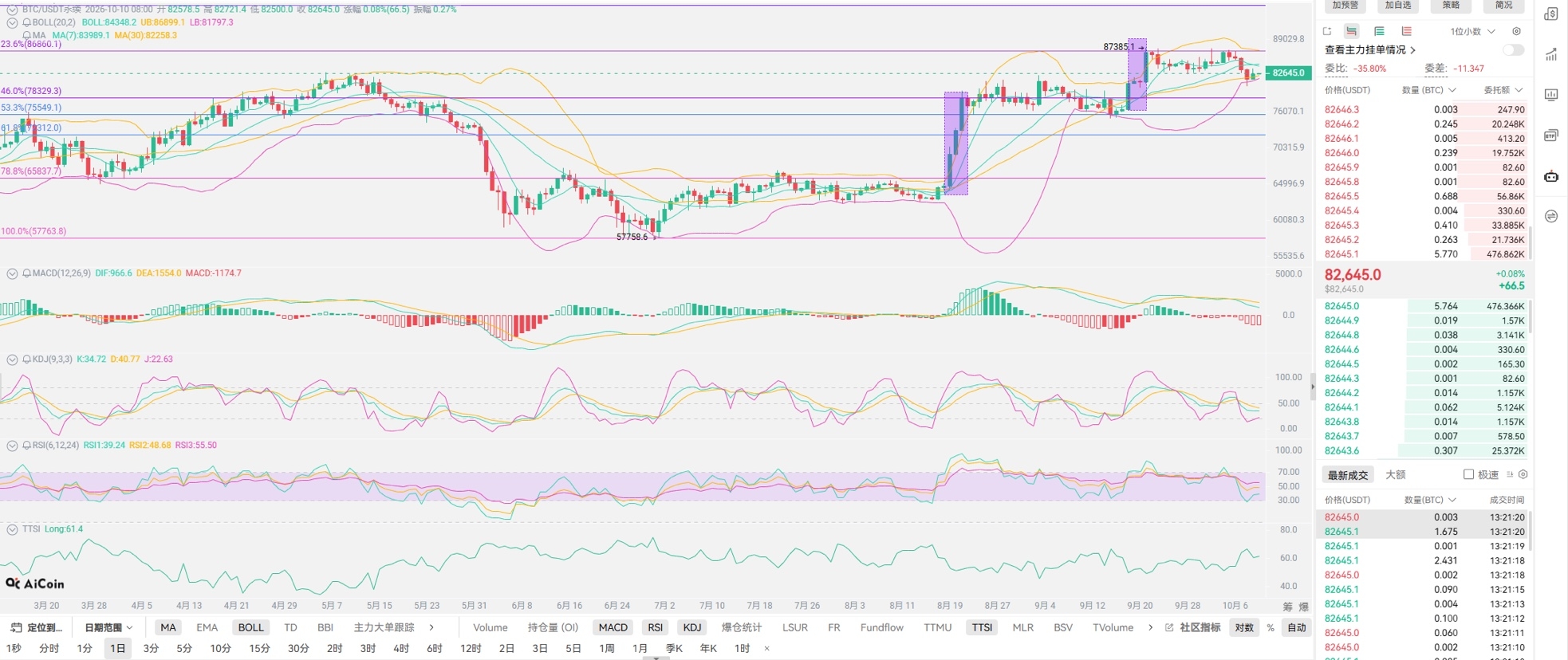
Lao Cui’s summary: Bitcoin’s price fluctuations will most likely continue the downward trend we’ve seen recently. There’s just one point I want to make: the real bearish sell-off has not yet arrived. The current movement can only be seen as a test of market sentiment, based on yesterday’s actual trading. Some people have asked me whether they should enter a short position. My answer is straightforward: you can enter, with a stop-loss above $85,000. That was the point at which I opened my first position. Some people still think the risk is too high. I understand, and I want to clarify that the risk may not necessarily materialize. I’m simply preparing for it. If you can’t accept the risk, then staying out is definitely the best choice. For example, when Bitcoin was around $87,000, I said it might reach this year’s high, somewhere around $92,000–$97,000, before dropping rapidly. It hasn’t reached that range yet, but the risk of shorting is still there. Don’t dream of getting rich overnight and expect to make a profit as soon as you enter a position. Trades like that often don’t yield enough returns.
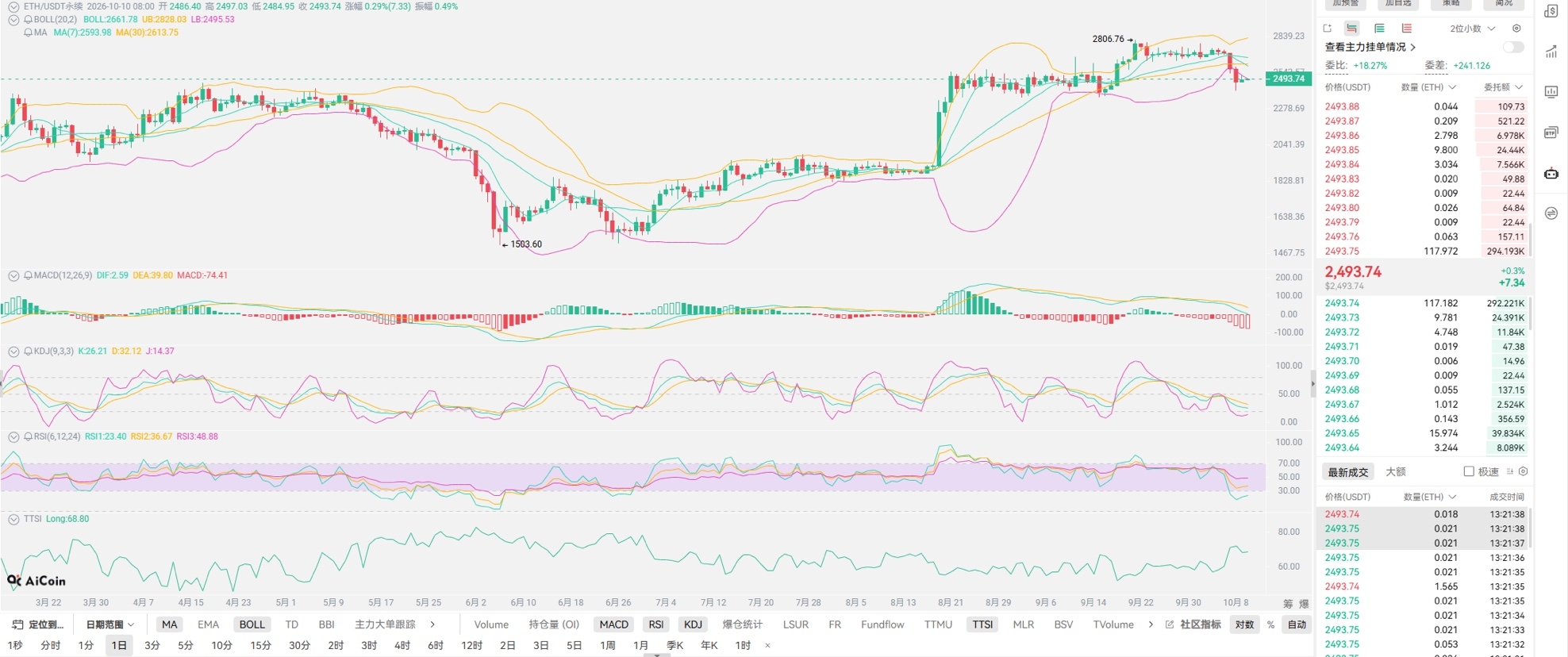
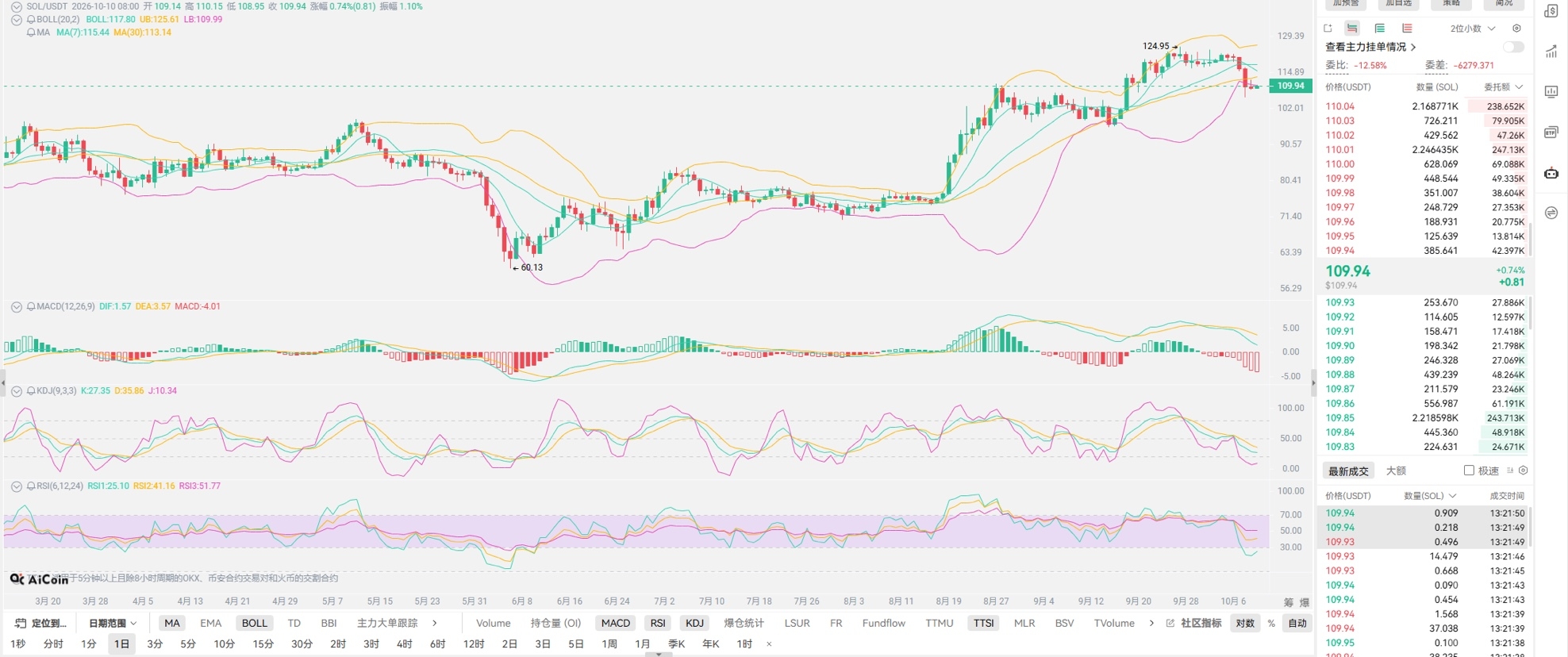
When Lao Cui’s positions make more than $50,000 in profit, it’s usually because he’s held them for over a week—in other words, they’re medium-term positions. As far as I know, CZ may be the only person currently capable of generating returns in the short term and willing to guide you. But you’ll still need to work out whether he’s messing with you. I can also give you my view of the market before the next major news event: it will most likely follow a pattern of dropping 2,000–3,000 points, then recovering 1,000–2,000 points. I expect this to continue until the next interest-rate meeting. The lows will keep getting lower, and the short squeeze may be concentrated around the time of the meeting. There’s no need to worry too much; the actual movement shouldn’t deviate significantly from this outlook. Smaller coins, including Ethereum, have almost completely retraced the gains from their second wave. If a third wave doesn’t form within a week, the depth of the market sell-off will exceed what most people expect. I’ve shared my view. Now we’ll leave it to time to test my prediction.