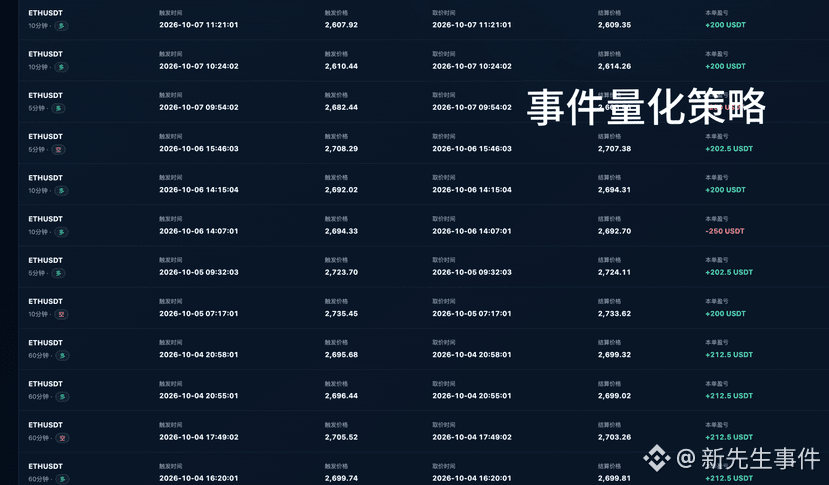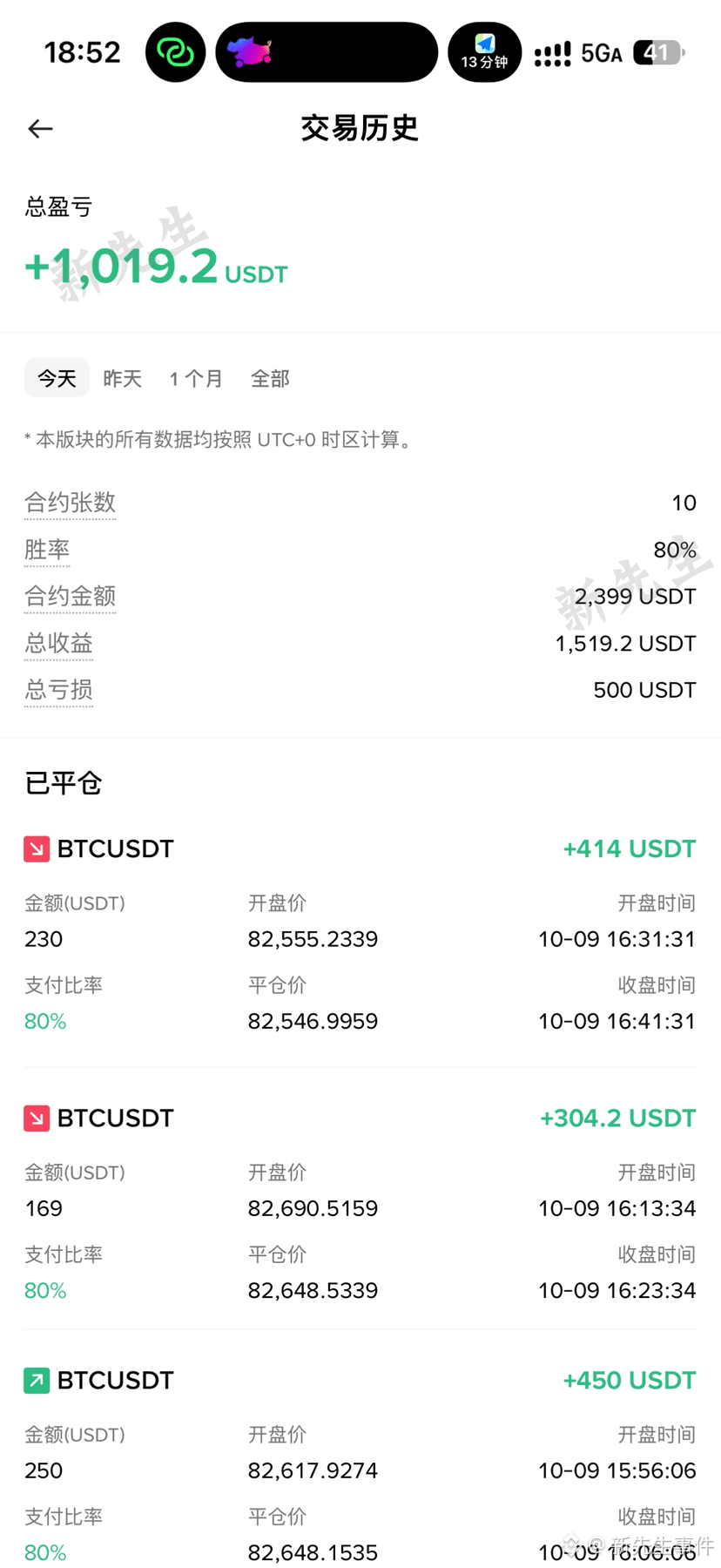
The market suddenly plunged! Can you still trade event contracts? How should quantitative strategies respond now? Let’s take a look.
1. First, the bottom line: opportunities are still there—the key is not to trade recklessly! #事件合约 trades on whether prices go up or down within a set period; you’re not buying in and waiting for a bull market. A sharp rise doesn’t mean the next trade will go up, and a steep drop doesn’t mean the next one will keep falling. Many people chase shorts during a crash and chase longs during a rebound, only to get hit on both sides. What matters now is whether your strategy’s conditions have been met, not rushing to guess where the bottom is.
2. The broader trend can be a useful reference, but it can’t replace an entry signal! For 10-minute, 30-minute, or 1-hour event contracts, you need to consider direction, price levels, and expiration time. Even if the price rises later, if it hasn’t risen by settlement, you still lose the trade. The point of quantitative trading is to filter opportunities based on predefined conditions: wait when you should, and execute when you should. You don’t need to participate in every market move.
3. So the plan is clear: set your amount per trade, trading frequency, and loss limit in advance, then let the quantitative system execute according to the rules. Open a trade only when there’s a signal; otherwise, wait. Don’t casually increase your position after consecutive wins, and don’t double down to make up for consecutive losses. If your goal was to build up gradually, don’t wager your entire account on the next outcome just because a few trades went badly.
4. Even if the market falls to a level your strategy is watching, don’t go long just because it touches support. Check whether the other conditions are met too. The same applies to BTC and ETH: just because they’re both falling doesn’t mean they’re both buying opportunities. Set trigger conditions in advance and execute only after the signal is confirmed. That helps you avoid rushing in during a drop and then regretting that your position was too small when prices rise.
5. If a trade has already settled at a loss, accept the result. Don’t feel that you have to win it back on the next trade. You can’t rely on holding event contracts indefinitely until you break even, and you can’t simply apply the spot-trading approach of taking profits in stages. If you reach your preset profit target for the day, stop as planned; if you hit your loss limit, pause trading. Wait for a new signal to see whether another opportunity comes along—don’t force another trade just to recoup your losses.
6. These are the words I focus on: execute when conditions are met; stop when emotions take over. Many people think their profits are too small, refuse to accept their losses, and end up giving back several days’ profits all at once. The value of #量化 lies in following the rules and reducing impulsive trades. But automated execution doesn’t guarantee profits—the strategy still needs to be tested and adjusted. First, keep your position size and trading frequency under control. Don’t let one impulsive decision undo all your previous discipline.