


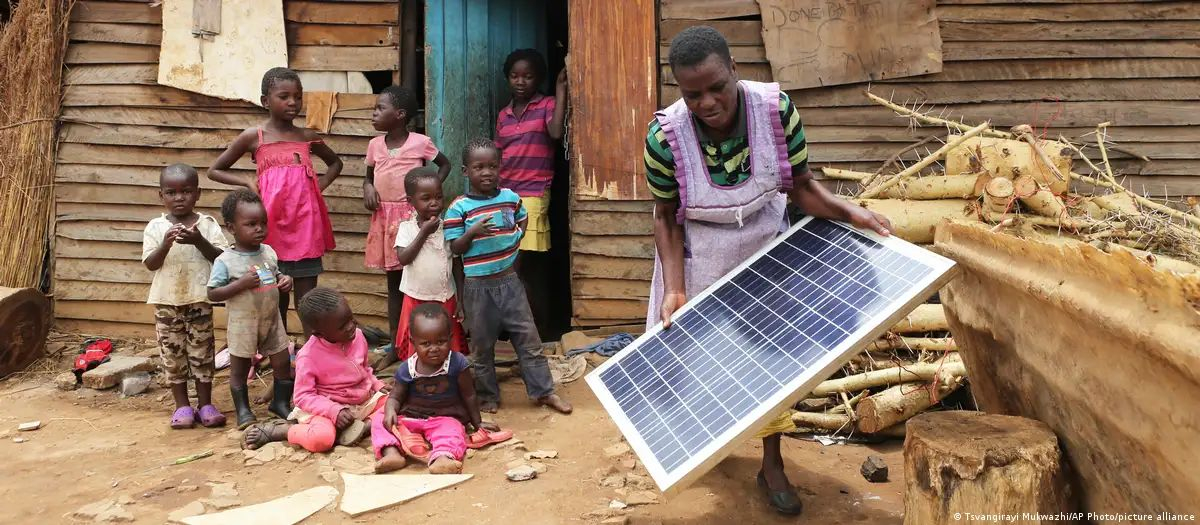
Against a backdrop of wars and global warming, in a world where climate disasters—from wildfires in Europe to melting glaciers in Nepal—are becoming increasingly destructive, solar energy offers clean, affordable electricity. This is the message of an open letter calling for wider use of solar power, signed by prominent climate action leaders, including writer Bill McKibben, former UN climate chief Christiana Figueres, and former Canadian Minister of Environment and Climate Change Catherine McKenna.
The document makes a clear appeal: governments, companies, institutions and the public must join forces to provide “clean, affordable energy for everyone, everywhere by 2030”—from the nearly one billion people who still lack reliable access to electricity to the several billion more who pay too much for energy generated from fossil fuels that pollute the environment.
There are just over three years left in the decade. How realistic is this goal? “It’s an ambitious target, but we have far exceeded our previous expectations of where we would be with solar and renewable energy,” McKenna told DW. “So let’s just keep moving forward.”
Why are experts betting on solar power?
According to Ember, an independent British think tank focused on energy and climate, solar power has had the highest growth rate of any energy source over the past eight years. In 2025, generation rose by a record 30 percent compared with the previous year, and has increased more than tenfold since 2015.
“Solar energy is the cheapest source of electricity in human history,” says McKenna, who founded the consultancy Climate and Nature Solutions and the international coalition Women Leading on Climate. “It is developing much faster than anyone could ever have imagined.”
The same applies to battery technologies used to store surplus energy from renewable sources. “The cost of batteries has also fallen, just like the cost of solar modules,” says physicist Eicke Weber, former director of the Fraunhofer Institute for Solar Energy Systems in Germany, who later helped found the European Solar Manufacturing Council, among other organizations. He says that “we already have the technology and enough money to fund” a broad transition to solar power.
According to Ember’s latest analysis, in 2025 renewable energy surpassed coal in the global energy mix for the first time in 100 years.
How much solar power do we need to achieve?
The total installed capacity of solar power worldwide currently stands at 3 terawatts. One TW equals 1,000 gigawatts, while a nuclear power plant has a capacity of around 1 GW.
Today, around 1 TW of new solar photovoltaic capacity is installed worldwide each year, most of it in China. Weber says a complete transition of the global energy system to renewables would require around 50 TW. “We have more manufacturing capacity than we sell,” he adds.
At the same time, around 655 million people around the world still lack access to electricity. “The pace of electrification in sub-Saharan African countries needs to triple to provide universal access to electricity by 2030,” McKenna notes, highlighting how quickly solar power could help close this gap.
She says that regions without electricity have the opportunity to move directly to clean technologies, bypassing the fossil fuels that heat the planet. “And there is a misconception, often deliberately spread by fossil fuel companies, that this is expensive, difficult and unreliable. But that has not been true for a long time,” she says. “To be honest, the most unreliable thing is trying to transport fossil fuels through the Strait of Hormuz,” the expert believes.
It’s not about technology, but political will
Hans-Josef Fell, a well-known German politician from the Alliance 90/The Greens party and an expert on environmental and energy policy, is used to hearing arguments that certain things are impossible. Widely recognized as one of the pioneers of renewable energy, he helped develop Germany’s Renewable Energy Sources Act, which introduced guaranteed electricity tariffs and gave a powerful boost to the growth of clean energy in Germany and beyond.
“The Renewable Energy Sources Act triggered exponential growth in this sector, overturning all previous assumptions about what could be achieved. It upended the scenarios and forecasts that politicians and experts considered realistic. In the end, reality exceeded all expectations,” says Fell, who now heads the Energy Watch Group think tank.
The politician, who has lived off-grid for five years, says that political and public will is needed to achieve the global energy transition—will that “is currently lacking around the world, as public debate is heavily influenced by the interests of the fossil fuel industry.”
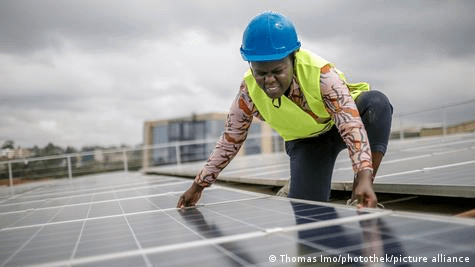
According to calculations by his think tank, if the world’s energy needs were met entirely by renewable sources, solar power would account for around 60–70 percent of supply. The rest would come from wind power and other sources, such as bioenergy and hydropower.
What needs to happen next?
Countries such as China and Pakistan have already made significant progress in this direction. “Now, in 2026, it’s all in our hands: we can say that we’re setting everything else aside and focusing on this problem. We don’t need to wait for more research,” says Weber. “It’s possible to achieve this, but it will take a kind of extraordinarily ambitious program.” He says this will require strong political support.
The politician believes Germany could make such a transition in two to three years if the necessary political will existed, but that it would probably take longer on a global scale. “We will probably need until around 2040 to be able to say that we have a goal of generating 80–90 percent of the world’s electricity from renewable sources.”
“I would put it this way: if we, as a global community, tackle this challenge properly, then perhaps we really can achieve it,” says Fell. “And even if we achieve only 90% of our goal, that would still be an outstanding accomplishment.”
McKenna stresses the need for blended finance, urging governments, the World Bank, the African Development Bank and the private sector to invest. “It’s irrational to keep following the path of fossil fuels. It’s irrational in terms of costs, risks and consequences. It’s outdated technology,” she says.