


The IMF Executive Board approved a $138 million disbursement to El Salvador on October 1, releasing funds that had been held up. Headlines are framing this as the IMF suddenly cracking down and forcing a halt to Bitcoin purchases.
Here's what actually happened though, honestly.
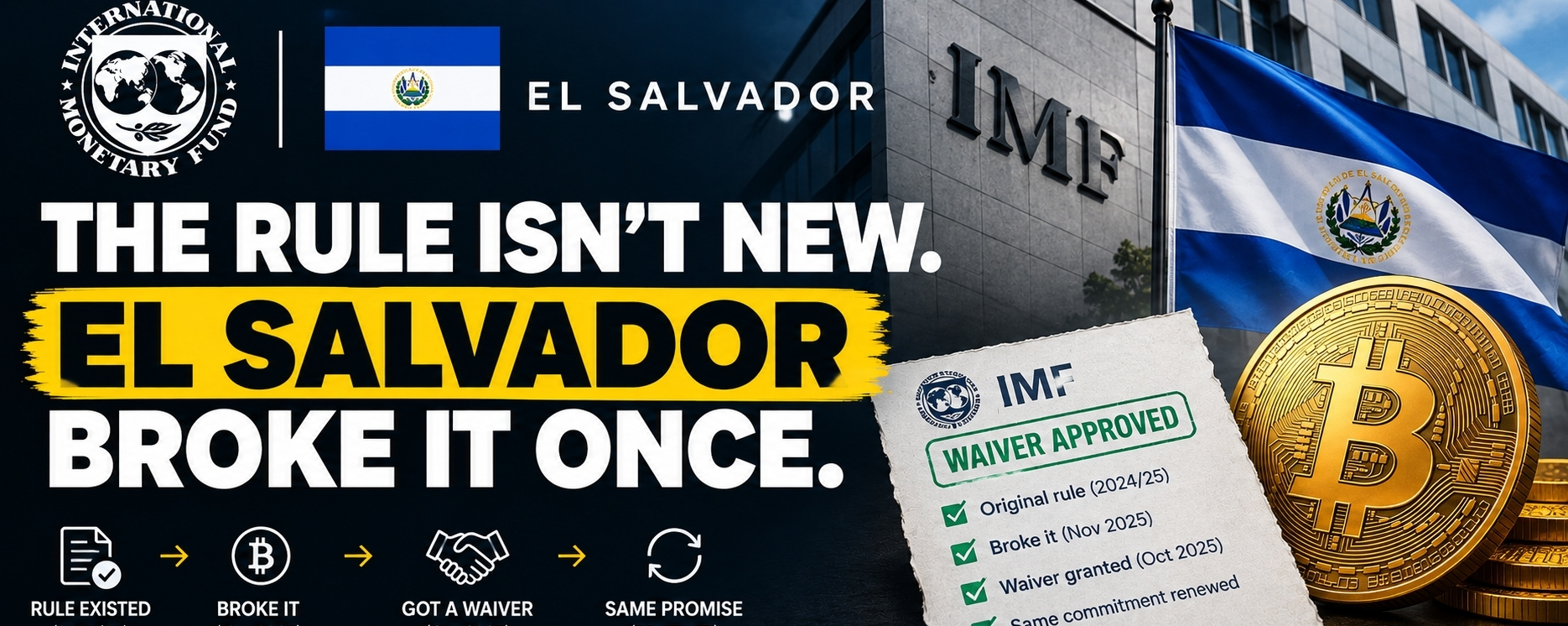
The no-further-accumulation rule isn't new at all. It traces back to El Salvador's original IMF agreement with the Executive Board around late 2024/early 2025, well over a year ago. El Salvador broke that existing rule in November 2025, buying roughly 1,090 BTC worth about $100 million at the time. What happened this week isn't a new restriction landing, it's the IMF granting a waiver for a rule El Salvador had already violated, then both sides restating the same original commitment.
I think that distinction matters, tbh. "IMF forces a halt" sounds like fresh pressure just applied. The actual sequence is closer to: rule existed, country broke it, got caught, received forgiveness instead of real penalty, and renewed the same promise it already wasn't keeping.
Worth noting what this doesn't actually change too, honestly. El Salvador still holds roughly 7,794 BTC, worth around $666 million right now. The restriction only covers government purchases, not donations, and one report specifically notes reserve balances can still rise without indicating purchases resumed. The stack isn't frozen, just the acquisition method is narrower than headlines suggest.
Not dismissing the real economic context either, tbh. The IMF Executive Board also raised El Salvador's 2026 growth forecast to 4.5%, citing improved security and investor confidence, alongside this waiver. The broader program is actually going reasonably well.
Not calling this a win or a loss for Bitcoin policy, honestly. Just noting "forced to halt" undersells that the rule was already there, already broken, and already forgiven once before this week's announcement.
