


The Pentagon has been asked to draw up military options against Iran that could be carried out before the Nov. 3 midterms, according to The Atlantic, which cites two administration officials. The request came from the White House. That cuts against a widely shared assumption that President Donald Trump would hold off escalating with Tehran until after next month's vote.
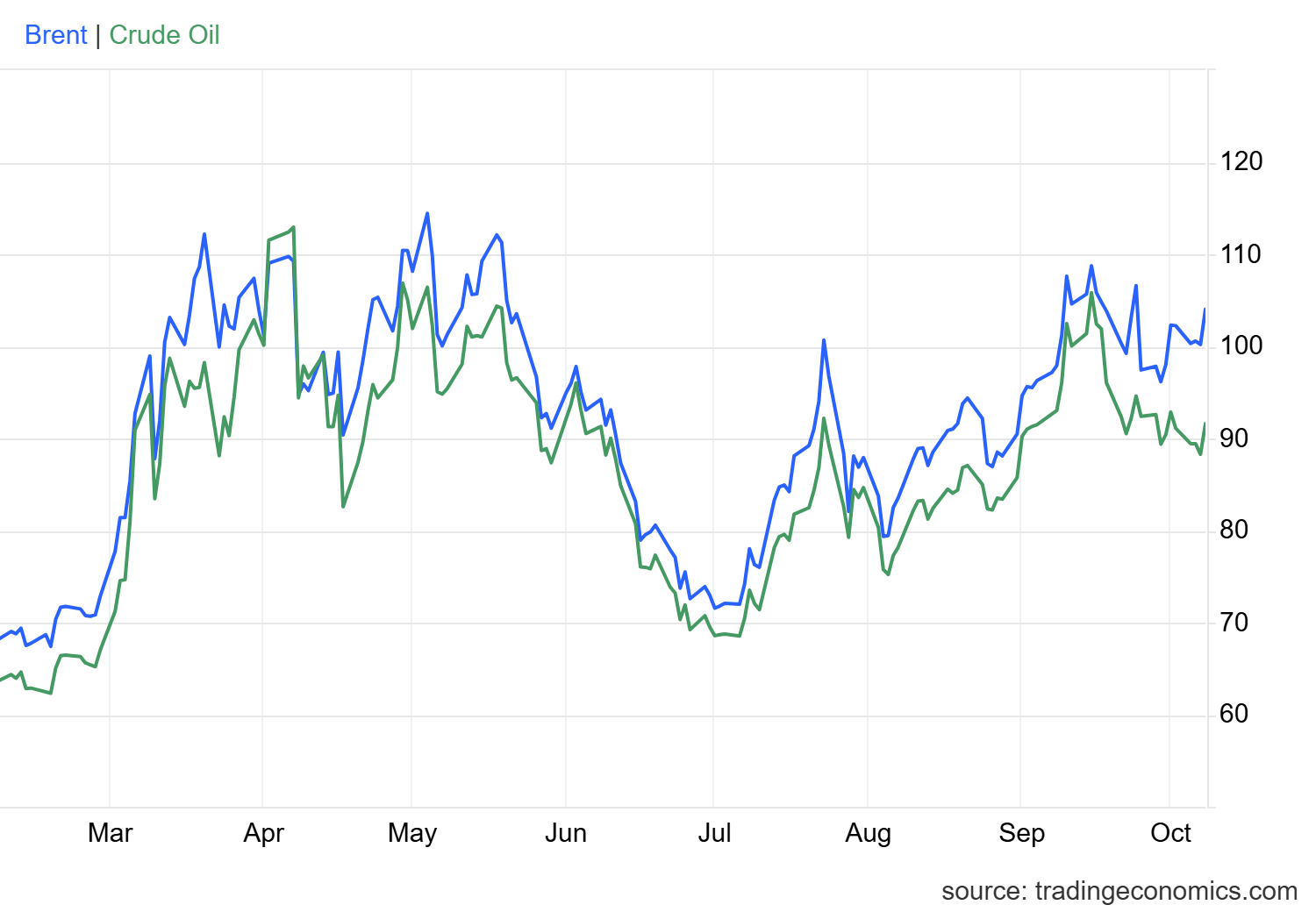
Crude moved on it. In Thursday trading, West Texas Intermediate pushed past $90 a barrel, and Brent went north of $104, both comfortably above Wednesday's settlements of $88.28 and $100.20.
Details are thin. Two unnamed sources described a limited operation first and something larger once the midterms have passed, and even the people who favor that sequence reportedly admit a short round wouldn't force Iran back to the table, reopen the Strait of Hormuz or cut fuel prices before voters show up. None of it is an order, only planning.
Still, a second wave of military action, whatever its size, would lean hard on Middle East oil supply, and this war has already run into its eighth month. It began Feb. 28 with the U.S. and Israel against Tehran.
Storm Season Picks Its Moment
Shell and Chevron began clearing out of the U.S. Gulf of Mexico on Wednesday as Tropical Storm Isaias approached. Shell pulled all personnel and shut in production at five assets, Mars, Ursa and Appomattox among them. Chevron started shut-in procedures at four facilities it operates.
Isaias is now a hurricane, the first of a late-starting Atlantic season, and the National Hurricane Center expects it to keep strengthening on its way to the northern Gulf coast, where it should arrive Friday night. Reuters put the shut-in share of Gulf oil output at about a quarter.
The Costs Land on Shippers
Maersk wants more for fuel. The Danish shipping giant said Thursday it is raising its emergency fuel surcharge on every export collection and import delivery, a response to the Middle East war. From Monday, Oct. 12, the surcharge will be 20%, and the company says it will keep the figure under regular review.
At least 12 attacks targeted oil, liquefied natural gas and liquefied petroleum gas tankers around the Strait of Hormuz in the week to Oct. 5, three maritime security sources told Reuters, and no week since the war began has been worse. The International Maritime Organization takes longer to verify incidents and tallied nine involving vessels over the same period. Gulf producers, for their part, have been exporting more.
Who Controls Hormuz Depends on Who You Ask
Brig. Gen. Mohammad Reza Naqdi didn't hedge. The senior adviser to the Islamic Revolutionary Guard Corps commander-in-chief said Wednesday that the strait is closed and under the full control of Iran's armed forces, and will stay that way until Tehran's demands are met. The "illegal routes" that let some oil slip past will be blocked soon, he told Iranian media, though he allowed that not much moves that way.
He was answering Secretary of State Marco Rubio, who had said hours earlier in Athens that Tehran had "lost complete control" of the strait, that it's open, and that nearly as much oil is flowing out as before the war. It's hard to see how both descriptions fit the same stretch of water.
Iran's president took a calmer line with Russian President Vladimir Putin. A fair and balanced agreement with the United States is "not out of reach," Masoud Pezeshkian said on a phone call, so long as Washington stays within international legal frameworks, Iranian outlets including the Fars News Agency and ISNA reported. Tehran, he said, is fully prepared to settle for lasting regional peace, and he blamed Washington's uneven standards and maximalist demands for the holdup.
Fars ran his harder lines from the same day: that Iran is in full-scale war, that it will keep resisting the enemy, that it's talking with its neighbors to meet their needs. Peace within reach and a country at war, from one man on one Wednesday.
Emergency Barrels Come Into Play
Wednesday brought some relief. IEA member states agreed to prioritize releasing diesel stocks to tackle surging fuel prices, and crude steadied, CNBC reported. Members have deployed 325 million barrels under the March emergency plan, and about 100 million more are still waiting to be released.
What's left in the vaults is considerable: roughly 1.1 billion barrels held by IEA governments, more than 200 million of them diesel. Executive Director Fatih Birol said the agency is ready to release more if needed. The decision follows the G7's agreement last Friday to release 100 million barrels of diesel and crude, though nobody has said how much of that will be diesel.
Saudi Arabia's East-West pipeline gave supply a lift of its own. Energy Minister Prince Abdulaziz bin Salman said the line was carrying 5.8 million barrels a day as of Tuesday morning, against a capacity of about 7 million, after drone attacks shut it down in September. It restarted Sept. 22.
Riyadh's Airport Gets Caught in Yemen's War
Iran-backed Houthi attacks on Tuesday and Wednesday hit two Saudi airports, King Khalid International in Riyadh and Abha International, killing three people and injuring 36, Saudi Arabia's civil aviation authority said. Damage was material. Saudi forces intercepted a ballistic missile north of Riyadh and, the Saudi-led coalition says, destroyed a launch platform in Sanaa.
Yemen's front has been heating up for months. In July, the Houthis announced a blockade of Saudi ports and ships, and in early September they moved south along the Red Sea coast toward the Bab el-Mandeb Strait, a key route for energy tankers and container ships, with fighting escalating since. Saudi-backed Yemeni government forces answered with a counteroffensive on Oct. 4 to retake ground near the strait. Within days, the airports were hit.
The $77 Million Charter
Hauling the oil costs more, too. Hiring a very large crude carrier to take U.S. oil to Asia now runs $77 million, Baltic Exchange data showed Oct. 7, a fresh high and a long way from the 2025 average of $9.2 million. Spread across a two-million-barrel cargo, that's about $38.50 a barrel before the oil itself is counted.
Election Day is 26 days off. Whether these numbers mark a peak or only the start depends on a decision nobody in Washington has announced, and oil is already reacting to the possibility.