



It’s not revenue retained by the platform, and it’s not token rewards. Verified contributors get paid directly for the tasks they complete.
KGeN @KGeN_CN compares this to the scale of revenue disclosures made around the same time by leading public blockchains. The difference is where the money goes: public blockchains typically route fees to the protocol or validators, while here, most of it goes to the people providing the data.
Spanning more than 30 countries, over 15 environments, and more than 300 task types. People are verified first, then they do things like walk, speak, operate tools, and make judgments in specific scenarios. Robots need to learn from people, and labs can’t easily generate these samples at scale on their own. The languages, everyday settings, and physical movements of the Global South are also different from those in Silicon Valley.
In the past, this kind of work often followed a familiar pattern: platforms or outsourcing firms pocketed the middleman’s cut. Workers received low piece rates, and once their data was sold, they had no further stake in it.
The framing here is “verified contributors,” which effectively allocates some of AI’s growth gains to the original data sources upfront, rather than waiting until the model is built and the company’s valuation rises to discuss equity or airdrops.
For ordinary contributors, equity feels too far off and airdrops too uncertain. Getting paid in cash per task or receiving reliable settlements is more direct.
Whether this model can go the distance depends on two things.
First, can verification keep out bad actors? Data markets are especially vulnerable to fake users, repeated actions, and low-quality spam. If verification is lax, downstream AI companies won’t keep paying, and contributors’ earnings will fall too.
Second, the per-task rate and how consistent the work is. Reaching this scale in two months shows that there is real demand and people are paying. But whether people will keep doing the work long-term depends on whether the pay per task is better than other local gig work—and whether platform fees or token volatility drive their actual take-home pay too low.
If putting money in contributors’ pockets is just marketing talk, it will soon be exposed. If the settlement records add up, that’s more concrete than most “users are owners” slogans.
Once the data is out there, whether models will in turn affect the labor markets these contributors work in is a bigger, longer-term question. There’s no answer yet.
3.4 million is not the finish line, and it shouldn’t be treated as a miracle. It is more like a signal: someone is willing to keep paying for verified human data, and for now, most of that money is going to the people doing the work.
Whether this can be sustained and expanded to more types of tasks depends on whether clients keep placing orders, and whether the verification and settlement processes hold up to scrutiny. At the very least, it is starting to move “who creates value and who gets it” from a slogan toward actual settlement records.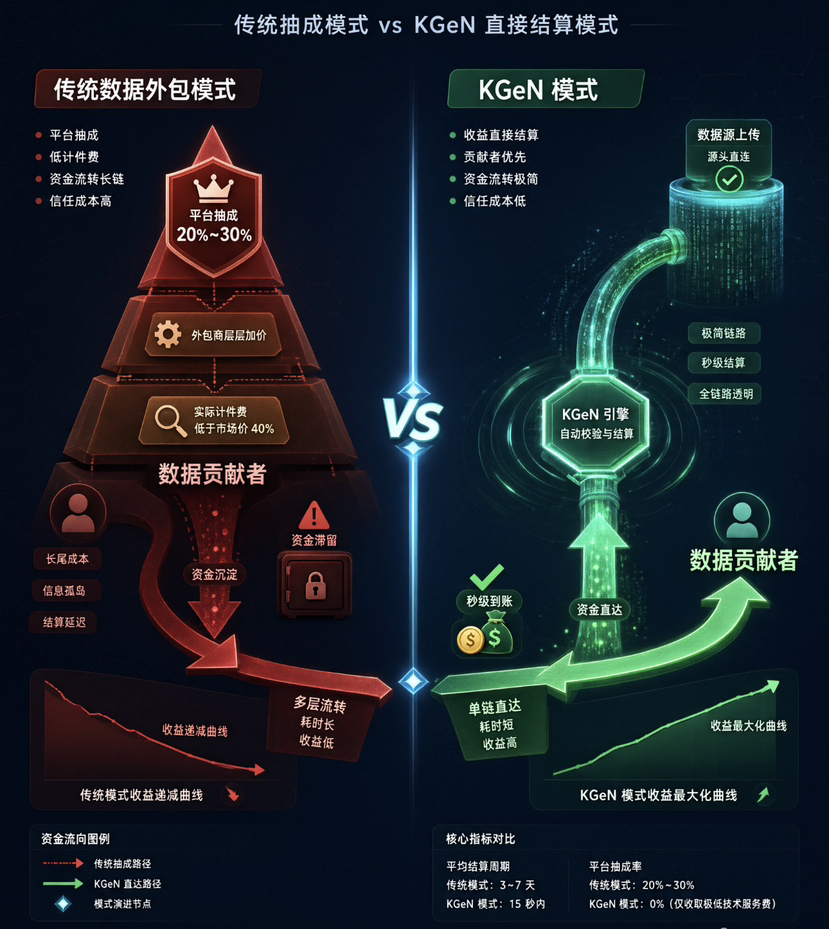
@KGeN_IO