
Welcome to this monthly roundup. I'm Siziy, and this is a new episode of "ALL IN ALL"
Enjoy reading!
1. September's top news
2. September's top themes:
The Robinhood network
Solana fights back (STONK)
Massive gains for ZEC and NEAR
USELESS surged 5x
3.#BTC Breakout and return to the range
4. September's scam coins (AKE, LSK)
5. What else happened in September?
September’s major events:
On September 8, OpenAI announced that it had found a solution to the Navier–Stokes equations, but was quickly accused of using data from a mathematician who had worked on it together with ChatGPT. This was the perfect catalyst for VVV, a coin linked to “private AI/inference” that had been quietly consolidating below its highs near $20 before soaring to $29 in a single day. The price then fell below $22, but a second powerful surge followed, taking it to $34, its high for the month. The best non-scam coin of the year so far.
Hunter Biden launched his $LAPTOP meme coin on the Base platform. The launch went extremely poorly: the coin first reached an absurd multi-billion-dollar valuation and, as might be expected, its price has only fallen since the TGE.
On September 16, Kraken (Payward) announced that it was creating permissioned Hyperliquid HIP-3 markets for U.S. clients. This helped push HYPE to another new high of $98 after a 28% gain in a week. On September 24, Binance announced that HYPE would be listed on its spot market; the coin rose only +3% on the news, marking a local high, before falling by 10%.
On September 17, the SEC granted temporary/conditional relief from requirements, allowing U.S. tokenized securities to be traded through permissioned AMM pools on Uniswap v4. This led UNI to rise by +35%.
On September 22, CME announced the launch of regulated BCH and UNI futures in October. BCH reacted to the news immediately, rising +35% in a day.
September 24: Ondo launched three on-chain portfolio tokens based on investment strategies developed by BlackRock specifically for Ondo. ONDO’s price jumped 40% in the three days after the news broke.
On September 28, Binance announced that SpaceX “dividends” for MARSCOIN would be distributed to holders on the centralized exchange (CEX). This led to a brief 45% surge in eight hours, but the price then pulled back. MARSCOIN’s market cap rose from $60 million to $270 million at the start of the month, before returning to $100 million. Many are bullish on this coin—it’s the leading stock-related meme token on the BNB chain.
Robinhood held its summit on September 29–30. On the first day, it announced that Bitstamp-based perpetual contracts would be launched on the exchange. This didn’t affect the Lighter-based perpetual contracts in the Robinhood wallet, but it was still bad news for Lighter, and LIT’s price fell sharply from $4.5 to $3.7 in one hour. In early November, LIT showed very strong momentum amid the Robinhood news, as well as broad market strength and multi-month chart momentum. The price broke through $3.8 and quickly climbed to $5.3. It consolidated around $5 for two weeks and reached new highs on news of a LIT ETF, but the breakout ultimately failed.
September’s main themes:
1. Robinhood network.
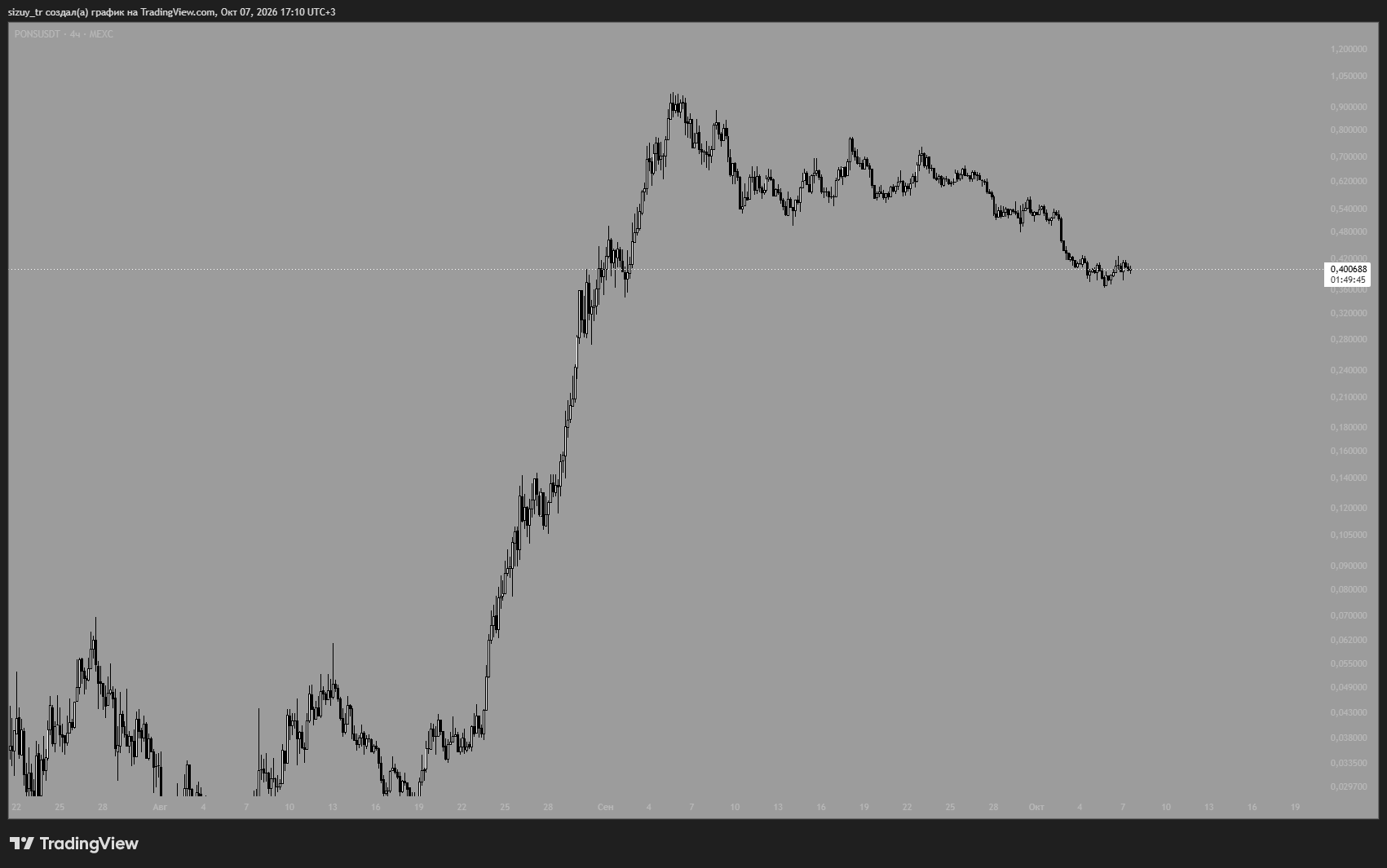
The main altcoin theme in August—the Robinhood network—remained very relevant in September, especially during the first half of the month. The Pons launchpad saw revenue rise for around two weeks straight, through September 6. Its token, PONS, jumped from $0.40 to nearly $1 during the first week of September. That means it rose 25-fold in two weeks. The price then stabilized somewhat at around $0.95, but this turned out to be its high for the month, as the platform’s daily revenue began to decline from that point (though it remained fairly high).
The RH network’s main mascot, CASHCAT, reached new highs around the same time, with a market cap of $320 million, before losing 50% of its value. The leading AI stock-related meme token (Artificial Inu, linked to tokenized NVDA shares) reached $320 million at the start of the month and even hit a new high of $380 million in mid-September, but ended the month at $160 million.
2. Solana fights back (STONK)
Of course, following the success of unusual stock pairs on the Robinhood network, some protocols started doing the same on Solana. The most successful was Stonkdotfun, essentially a Solana version of PONS. Its STONK token rose in value from $20 million to $350 million at its peak. The main coin launched on the platform is ZCAT—a cat meme paired with tokenized ZEC—which went from almost zero to $170 million in value in four days. Pairs launched on Stonkfun trade on Raydium, so this story also helped drive RAY higher, with the token gaining +180% from low to high in September.

On September 9, PumpFun also launched its own pairs, but this marked a local top as investors sold in reaction to the news, bringing its FDV down to $3.5 billion from its August high of $5.5 billion. However, PUMP rebounded strongly in the second half of the month, rising +73% and reaching a $6 billion market cap, while PumpFun’s daily revenue continued to grow steadily.
Another Solana coin that rallied sharply was BP, the Backpack token, which tokenizes a huge number of stocks on Solana. In September, BP rose +270%, reaching 10 times its May price.
The token itself, $SOL , also benefited from this Solana momentum, as SOLBTC rose by double digits this month.
3. ZEC and NEAR’s massive rally.
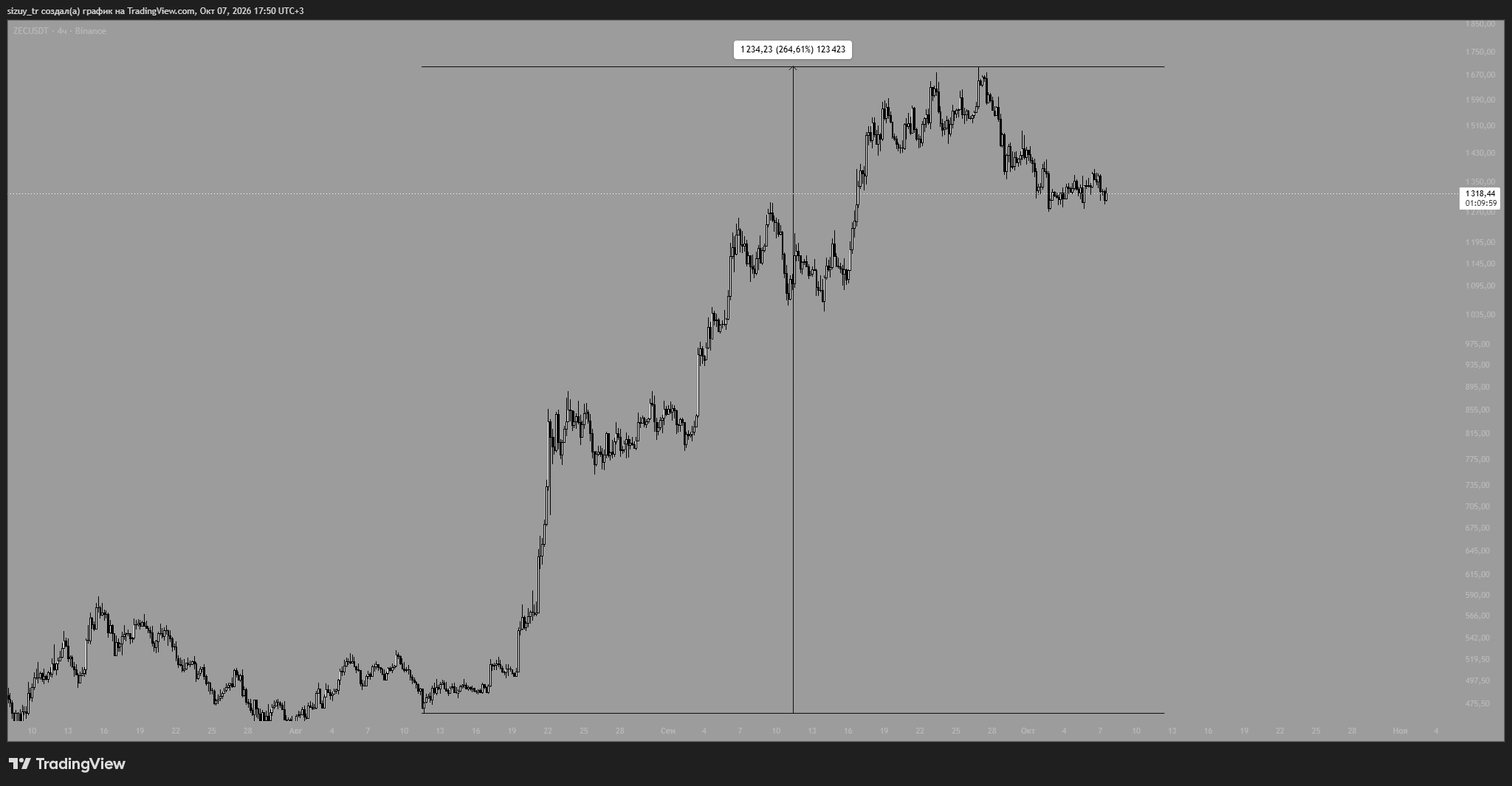
#ZECUSDT was one of the most impressive leaders of this uptrend: after its first jump from $500 to over $800 in August, it continued to rise without any pullbacks in September, reaching $1,700 on September 26. Thanks to ZEC’s exceptionally consistent performance, it seems to have become a serious contender for the role of a primary store-of-value (SoV) coin, “in case something happens to BTC.”
Such strong support from ZEC is helping many privacy-focused beta coins rise. The most significant of these was $NEAR: its fundamentals are improving, and the total value locked (TVL) in Near Intents keeps growing. NEAR started the month at around $2 and reached $5.5, with the entire move happening almost without any pullbacks. That equates to a market cap of around $7 billion, making the scale of the move even more impressive.
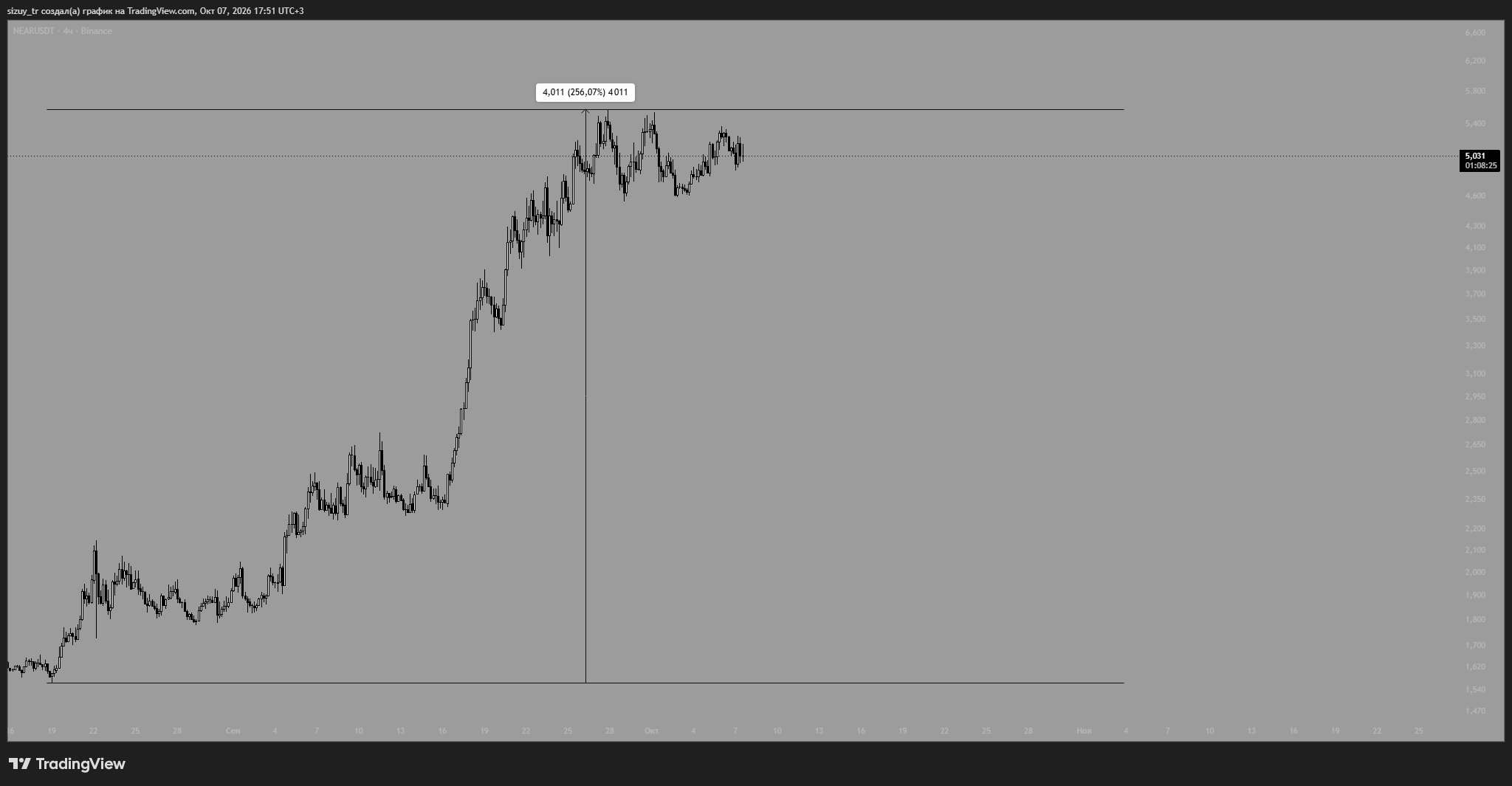
Another beta coin is the familiar leader, DASH, which rose 84% in early September. ZAMA is also worth mentioning: a new coin launched in early 2026, it has been in an uptrend since February 2026 and rose 140% from low to high in September.
4. USELESS surged 5x.
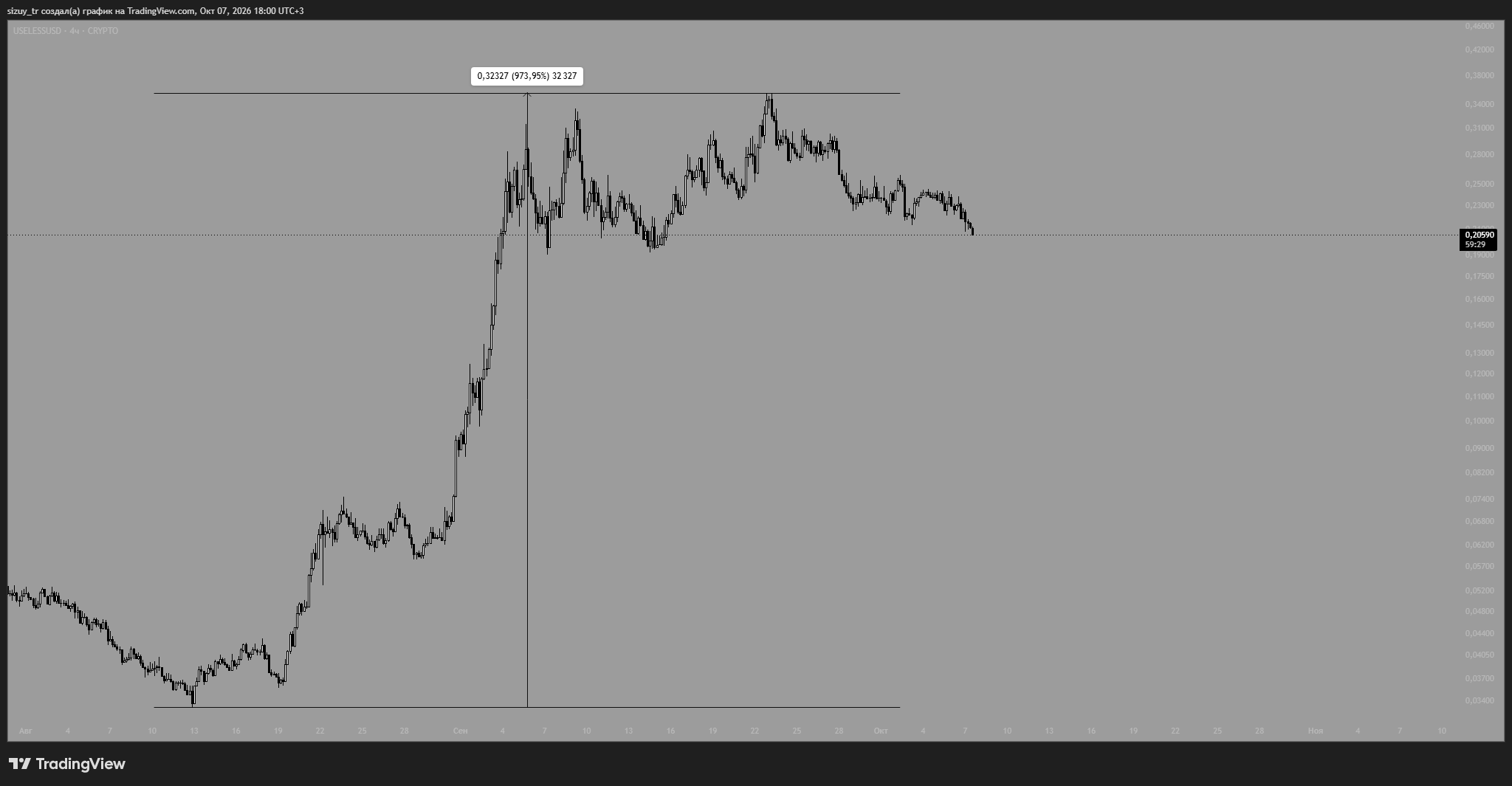
Bonk guy (Unipcs) was back in the spotlight thanks to his huge win on a long PONS position—it was an eight-figure trade at the market top, putting him at the top of the FOMO rankings. Fomo is very popular right now, which means Unipcs has certainly drawn a lot of attention. It’s no surprise that the coin he promotes the most, USELESS, rose sharply. USELESS’s market cap climbed from $70 million to $320 million (+360%) in five days, even reaching $360 million at its September peak. The price then fell back to $240 million. This remains one of the meme coins I’m most bullish on.
#BTC breakout and return to the range:
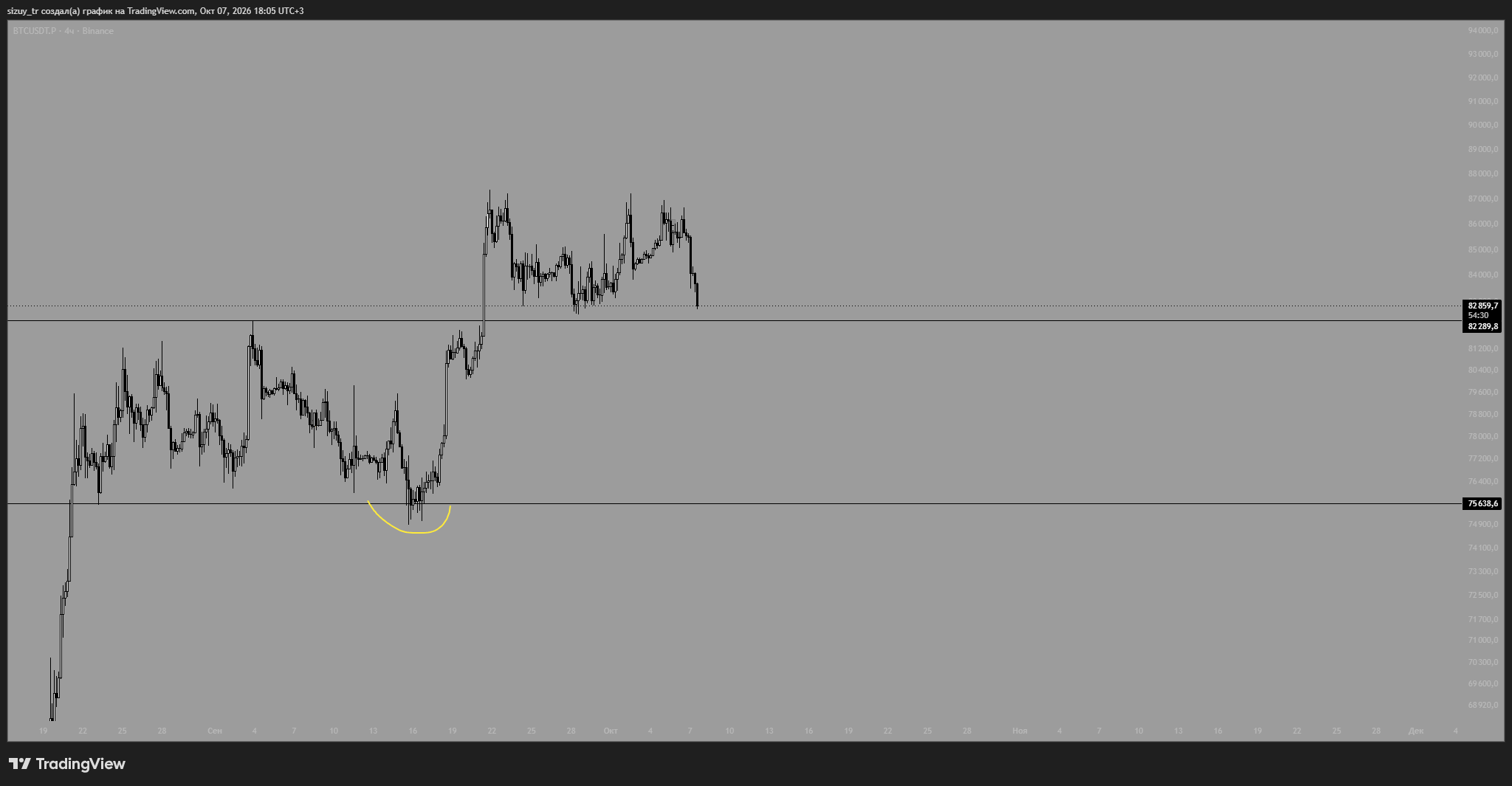
During the first two weeks of September, $BTC mostly consolidated in the $76k–$82k range. It tried to break out of this range on September 3 but failed, then continued to decline until September 15, when the Clarity Act was not passed—that was when BTC plunged to $75k. A day later, the FOMC met, and Warsh raised rates by 25 basis points (this had already been priced in by the market), but BTC refused to fall further. From then on, it even began to form higher lows very slowly on short-term charts, which meant that a dip below $76,000 was a decent opportunity to go long. From that point, BTC essentially only went up: it immediately returned to the top of the range, then broke above it very quickly and reached $87k on September 21. Since then, BTC has once again been consolidating in a new range, higher than the previous one.
As for altcoins, they only rose collectively in September and outperformed BTC. This is clearly a risk-on season, but we haven’t yet seen irrational speculation or risk-taking.
September scam coins (AKE, LSK)
September’s main “scam” coin was the same one as in July—AKE.
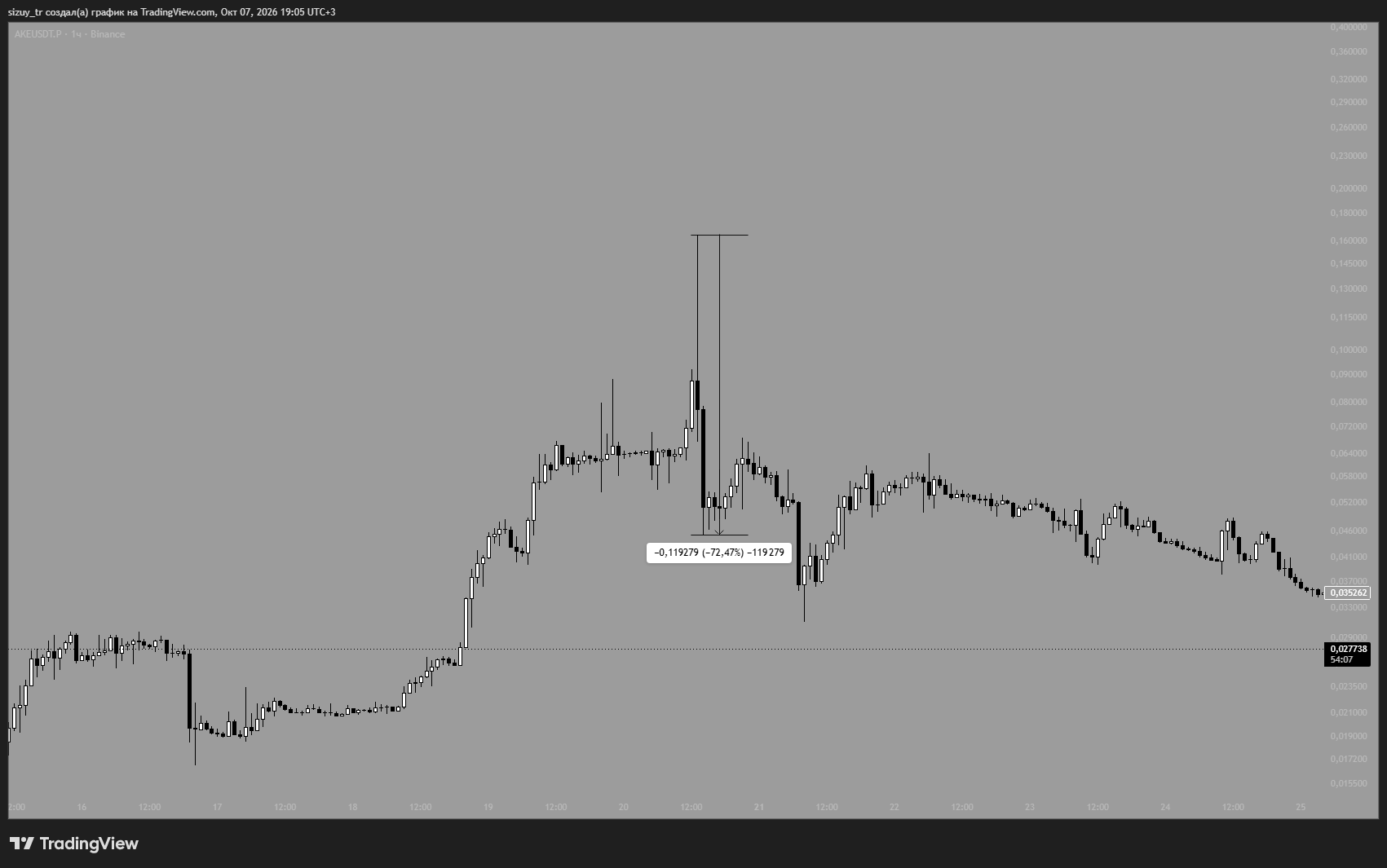
From its July low to the start of September, its value rose 45-fold, and in early September it saw its first major FDV surge, from $1 billion to $4.5 billion. According to Velo, $20 million in long positions were liquidated that day, suggesting a top had been reached. But AKE’s price stayed almost unchanged for the next two weeks, then began rising sharply again: in one day, AKE’s market cap climbed from $2 billion to $6 billion, and two days later came the final vertical spike to over $16 billion, which this time marked the top.
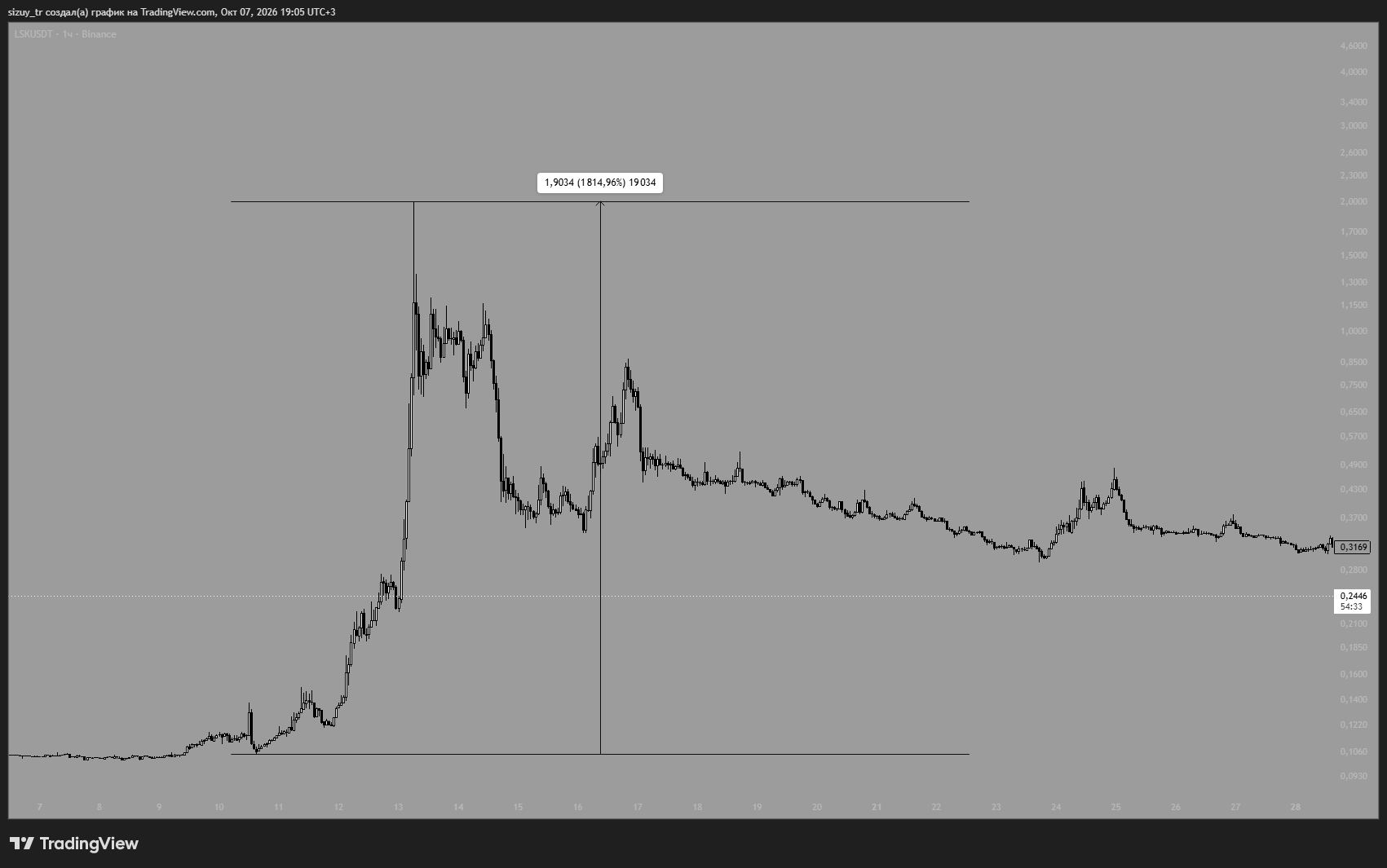
Another notable price surge came from $LSK (Lisk), which rose 20-fold in four days in early September amid huge trading volumes, with $36 million in long positions liquidated in a single day.
What else happened in September?
ENA was one of the strongest coins in August, and as always, “winners keep winning,” so it’s no surprise that ENA continued to be a very strong coin. In September, its price doubled, rising from $0.14 to nearly $0.30. On September 25, it was announced that Ethena would expand into basis farming on Binance perpetual stocks, driving the price up on the news.
ZRO has been in an extremely weak state since March: at the start of August, its fully diluted valuation (FDV) fell to $700 million, down from $2.5 billion just a few months earlier. It rose along with BTC to $1.3 billion in August, but then fell below $1 billion again in mid-September. This proved to be a great entry point, as ZRO then doubled in price over two weeks. By the end of September, its FDV was under $2 billion, which still seems like a fairly low valuation given the project’s popularity and the upcoming launches of Atlas and Zero.
GRASS showed extremely weak momentum through mid-September, trading almost at the same level as before the broad market rally in August. But it also held at $0.30, which had long been very strong support, meaning the upside potential was significant. There was no real catalyst, but the market likely decided it was time to recognize that the protocol’s revenue figures were real and that revenue would finally start flowing back to the token… so GRASS rose +170% in two weeks.
QNT is an “old-school” coin that rose sharply in 2021 and is something of an institutional coin, similar to XRP/XLM/HBAR. On September 24, The Clearing House selected Quant to power its On-Chain Money Initiative, a U.S. network for clearing and settling tokenized bank deposits. This triggered a huge +430% jump in three days, which also marked a local peak (very high trading volume + $16 million in long liquidations).
September was a very successful month for AVAX, with an overall low-to-high gain of +70%. The Avalanche Summit took place on September 16–17, but the price only began to rise sharply immediately afterward. It’s hard to point to a specific catalyst, but Avalanche is very focused on the tokenization of real-world assets (RWA)—the hottest topic in crypto right now. In addition, AVAX was upgraded to Helicon on September 22 (though the main rally took place from September 17 to 21). AVAX is also a well-known token that had yet to see a major rally, despite the market’s high appetite for risk.
There were plenty of altcoin price spikes in September that didn’t continue: $ONE (8x), $SAGA (6x), $MOVR (+350%), $NIL (4x), $PHA (4x), and $SYN (+250%). Plenty of opportunities for both long and short positions!
Thanks for reading this article!
Regards, Sizuy_tr.