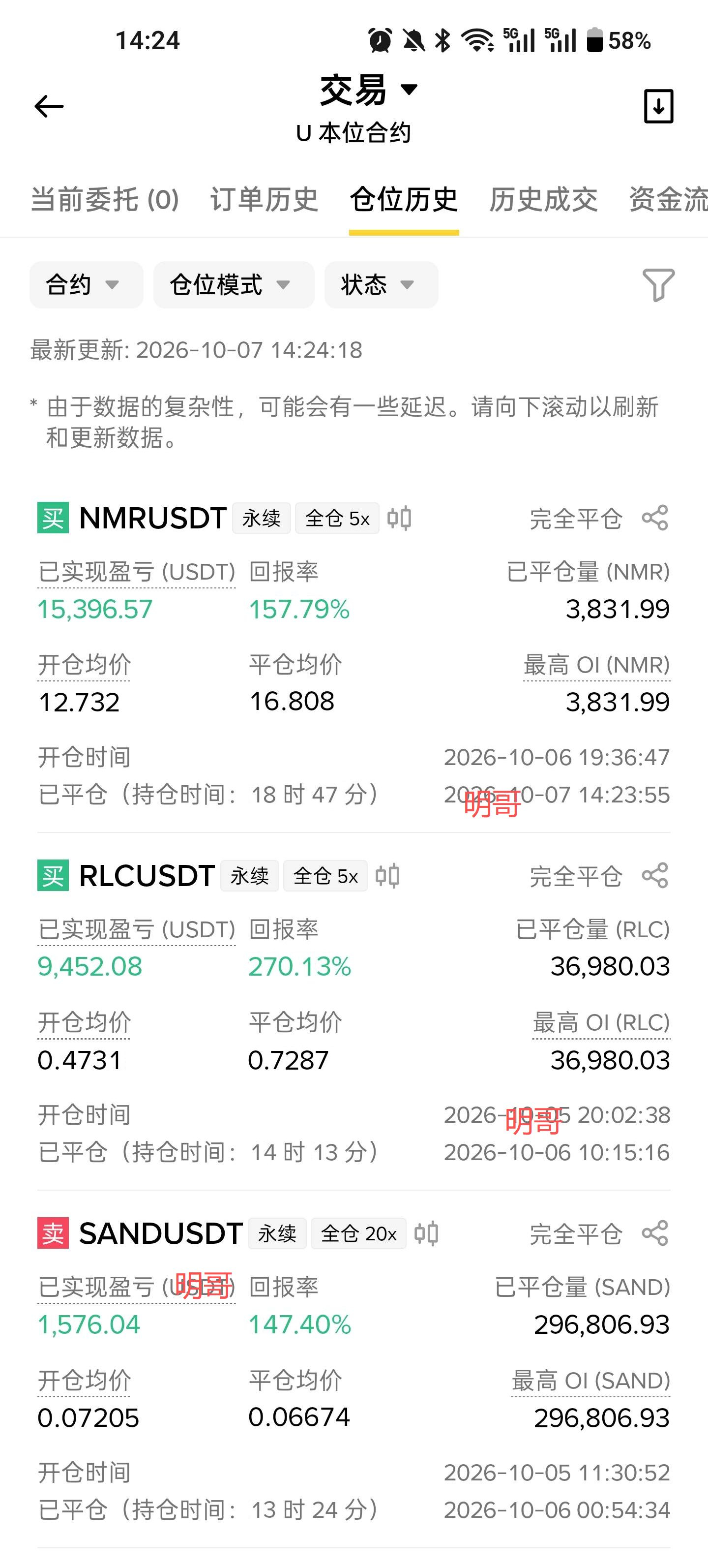
Turn a follower account into $2 million—core principle: when a high-win-rate opportunity appears, only then execute strictly according to discipline. Don’t touch vague setups, don’t chase emotional market moves, and don’t let impulsiveness eat away at your principal.
Newcomers always ask: what should I go for today, which coin will explode tomorrow, and is there a chance of a one-trade comeback? I usually don’t rush to answer—because growing an account isn’t about winning one particular trade. It’s about being able to hold your hand when there’s no good setup.
I used to have a follower. At first, his actions were all over the place. When prices rose, he was afraid to miss out so he chased. When they fell, he felt it was cheap so he bought. He watched the market move every day, yet his profits never stuck. Later, I only gave him one rule: move less, and only fight battles that are certain.
Don’t jump when news breaks—wait until volume confirms. Don’t place bets before the trend is formed—wait for the structure to become clear. When you profit, don’t get greedy—take some off the table first. When you hit your stop-loss line, leave decisively—don’t let a small loss roll into a major wound.
This style looks slow, but the account ends up getting steadier and steadier—because it avoids a huge amount of ineffective losses and emotion-based trading. Rolling from small capital to $2 million wasn’t about making huge gains every day, nor were every trade perfect. What truly widens the gap is learning to wait, learning to take profit, and when you’re wrong, withdrawing.
In the crypto world, opportunities never run out. But those who manage to eat the big meat usually haven’t fired all their bullets too early. Less action means your account can run faster.
That said, the hardest part of the whole thing is really the six words: “wait for a high-win-rate opportunity.” What exactly counts as high win rate? To what extent does volume confirmation make it valid? And what standards define a clear structure? Back then, I tested these using real money, one step at a time, and I fell into plenty of traps. If you want to figure it out, tap follow to find me—I’ll explain it to you slowly.